How to Turn Off Solar Panels UK

How to Turn Off Solar Panels UK: A Safe Step-by-Step Guide
You’re probably here because something’s up. Maybe the inverter’s flashing a fault, a window cleaner is due, or a roofer needs the panels out of the way. Whatever the reason, switching solar off isn’t one big switch. It’s a short routine, and the order matters.
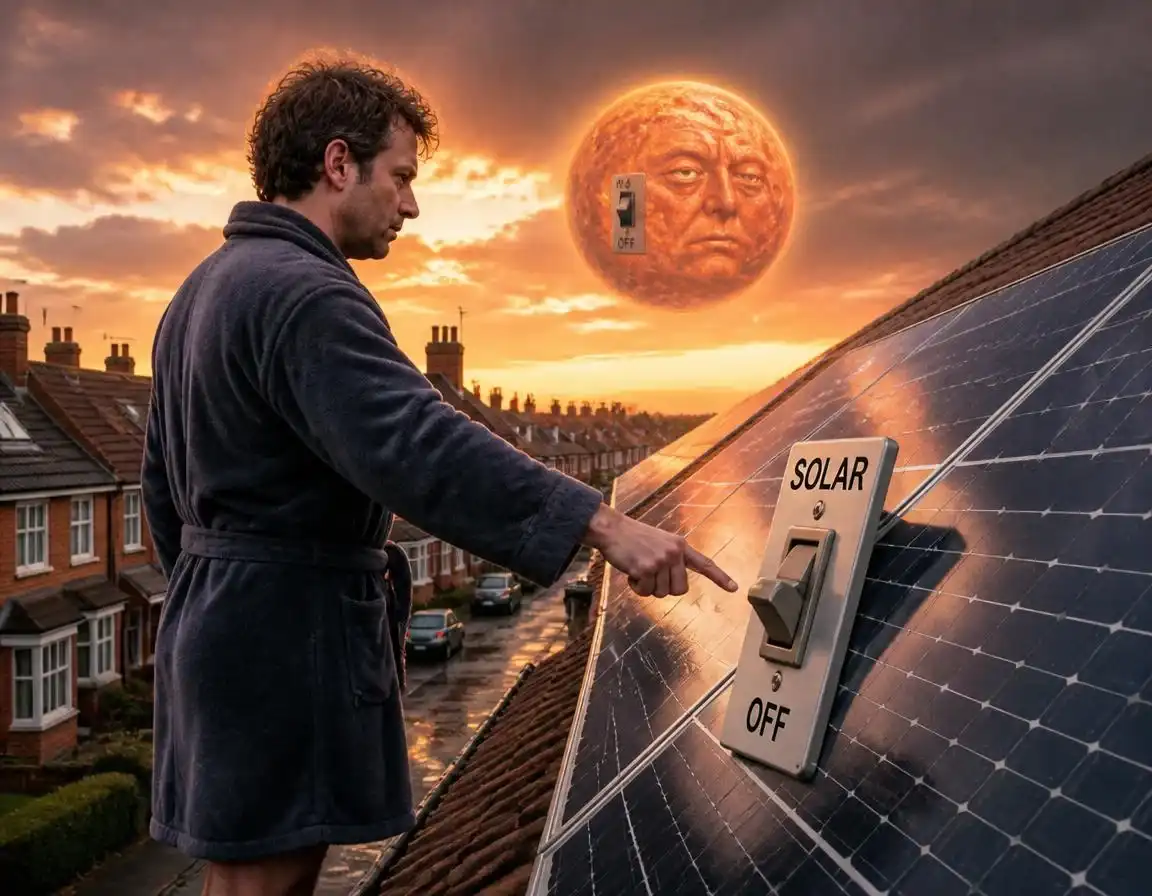
To switch off solar panels in the UK, turn off the AC isolator(s) first, then the DC isolator on your inverter. Check the display goes dark. Here’s the catch: the panels, and the cable running down to the DC isolator, stay live whenever there’s daylight, so never touch the roof wiring. That covers cleaning and a quick reset. For roof work or damage, call an MCS installer. If there’s smoke, call 999.
When you’d need to switch solar off
Most owners never touch the isolators, then need them in a hurry. These are the usual reasons:
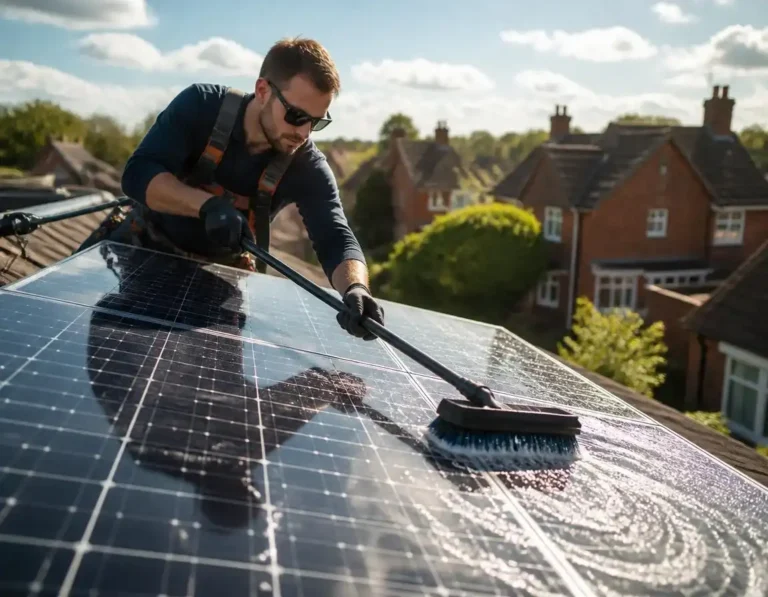
- Cleaning. The Energy Saving Trust says you’ll need to know how to turn your system off before you clean it. My own walkthrough is in how to clean solar panels.
- Roof, chimney or gutter work close to the array.
- A fault or odd behaviour. A restart sometimes clears a glitch. If it doesn’t, check the inverter fault codes.
- Storm or tree damage. Only once it’s safe to go outside.
Routine upkeep is covered in the solar panel maintenance checklist.
Find your switches first
Do this on a calm day, not when something’s gone wrong. Layouts vary, so check the labels and your installer’s handover pack. Here’s where I’d usually look:
| Switch | Where it usually is | What it does |
|---|---|---|
| Solar breaker | Your consumer unit (fuse box), often labelled “solar” or “PV” | Disconnects the inverter’s AC supply to the house |
| AC isolator | Next to the inverter or near the meter | Isolates the AC side of the inverter |
| DC isolator | On or under the inverter | Disconnects the panels’ DC feed from the inverter |
| Battery isolator | On the battery or hybrid inverter, if you have one | Isolates the battery. Follow your manual. |
| Firefighter’s switch | Near the array, but only on some systems | Lets emergency crews cut the DC side |
Can’t find one? Ask your installer now and write the locations on a note by the consumer unit.
How to turn off solar panels, step by step
Switch off the AC side
Flip the solar breaker at the consumer unit, then the AC isolator beside the inverter. If you have more than one AC isolator, switch them all off.
Turn the DC isolator to OFF
It’s on or underneath the inverter. On a hybrid inverter, it’s the DC isolator on the underside.
Check the display
The screen and lights should go dark. If the inverter stays lit, stop there and call your installer.
AC first, then DC. That’s the order UK guides such as OVO’s solar handover pack give. Your inverter manual has the final say if it lists extra steps.
Switching back on
Restart order differs between makes, so use your manual rather than guessing. Once everything’s on, give the inverter a few minutes to reconnect, then check it’s generating. If it stays off after a power cut, read what G99 reconnection actually does. If a fault code appears, see the fault code guide.
Why the panels are still live after you’ve switched off
This catches people out. The BRE says the DC supply from the panels to the DC isolator stays live during daylight. The Institution of Fire Engineers goes further: the only way to stop panels generating is to block the light.
So don’t: touch roof cables or connectors, open the inverter, or unplug panels yourself. Fully isolating the array is a qualified installer’s job.
Wondering about remote shutdown features? That’s a separate topic, which I cover in Does Your Solar Inverter Have a Hidden “Kill Switch”?
If you have a battery
A battery is a second power source, so there’s more to switch off. OVO’s guide for solar and battery systems has the AC isolators off first, then the DC isolator on the hybrid inverter. Batteries also have their own isolator, so follow your manufacturer’s manual for it and never open the battery enclosure. For the risks, see my page on solar battery fire safety.
In an emergency: smoke, burning smells or damage
If you see smoke or flames, or smell burning, get everyone out and call 999. Don’t go on the roof and don’t stop to flip switches if it isn’t safe.
Panels can’t be “turned off” like a hob, and firefighters know that. After an incident, don’t restart anything until an installer has inspected it. I’ve looked at the numbers in UK fire crews attend a solar panel fire every two days.
When to call an MCS installer instead
- An isolator won’t turn, looks scorched, or has water inside.
- The fault code comes back after a restart.
- Panels need lifting for roof repairs. Removal costs are in solar panel removal cost UK.
- You can see damaged cables, or the job means unplugging panels.
Need someone? Use the find an installer page, or my tips on how to choose a solar installer.
FAQs
Can I turn off my solar panels myself?
Yes. Switching the AC and DC isolators is something owners are expected to be able to do, for example before cleaning. Opening the inverter, unplugging panel cables or going on the roof is a job for a qualified installer.
Should I turn off AC or DC first?
AC first, then DC. Switch off the solar breaker or AC isolator, then turn the DC isolator on or under the inverter to OFF. Check your inverter manual, because some makes list extra steps.
Are solar panels safe to touch once I’ve switched them off?
No. In daylight the panels keep generating, and the cable between the panels and the DC isolator stays live even when the isolator is off. Leave roof wiring to a qualified installer.

One Comment