Solar Panels for Garden Sheds

Your garden shed roof is generating nothing right now. It could be generating electricity. That is the straightforward case for solar panels on a garden shed — and in 2026, it has never been easier or cheaper to make it happen.

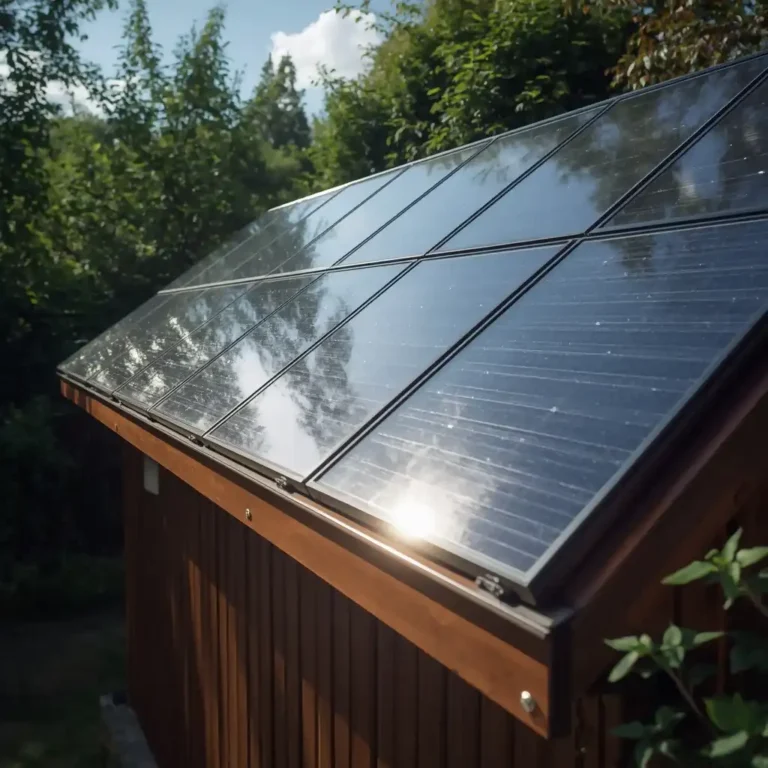
Shed solar is almost always off-grid, which keeps it wonderfully simple. You do not need to notify your Distribution Network Operator, apply for planning permission, or hire a qualified electrician for a basic 12V system. A single solar panel on the south-facing roof or wall, connected to a charge controller and a leisure battery, gives you reliable power for LED lights, USB device charging, a small radio, basic power tools, and security cameras — exactly what most shed users actually want.

For higher-demand applications — a workshop fridge, a 3D printer, or regular power tool use — step up to a 200–400W system with an inverter to convert 12V DC to 230V AC. A well- sited 400W shed setup can generate 350–450kWh per year in the UK, more than enough for an active garden workshop or hobby room.

From mid-2026, the BS 7671 Amendment 4 plug-in standard also opens up the option of running a solar kit from your shed roof through a standard socket back into your home’s consumer unit — giving your house a free electricity top-up powered by your garden. A shed south-facing roof or fence is the UK equivalent of a German balcony solar installation.

TOP 3 SHED SOLAR OPTIONS (2026 UK PRICES)

  1. Basic 100W kit (LED lights and USB charging) £60–£120 | Ideal for small sheds and potting outbuildings
  2. 200–400W off-grid kit with battery and controller £150–£400 | Powers tools, shed fridge, and USB devices
  3. 800W plug-in system (shed-mounted, feeds home circuit) £400–£600 | Reduces home electricity bill directly

Whether you want to light your potting shed on dark winter evenings or run a fully equipped off-grid workshop, solar gives your outbuilding genuine independence. No mains cable. No electrician for the basics. No planning permission. Just free electricity from a roof that was doing nothing until now.

You Might Have Questions

Q1: Do I need planning permission for solar panels on a garden shed?

A1: In most cases, no. Solar panels on domestic outbuildings and garden sheds in England are permitted development, provided the installation does not protrude more than 200mm beyond the roof plane and the property is not in a conservation area or a listed building. Always check with your local planning authority if you are in an area with special designation or Article 4 directions in force.

Q2: What can a solar panel power in a garden shed?

A2: A basic 100W solar panel kit can power LED lighting, USB device charging, a small radio, and low-draw security cameras. A 200–400W system with battery storage and an inverter can power small power tools, a workshop fridge, a laptop, and a printer. For heavy power tools running continuously, a 600W+ system with a 100Ah or larger battery bank is recommended.

Q3: What type of solar panel is best for a garden shed?

A3: Monocrystalline solar panels are the best choice for garden sheds in the UK because they achieve higher efficiency in the diffuse, lower-light conditions common in British weather. Polycrystalline panels are cheaper but less efficient. Monocrystalline panels from brands such as Renogy, ECO-WORTHY, and Victron are widely available and well suited to off-grid shed installations at all sizes from 100W to 400W.