
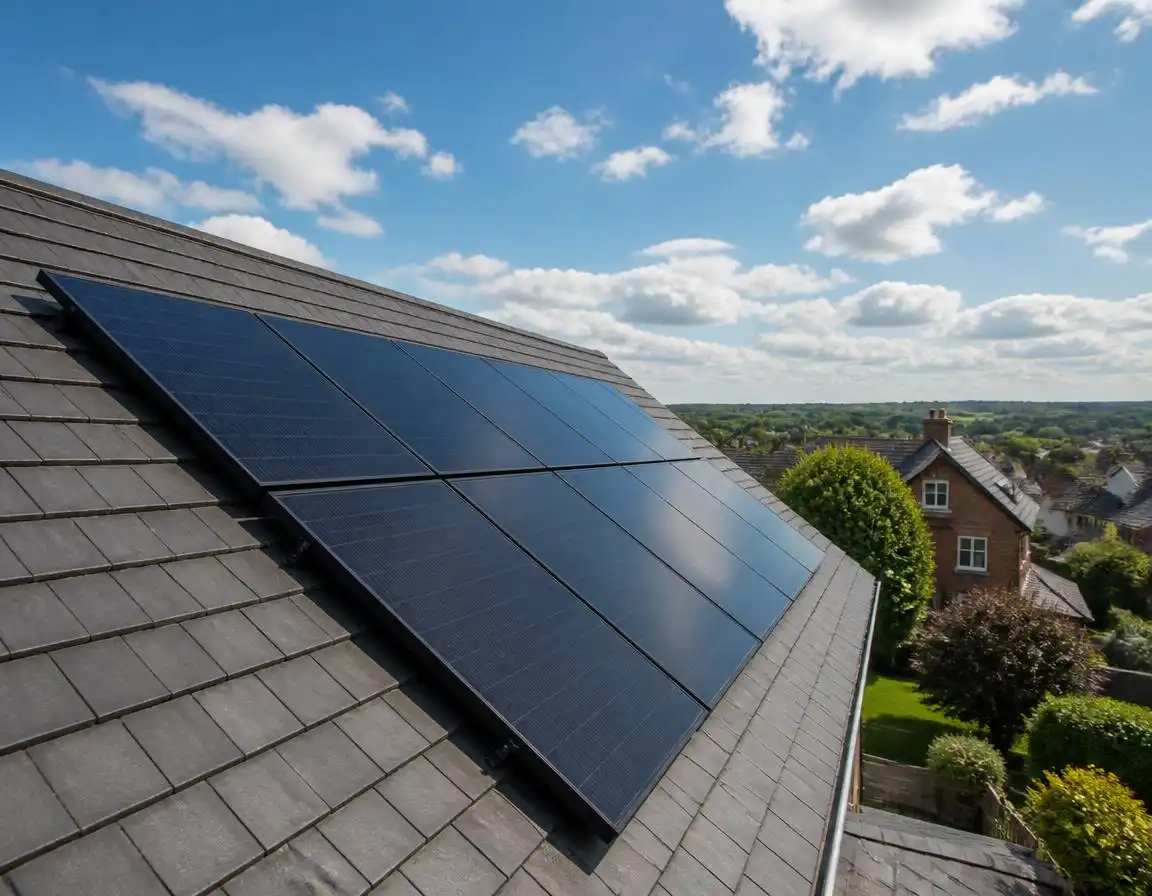
Solar Panels

We’ve spent weeks researching the UK solar market so you don’t have to. Real costs, every available grant, the latest technology — and absolutely no installer bias or sponsored spin. Welcome to SolarBriton.
(March 2026)
(milestone reached 2026)
(fully installed, 0% VAT)
(4kW, average UK home)
Table of Contents
- 01 About This Guide & 2026 Snapshot
- 02 How Solar Panels Work in the UK
- 03 Solar Panel System Costs 2026
- 04 Solar Grants & Funding Routes
- 05 Smart Export Guarantee (SEG)
- 06 Solar Panel Technology Explained
- 07 Balcony & Plug-In Solar Legalisation
- 08 Solar Battery Storage Worth It?
- 09 Are Solar Panels Worth It in 2026?
- 10 Planning Permission & Installation
- 11 Solar Performance by UK Region
- 12 Choosing a Solar Installer
- 13 Frequently Asked Questions
Why we built this pillar guide
We created SolarBriton because the solar information out there is, frankly, a mess. Most “guides” are thinly disguised sales funnels — designed to get you to click a “get quotes” button, not to actually inform you. Affiliate links, sponsored content, and cherry-picked data are everywhere.
We’re not affiliated with any installer, panel brand, or energy supplier. We don’t earn commission if you buy solar panels. We earn nothing from the companies we mention. What you read here is our honest, independent take — sourced from government data, MCS installation records, and Ofgem publications.
As the definitive resource on our site, this page acts as a hub. For those looking to dive deeper into specific areas, we encourage you to explore our dedicated tools, such as the Solar Panel Cost Calculator and our comprehensive Best Solar Panels UK Guide.
This page is updated regularly. Everything on it reflects the UK market as of 2026.
Our stance: Solar panels are genuinely a good investment for most UK homeowners in 2026. We’ll show you why the numbers stack up — and be honest about who they don’t work for.
The UK solar story right now
2026 is a genuinely exciting year for UK solar. For the first time, the UK has passed two million solar installations and 22 gigawatts of total capacity. New grants are arriving under the Warm Homes Plan. Balcony solar — plug-in panels for flats and renters — has just been legalised. And electricity prices have risen far enough that solar pays back faster than at any point in the last decade.
The technology has quietly leaped forward too. The N-type TOPCon and HJT panels being installed today are meaningfully better than what was being sold five years ago — more efficient, slower to degrade, and better suited to grey British skies than older P-type panels.
The short version? If your roof is suitable, 2026 is a very good time to go solar.
What’s happening in UK solar right now
The headlines from the latest government deployment data and market reports — all confirmed as of mid-2026.
UK Hit 2 Million Installations
The UK crossed the 2,003,000 installation milestone in early 2026 — growth not seen at this pace since 2012.
22.1 GW Total Capacity
Total UK solar PV reached 22.1 GW by March 2026, per provisional DESNZ data. The equivalent of 8–10 large power stations.
Prices Stabilised
Panel costs dropped 90% between 2010 and 2023. They’ve now stabilised — but so have they in terms of value, because electricity prices have risen to meet them.
£15bn Warm Homes Plan Live
The UK government launched the Warm Homes Plan in January 2026 — the largest home energy upgrade programme in British history.
UK Total Solar PV Capacity Growth (2019 – Q1 2026) — GW
How solar panels work in a UK home
It’s genuinely simpler than most people think. Here’s the full picture in five steps. To understand how much energy you could personally generate based on your specific roof angle and orientation, try our dedicated Solar Output Calculator.
Sunlight Hits Panels
Photovoltaic (PV) cells convert daylight — not just direct sun — into direct current (DC) electricity.
Inverter Converts Power
A solar inverter converts DC from the panels into 240V AC electricity — the same as your mains supply.
Powers Your Home
Your appliances run on solar first. You only draw from the grid when panels can’t meet demand (evenings, overcast days).
Battery Stores Surplus
If you have a battery, surplus daytime power is stored for use at night — dramatically boosting self-consumption.
Export Earns You Money
Any excess generation gets exported to the National Grid. Under the Smart Export Guarantee (SEG), your energy supplier pays you for it.
A common myth: Solar panels don’t need direct sunshine to work. They generate electricity from daylight — diffuse light on cloudy days still produces useful power. The UK’s famously grey skies reduce output compared to southern Spain, but by far less than most people imagine. A well-sited UK system generates around 850–1,050 kWh per kWp per year, depending on region.
What does a solar panel system cost in the UK?
Prices are sourced from MCS-registered installation data for early 2026. All figures include 0% VAT, which applies to all residential solar installations until at least 31 March 2027 — saving you £1,000–£2,000 versus standard rate. If you want a personalised estimate tailored to your home’s energy usage, please use our Solar Panel Cost Calculator.
| System Size | No. of Panels | Installed Cost (0% VAT) | Annual Generation | Annual Bill Saving | SEG Income (est.) | Typical Payback | Best For |
|---|---|---|---|---|---|---|---|
| 3 kW | 7–8 panels | £4,500 – £6,500 | ~2,700 kWh/yr | ~£500–£600 | ~£100–£130 | 8–12 years | 1–2 bed flats & small homes |
| 4 kW | 10–11 panels | £6,500 – £8,500 | ~3,400 kWh/yr | ~£650–£800 | ~£130–£200 | 8–11 years | Most popular 3-bed semis |
| 5 kW | 12–14 panels | £7,500 – £10,000 | ~4,250 kWh/yr | ~£780–£950 | ~£160–£240 | 9–12 years | 3–4 bed detached homes |
| 6 kW | 15–17 panels | £9,000 – £11,500 | ~5,100 kWh/yr | ~£950–£1,150 | ~£190–£290 | 9–12 years | Large homes, EV charging |
| + 5kWh Battery | — | +£3,000 – £4,500 | — | +£250–£350 extra | — | Add 3–6 years to battery payback | Evening & night self-consumption |
| + 10kWh Battery | — | +£5,000 – £8,000 | — | +£350–£500 extra | — | Add 5–10 years to battery payback | High usage, EV, time-of-use tariffs |
Savings assume the Ofgem Q2 2026 rate of 24.67p/kWh and a self-consumption rate of around 50% (without battery) or 75% (with battery). In July 2026, the Ofgem price cap rises further to a level equivalent to ~£1,862/year — which means solar savings increase in the second half of 2026. Your actual savings depend on roof orientation, shading, usage patterns, and which SEG tariff you choose.
Estimated Annual Savings — Solar Only vs Solar + Battery
25-Year Cumulative Net Position — 4kW System (£)
📌 Bottom line on costs: A 4kW system at £7,500 installed (typical mid-range quote) saves roughly £850/year in total benefits. That’s an 11.3% annual return on your investment before factoring in electricity price rises — significantly better than most savings accounts or bonds, with no ongoing risk once installed. For a deeper dive into pricing variables, read our Solar Panel Costs Explained article.
Every solar funding route available right now
There’s no single universal “free solar” grant for every UK homeowner. But there are multiple genuine funding routes, and when stacked together they can dramatically reduce what you actually pay. Here’s every option available as of 2026. For a more detailed breakdown of eligibility, check our Solar Panel Grants Guide.
0% VAT on Solar Installations
All residential solar panel and battery storage installations are exempt from VAT — saving you 20% versus the standard rate. This applies automatically, no application required.
- Applies to panels, inverter, mounting, and battery
- Labour costs are also included at 0% VAT
- Valid until at least 31 March 2027
- No income thresholds — everyone qualifies
- Simply hire an MCS-certified installer
ECO4 — Free Solar for Eligible Homes
The Energy Company Obligation scheme (4th phase) requires large energy suppliers to fund home improvements for low-income households. Extended until 31 December 2026. Act now — once it closes, no successor scheme is planned in its current form.
- EPC rating of D, E, F, or G required
- Must receive qualifying benefits (Universal Credit, Pension Credit, Child Tax Credit, Income Support, Housing Benefit, JSA/ESA)
- Or referred via LA Flex for borderline cases
- Solar usually offered alongside insulation/heat pump
- Apply via your energy supplier or local authority. Check eligibility at gov.uk
Warm Homes: Local Grant
Phase one of the government’s landmark £15 billion Warm Homes Plan. Live since April 2025 and expanding. Delivered via local authorities. Covers solar panels alongside insulation, heat pumps, and other efficiency upgrades.
- Household income typically under £36,000
- EPC rating of D, E, F, or G
- Applied for via gov.uk eligibility checker or local authority
- Covers owner-occupiers and private renters
- Funded through local authority budgets (varies by area)
Smart Export Guarantee (SEG)
Not a grant but an ongoing income stream — you’re paid for every unit of surplus solar electricity you export to the National Grid. Rates vary by supplier and some tariffs are excellent. See the dedicated SEG section below.
- Open to all homeowners with MCS-certified solar
- Requires a SMETS2 smart meter
- Completely separate from your electricity import supplier
- Typicall earns £100–£400/year on a 4kW system
- Best rates: Good Energy 25p/kWh, Octopus peak up to 32p/kWh
Scotland: Home Energy Schemes
Scotland has its own support alongside ECO4. The Scottish government and Great British Energy offered a £2m Solar Energy Efficiency Loan Scheme (window closed March 2026, but new rounds expected). HEEPS:ABS provides zero-interest loans.
- HEEPS: ABS — interest-free loans for low-income households
- Keep an eye on Energy Saving Trust Scotland for new rounds
- Scotland also benefits from ECO4 and Warm Homes
Wales: Nest & Ynni Cymru
Wales has the Nest scheme for low-income households, which can include solar panels as part of a home energy package. Ynni Cymru is aimed at public sector, community, and SME organisations rather than individual homeowners.
- Nest: owner-occupiers or private renters on low income
- Must have EPC-related criteria met
- Apply via nestwales.co.uk
- Wales also benefits from UK-wide ECO4 and 0% VAT
Beware solar scams: If someone cold-calls you or knocks on your door offering “free solar panels from the government,” be very cautious. Legitimate schemes work through your energy supplier, local council, or the gov.uk eligibility checker — never via unsolicited door-to-door salespeople. Any genuine grant will never ask for upfront payment.
Grant Comparison Table
| Scheme | Who Qualifies? | Max. Value | Type | Deadline | England | Scotland | Wales | N. Ireland |
|---|---|---|---|---|---|---|---|---|
| 0% VAT | All homeowners with MCS installer | £1,000–£2,000 | Discount | Mar 2027 | ✅ | ✅ | ✅ | ✅ |
| ECO4 | Benefits recipients, EPC D–G | Up to 100% cost | Grant | Dec 2026 | ✅ | ✅ | ✅ | ❌ |
| Warm Homes: Local Grant | Income <£36,000, EPC D–G | £15,000 | Grant | Ongoing | ✅ | ✅ | ✅ | ❌ |
| Smart Export Guarantee | All MCS-certified solar owners | 1p–32p/kWh ongoing | Export Payments | No end date | ✅ | ✅ | ✅ | ❌ |
| Scotland: Loan Scheme | Scottish homeowners | Up to £9,000 | Loan (0%) | New rounds TBC | ❌ | ✅ | ❌ | ❌ |
| Wales: Nest | Low-income Welsh homeowners | Free install possible | Grant | Ongoing | ❌ | ❌ | ✅ | ❌ |
Getting paid for the solar electricity you don’t use
The Smart Export Guarantee (SEG) replaced the old Feed-in Tariff in January 2020. It pays you for every kWh of surplus solar electricity you export to the grid. Rates are set by suppliers — and they vary enormously. Choosing the right tariff can add £200–£400 per year to your returns. Read our full SEG Guide for more.
How the SEG works
Any energy supplier with more than 150,000 domestic customers must offer at least one SEG tariff, as mandated by Ofgem. You register your installation, they fit a smart meter (SMETS2), and they pay you per kWh exported. You can use a completely different supplier for your SEG payments than for your electricity import — which is crucial, because rates vary wildly between suppliers.
As of 2026, there are roughly 30 live SEG tariffs across the UK, ranging from 1p/kWh to peak rates of over 32p/kWh. Here’s the honest breakdown:
- Best flat rate (no battery needed): Good Energy Solar Savings Exclusive at 25p/kWh
- Best with battery & Octopus import tariff: Octopus Intelligent Flux at up to 32p/kWh at peak export windows
- Strong fixed rates: EDF Export Exclusive 24p, E.ON Next ~16.5p, British Gas 15.1p
A typical 4kW system exports around 1,500–2,000 kWh per year. At Good Energy’s 25p/kWh, that’s £375–£500 per year — a meaningful addition to your bill savings.
Best SEG Export Rates — 2026 (p/kWh)
Important: SEG rates change regularly. Always check directly with suppliers before signing up. You can switch SEG tariffs at any time with no exit fees — it’s completely separate from your electricity import contract. Review your rate annually; moving from 5p to 25p on 1,500 kWh of exports saves you £300/year at zero cost.
To register for SEG you need:
MCS Certificate
Your installer provides this on completion. Required by all suppliers for SEG registration.
SMETS2 Smart Meter
Needed to record half-hourly export data. Most energy suppliers can provide one free of charge.
System Under 5MW
Virtually all domestic systems qualify. The 5MW cap covers every residential installation.
Application to Supplier
Apply directly to your chosen SEG supplier. Most process applications in 1–4 weeks. It’s free.
Which solar panel types are actually worth buying?
The panel market has changed dramatically in the past three years. Here’s what’s actually installed in UK homes in 2026, and what the differences mean in practice. For our full ranking of top-performing models this year, see our Best Solar Panels UK 2026 review.
The technology landscape in 2026
The residential solar panel market has converged almost entirely on N-type monocrystalline silicon, specifically in two cell architectures — TOPCon and HJT (Heterojunction). Older P-type PERC panels are being phased out for new installations. Polycrystalline panels are effectively obsolete.
The reason N-type matters in the UK specifically is low-light performance. N-type cells carry a lower temperature coefficient — they lose less output on warm summer days, and they generate proportionally more on overcast days than older P-type panels. For a country with around 1,500 hours of sunshine per year (versus 2,800 in southern Spain), that’s a meaningful real-world advantage.
N-type panels also degrade more slowly — around 0.3–0.4% per year, versus 0.5–0.7% for older PERC. Over a 25-year panel life, that difference compounds into a noticeably higher total energy output.
🏆 What we’d recommend in 2026: N-type TOPCon for most roofs (great value, 22–23.5% efficiency, 25–30-year warranties). HJT panels for space-constrained roofs where squeezing maximum kWh from fewer square metres matters. IBC panels (e.g. SunPower Maxeon) if budget is flexible and long-term output is the priority.
Panel Efficiency — Cell Technology Comparison
Higher efficiency means more power per square metre of roof. All figures are 2026 commercial module averages.
Panel Technology Comparison
| Technology | Efficiency | Annual Degradation | Temp. Coefficient | Typical Warranty | Relative Cost | Best For |
|---|---|---|---|---|---|---|
| N-Type IBC (Back-Contact) SunPower Maxeon | 24–24.6% | 0.25%/yr | –0.27%/°C | 40 years | Premium (£££) | Small roofs, max output, aesthetics |
| N-Type HJT REC Alpha, Risen, Panasonic EverVolt | 23–24% | 0.25%/yr | –0.24 to –0.26%/°C | 25–30 years | Mid-Premium (££) | Space-constrained roofs, hot climates |
| N-Type TOPCon Jinko Tiger Neo, JA Solar DeepBlue 4.0 Pro, Aiko Neostar | 22–23.5% | 0.3–0.4%/yr | –0.28 to –0.30%/°C | 25–30 years | Mainstream (£–££) | Best all-round for UK 2026 |
| P-Type PERC Monocrystalline Various brands (older stock) | 20–21.5% | 0.5–0.7%/yr | –0.35 to –0.40%/°C | 10–25 years | Budget (£) | Large roofs with ample space; value installs |
How to check your panels are genuine Tier 1: Ask your installer to confirm the panel is listed on the Bloomberg NEF (BNEF) Tier 1 manufacturers list and is on the MCS Certified Products directory at mcscertified.com. If they can’t confirm both, ask why — and ask for alternatives that can.
Balcony & Plug-In Solar Is Now Legal in the UK
For years, plug-in solar panels sat in a legal grey area in the UK — popular across Europe but technically non-compliant here. That changed on 15 April 2026, when BS 7671 Amendment 4 came into force, creating a clear legal framework for small plug-in solar systems for the first time.
If you’re in a flat, renting, or just can’t access your roof, this is genuinely exciting news. A two-panel 800W kit on a south-facing balcony or garden wall can generate 640–760 kWh per year — saving around £150–£250 on your electricity bill annually, with no structural work needed.
Energy Secretary Ed Miliband confirmed the legalisation in March 2026. DESNZ also announced a £25m pilot on 21 April 2026 to put plug-in kits into low-income households. A full BSI product safety standard for DIY kits is expected around July 2026.
What the 2026 rules say
| Legal from | 15 April 2026 (BS 7671 Amendment 4) |
| Max output | 800W peak (typically 2 × 400W panels) |
| Installation | CPS-registered electrician until BSI standard (July 2026); DIY-grade kits coming Q3 2026 |
| DNO notification | G98 online form — simple notification, not approval |
| Planning permission | Not required (permitted development, England) |
| Renters’ Rights Act 2025 | Landlords cannot unreasonably refuse balcony solar requests |
| SEG export payments | Not available (plug-in systems can’t achieve MCS certification) |
| Kit cost | £200–£600 for 800W kit (electrician connection extra until July) |
| Annual saving | ~£150–£250 (south-facing, central England, 800W kit) |
⚠️ Always check your tenancy agreement before drilling into balcony railings. Freestanding bracket systems that require no drilling are the safest choice for renters. Read more about this in our Balcony Solar UK Guide.
Is adding a battery worth it?
Solar panels generate most of their electricity during the day. If you’re out at work, a lot of that generation goes straight to the grid at a lower SEG export rate than you pay to import electricity. A battery solves that mismatch — but it adds cost. Here’s the honest calculation, which is expanded upon in our Solar Battery Storage Guide.
The financial case for battery storage
Without a battery, a typical UK household uses around 40–50% of their solar generation directly. The rest is exported. A battery can push that self-consumption rate to 70–80%, which means buying significantly less expensive grid electricity.
With electricity at 24–28p/kWh in 2026, every kWh you pull from your battery instead of the grid saves around that amount. A 5kWh battery used well can save £200–£350 extra per year beyond solar alone. A 10kWh battery used with a time-of-use tariff (charging cheaply overnight) can save considerably more.
Battery storage also qualifies for 0% VAT until at least March 2027 — both when installed alongside solar and when retrofitted to an existing system. No planning permission is required for a wall-mounted or internal battery.
💡 Pro tip: If you’re getting solar now but can’t stretch to a battery, ask your installer for a hybrid inverter (battery-ready). This costs £100–£400 more upfront but means retrofitting a battery later will be far cheaper — one visit instead of a full re-install.
Popular home battery options in the UK (2026)
| Brand / Model | Usable Capacity | Typical Cost | Highlights |
|---|---|---|---|
| Tesla Powerwall 3 | 13.5 kWh | ~£9,000–£11,000 | Integrated inverter, 97.5% efficiency, 10-yr warranty, backup power |
| GivEnergy All-in-One 2.0 | 9.5 kWh | ~£6,500–£8,000 | Popular UK brand, hybrid inverter built in, backup power capable |
| Sunsynk 5kWh | 4.8 kWh | ~£3,500–£4,500 | Good entry-level option, backup power, strong installer support in UK |
| Pylontech US5000 | 4.8 kWh | ~£2,800–£3,800 | LFP chemistry, excellent safety record, widely used in UK retrofits |
| Fogstar Drift 10kWh | 10 kWh | ~£5,000–£7,000 | UK-founded, strong value, LFP cells, 6,000+ cycle life |
Prices include installation but exclude solar. All models listed use LFP (lithium iron phosphate) chemistry — safer and longer-lasting than NMC cells.
Is solar genuinely worth it in the UK in 2026?
Let’s be direct. Here are the honest facts — who solar works well for, who should wait, and the numbers behind the answer.
Who solar works best for
- You own your home (or have the freeholder’s permission)
- You have a south, south-east, or south-west facing roof with minimal shading
- Your electricity bill is above average (you use 3,000+ kWh per year)
- You’re at home during the day (or have a battery / EV to store surplus)
- You have an EV or electric heat pump (further increases self-consumption)
- You’re in the UK for the long term — solar is a 25-year asset
Who should think carefully
- North-facing roof — output reduced 25–40% vs south-facing
- Heavily shaded roof (trees, chimneys, adjacent buildings)
- You’re planning to move within 3–5 years (you’ll recoup less)
- Flat roof (possible but more complex and expensive)
- Listed building — needs Listed Building Consent, often denied
The electricity price case: In 2014, electricity cost 14.4p/kWh. In Q2 2026, it’s 24.67p/kWh. In July 2026 the price cap rises further. Every rise in the grid price makes your solar generation more valuable. The typical 25-year total benefit of a 4kW system, assuming just 3% annual electricity price rises, exceeds £20,000 net of installation costs.
25-Year Financial Projection — 4kW System (£)
Assumes: 4kW system £7,500, 50% self-consumption, Ofgem rate 24.67p/kWh (Q2 2026) rising 3%/yr, SEG 15p/kWh on 1,750 kWh exported/yr, inverter replacement £800 at year 12.
The full process, from first call to first generation
Here’s exactly what to expect — from the initial survey to the day you start seeing savings. For official guidance on permitted development, visit the gov.uk planning portal.
Do I need planning permission?
In the vast majority of cases, no. Roof-mounted solar panels in England, Scotland, and Wales fall under permitted development rights, provided:
- Panels don’t project more than 200mm from the roof surface
- They don’t exceed the highest point of the existing roof
- The property isn’t a listed building (all grades require Listed Building Consent)
- The roof isn’t on the principal elevation of a home in a conservation area
Listed buildings: All grades of listed building require Listed Building Consent for solar panels. Approval rates vary from around 18% (Grade I) to 60% (Grade II). Solar slates and tiles that visually match traditional materials have the best success rate. Always consult a heritage planning specialist before applying.
Site Survey & System Design
A qualified installer assesses your roof, orientation, shading, and energy usage. They design a system sized to your needs. Allow: 1–2 weeks after initial enquiry
DNO G98 Notification
Your installer notifies your Distribution Network Operator (DNO). For most domestic systems this is a simple online notification — no approval required. Allow: 1–10 working days
Scaffolding (if needed)
Most pitched-roof installs require scaffolding for safety — usually erected the day before. Flat-access roofs may not need it. Allow: 1 day
Installation Day
A crew of two or three electricians installs the system — panels, racking, inverter, cabling, and smart meter connection. Most domestic installs are completed in a single day. Allow: 1–2 days
Building Regs Sign-Off & MCS Certificate
Your installer issues an MCS installation certificate and a Building Regulations compliance certificate. Keep both documents — you’ll need the MCS certificate for SEG registration. Allow: within 1 week of installation
SEG Registration
Apply to your chosen SEG supplier using your MCS certificate. Most process applications in 4–8 weeks. After that, your export payments start. Allow: 4–8 weeks
How much solar does your region generate?
Solar panels work across the entire UK — even in Scotland. The difference between the sunniest and cloudiest regions is less than most people expect, and the financial case holds up well nationwide.
| Region | kWh/kWp/year | Annual output (4kW) | vs UK avg |
|---|---|---|---|
| South West (Cornwall, Devon) | 1,040–1,060 | ~4,200 kWh | +10% |
| South East (Kent, Sussex) | 1,010–1,030 | ~4,080 kWh | +7% |
| East Anglia | 980–1,010 | ~3,960 kWh | +4% |
| London & South | 960–990 | ~3,900 kWh | +2% |
| Midlands | 930–960 | ~3,760 kWh | Average |
| Wales | 910–940 | ~3,700 kWh | –2% |
| North West | 890–920 | ~3,640 kWh | –3% |
| North East / Yorkshire | 870–910 | ~3,560 kWh | –5% |
| Scotland (Central) | 840–880 | ~3,440 kWh | –8% |
South-facing roof, minimal shading. East/west-facing roofs generate approximately 15–20% less. All figures are approximate annual averages.
Annual Solar Generation by UK Region — 4kW South-Facing System (kWh)
Scotland specifically: Scotland generates about 8–10% less than the UK average — but installation costs can also be 5–10% lower. Combined with available Scottish-specific grants, solar in Scotland often delivers a better ROI than the national average might suggest. Don’t let the latitude put you off.
How to pick a good solar installer — and spot a bad one
The difference between a solar system that performs well for 25 years and one that underperforms is usually the installer, not the panels. Here’s what to look for. You can also find local reputable installers via our Installer Directory.
MCS Certification — Non-Negotiable
Only use an installer registered with the Microgeneration Certification Scheme (MCS). This is required to qualify for SEG payments and most grants. Check at mcscertified.com — not just on their website.
Which? Trusted Trader or NAPIT
Which? Trusted Traders undergo financial stability checks on top of workmanship quality — something MCS alone doesn’t cover. NAPIT registration also signals competent installer status.
Get Three Quotes
Solar quotes vary significantly. Three quotes from MCS-certified installers gives you a realistic price baseline and reveals whether any single quote is unusually expensive or suspiciously cheap.
Insist on a Site Survey
Reputable installers visit your property and assess your actual roof — orientation, pitch, shading, structural condition — before quoting. Be wary of installers who quote online without visiting.
Ask About Panel Brands
Ask for the specific panel model and check it’s on the BNEF Tier 1 list and MCS Certified Products directory. Avoid “generic” or unbranded panels from suppliers with no UK distribution network.
Check Their Track Record
Look for Google and Trustpilot reviews from actual solar customers — not generic building work. Ask for references from installations similar to yours. A good installer is happy to provide these.
Red flags: High-pressure sales tactics or “today only” pricing. Quotes provided without a site visit. Vague or unsigned contracts. Claims of “government-approved” status (there’s no such certification). Promises of savings that seem too good to be true. Any installer who can’t provide an MCS certificate number you can verify independently.
Your solar questions, answered honestly
These are the questions we get most often — and the ones most solar “guides” answer vaguely or with a sales agenda. We’ve tried to give you straight answers.
Got a question we haven’t answered?
We read every email and reply with honest, independent advice. No sales pitches. No affiliate links in our response. Just a straight answer.
✉️ Ask Us Anything Back to FAQ