
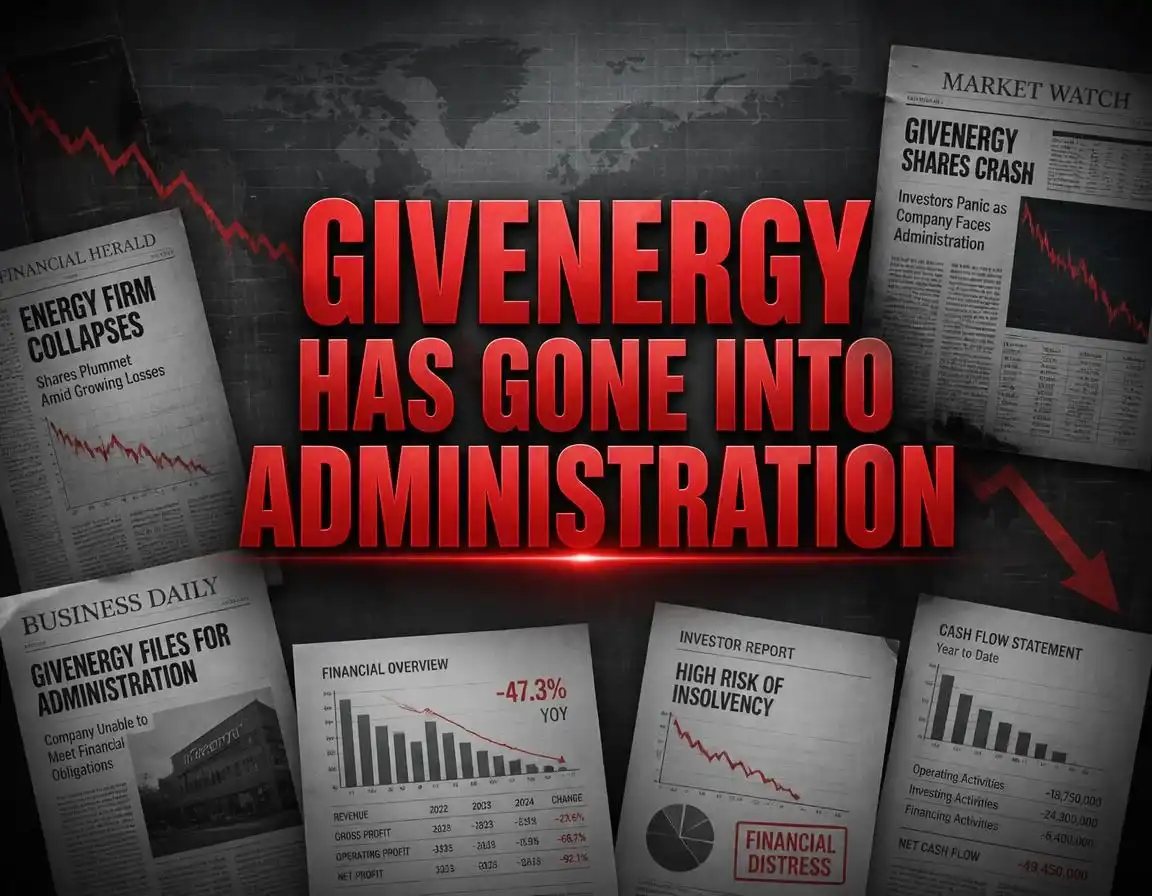
GivEnergy Has Gone Into Administration

GivEnergy Has Gone Into Administration: What It Means for Your Battery, Warranty and Money
If you’ve got a GivEnergy battery humming away in the garage and you’ve just spotted the word “administration” attached to the brand name, take a breath first — your system isn’t switching itself off tonight. I’ve gone through the administrator’s own statements, the filings sitting on the public record at Companies House, and what other GivEnergy owners are actually running into, so you don’t have to dig through it all yourself. Here’s the honest version: what’s actually happened, what it means for your warranty, what it means for your money, and exactly what to do about it — roughly in that order.
🧭 The short version, if you’re mid-panic
Your battery will keep working tonight. It’s a self-contained bit of kit and doesn’t need GivEnergy’s servers to store or release electricity.
GivEnergy Ltd itself can no longer honour hardware warranties — the administrator confirmed this from the very first statement.
The GivEnergy Cloud app is still online, because it’s run by a separate company (GivEnergy Software Ltd) that hasn’t gone into administration.
Your best route to support now is your installer first, then your consumer-code scheme, then your card provider if you paid that way.
What Actually Happened, Step by Step
GivEnergy didn’t collapse overnight, even though the headline landed that way for most owners. Here’s the real sequence, pieced together from the administrator’s own statements and the public record.
GivEnergy Ltd files a Notice of Intention to Appoint Administrators (case CR-2026-LDS-000357). This is a short protective step that shields a company from creditor action for up to ten business days while an administrator is lined up.
GivEnergy Ltd formally enters administration. Christopher Brooksbank of CB Business Recovery is appointed Administrator by the High Court of Justice in Leeds. Trading stops immediately and all 74 staff are made redundant.
The appointment is published in The Gazette, the official public record for UK insolvency notices.
The administrator’s office confirms, via the Energy Storage Association, that no further hardware warranties or software support will be honoured by GivEnergy Ltd, and that customers should go to their installer first.
A detailed Statement of Proposals is filed at Companies House, setting out the numbers for creditors — this is where the figures in the next section come from.
A further update reconfirms the warranty position, closing off some of the early “wait and see” uncertainty.
No buyer has been confirmed for GivEnergy Ltd. The wider group structure (including the software side) is unaffected, and the situation is still genuinely open.
Worth knowing: “administration” is a specific, protected legal process set out in the Insolvency Act 1986 — it isn’t the same thing as a company simply switching off the lights and walking away. An administrator’s job is to get the best realistic outcome for creditors, whether that ends up being a sale of the business as a going concern, a restructure, or an orderly wind-down. If you want the full legal picture rather than my summary of it, GOV.UK’s own explainer on putting a company into administration is the primary source.
One detail that matters a lot for the rest of this article: GivEnergy Ltd is only one company inside a wider group. The administrator was not appointed over GivEnergy Software Ltd, GivEnergy Property Ltd, GivEnergy Group Ltd or GivEnergy Commercial Ltd. That’s the technical reason your app hasn’t gone dark — more on that shortly.
Why Did GivEnergy Collapse? The Numbers Behind the Headline
GivEnergy started life in 2016 as a close-knit team of seven and grew fast, at one point holding somewhere around a third of the UK’s residential battery storage market. In 2023 the company moved into a new head office on Brymbo Road in Newcastle-under-Lyme, Staffordshire, creating around 40 local jobs in the process. By most measures, this looked like a genuine British manufacturing success story.
Then the numbers turned. The last accounts filed at Companies House, for the year to 31 December 2024, show revenue of £50.3 million — but the business swung from an operating profit of around £6.2 million the year before into an operating loss of roughly £6.5 million. The administrator’s own report points to intensifying price competition from cheaper overseas manufacturers, alongside a period of leadership change after 2022 that, in the administrator’s words, saw the company drift away from the sales discipline and customer focus that had built it in the first place.
Figures from GivEnergy Ltd’s last filed accounts and the administrator’s Statement of Proposals, filed at Companies House. “Operating profit/loss” — a different measure to after-tax profit, which some outlets have reported separately.
By the time the administrator took over, unsecured creditors were owed more than £17 million. GivEnergy had also been holding around £11.1 million worth of stock, but most of that had already moved to connected companies within the group, leaving roughly £925,000 in the entity that actually went into administration — and even that has since been revalued down to about £114,711, reflecting what it’s realistically worth in an insolvency sale rather than on a shelf. None of this is guesswork on my part — it’s all sitting on the public record. You can check GivEnergy Ltd’s filing history yourself on the official Companies House register, free of charge.
It’s also worth saying: GivEnergy isn’t the first well-known name in UK solar and battery storage to end up here. Margins across the sector have been squeezed hard since 2022 by cheaper imports and rising costs, and it’s part of why I keep coming back to the same advice — see our guide on what to do if your solar installer goes bust for the wider pattern, because the company behind the box on your wall matters just as much as the box itself.
Will Your Battery Actually Keep Working?
Yes. This is the bit people worry about most, and it’s genuinely the least of your problems. Your GivEnergy battery, hybrid inverter or All-in-One unit is a self-contained piece of hardware — it has its own internal controller, its own charge logic and its own connection to your solar panels and the grid. None of that depends on a live link back to GivEnergy’s head office. Your panels will still charge it during the day, it’ll still discharge into your home in the evening, and if you’ve got an EPS (emergency power supply) circuit, that’ll still kick in during a power cut exactly as it did before.
Where things get more interesting is the software layer sitting on top of the hardware:
GivEnergy Cloud, the app and the API
All still online. This side of the business is run by GivEnergy Software Ltd, a separate legal entity within the group that the administrator was not appointed over. The servers are up, and there’s no announced date for that to change.
Local access (Modbus TCP, port 8899)
Still free, and probably the most resilient option long-term if you’re comfortable with a bit of setup — it’s the route most Home Assistant users take, and it doesn’t rely on GivEnergy’s cloud staying online at all.
GivEnergy Premium (paid tier)
Remote access, historical data, automation and third-party API access moved to a monthly subscription shortly before the administration news broke. That change wasn’t caused by the administration, but it’s now the paid route to some of the smarter scheduling features.
One practical note: if you earn anything through GivBack or a virtual power plant arrangement, those payments depend entirely on the cloud platform staying up. It’s still running as I write this, so keep an eye on your statements, chase any payments you’re owed in writing now rather than later, and treat future income as a bonus rather than a certainty until a longer-term buyer is confirmed. For the wider picture on how export payments actually work, our Best SEG Tariff Rates UK 2026 guide covers the mechanics in full.
What Actually Happens to Your Warranty
This is the part that actually catches people out, mostly because “warranty” isn’t one single thing. There are four separate layers of protection on a typical GivEnergy installation, and GivEnergy’s administration only knocks out one of them directly.
Manufacturer’s product warranty
GivEnergy’s own warranty on the battery cells, inverter and other hardware. The administrator has been explicit that no further hardware warranties will be honoured by GivEnergy Ltd — this route is effectively closed for now, and will only reopen if a credible buyer takes on the brand.
Installer’s workmanship warranty
A completely separate promise from whoever supplied and fitted your system, usually running 2–10 years, covering the quality of the installation itself rather than the hardware. This is unaffected by GivEnergy’s administration and is your installer’s own obligation to you.
Insurance-Backed Guarantee (IBG)
If your installer is a member of RECC or HIES, their workmanship warranty is normally insured through an IBG. Crucially, this protects you if your installer goes bust — it doesn’t automatically extend to cover a manufacturer’s product fault, which is the mix-up that trips a lot of people up here.
Consumer Rights Act 2015
Your contract was legally with the installer who sold and fitted the system, not with GivEnergy. For the first six years in England and Wales (five years under the law of prescription in Scotland), the installer remains responsible if the goods weren’t of satisfactory quality when supplied. See the Consumer Rights Act 2015 in full on legislation.gov.uk.
| Protection layer | What it actually covers | Affected by GivEnergy’s administration? | Who to contact |
|---|---|---|---|
| Manufacturer warranty | Faulty cells, inverter defects, hardware failure | Yes — paused | Installer, as first point of contact |
| Workmanship warranty | Quality of the installation itself | No — unaffected | Your original installer, directly |
| Insurance-Backed Guarantee | Workmanship warranty if the installer fails | No — unaffected | RECC or HIES, whichever scheme applies |
| Consumer Rights Act 2015 | Goods “of satisfactory quality” for up to 6 years | No — unaffected | Your installer, in writing, referencing the Act |
For the general rules on what a genuine solar or battery warranty should include, our Solar Panel Warranty UK: What’s Covered guide is worth five minutes, and our Solar Panel Insurance UK 2026 guide covers the separate question of insuring the physical asset itself against damage, theft or fire.
What Happens to Your Money
This is the question I get asked in almost every message about this — understandably, since a battery system isn’t cheap. The answer depends entirely on how you paid.
If you paid any part of the system — even just a deposit — on a credit card, Section 75 of the Consumer Credit Act 1974 makes your card provider jointly and severally liable alongside the seller, for anything costing between £100 and £30,000. That protection doesn’t disappear just because the seller or manufacturer has gone under; if anything, it’s designed for exactly this situation. MoneyHelper’s guide to Section 75 and chargeback protection walks through how to actually make the claim.
If you financed the system through a solar loan or finance agreement, check the small print — many UK solar finance products include broadly similar borrower protections. Start with the finance provider directly, and if they refuse a legitimate claim, the Financial Ombudsman Service is the next step, free of charge to you.
If you paid a deposit or the full amount directly to GivEnergy Ltd — which is unusual for a domestic customer bought through an installer, but does happen with some commercial or direct-supply arrangements — you’re technically an unsecured creditor of the company now. Given that unsecured creditors are already owed more than £17 million between them, I’d be realistic about the odds of a meaningful recovery here rather than pinning hopes on it.
If you’re due GivBack or export payments that haven’t landed yet, get the request in writing now, keep every email, and don’t assume the same arrangement will still exist in six months’ time.
Your Step-by-Step Action Plan
If you only read one section, make it this one. Here’s the order I’d actually work through it in.
Check your system, don’t assume the worst
Glance at the app or the inverter display. In the vast majority of cases, everything is charging and discharging exactly as it did last week.
Gather your paperwork now, while it’s easy to find
MCS certificate, original invoice, serial numbers, commissioning certificate and any warranty documents. You may need these for an installer, a claim, or a future house sale.
Write to your original installer
Ask, in writing, whether they’re still trading, whether their workmanship warranty still stands, and whether their RECC or HIES membership included an Insurance-Backed Guarantee.
Start a Section 75 claim if you paid by card
Don’t wait for a problem to actually appear — it’s worth having the claim logged with your provider so there’s a paper trail from today’s date.
Save your settings before anything changes
Screenshot your charge schedule, target state of charge, backup reserve and any custom automation rules from the app, just in case.
Hold off specifying a new GivEnergy system for now
If you’re expanding an existing system or buying fresh, it’s worth reading the alternatives below before you commit to anything.
Buying a Battery Right Now? Here’s Where the Market Stands
If your existing GivEnergy system is working fine, there’s genuinely no rush to rip anything out — the hardware itself is solid, and this guide exists precisely so you don’t have to panic-replace a perfectly good battery. But if you’re mid-quote for a new system, or looking to expand an existing one, it’s sensible to widen the shortlist for now.
| Brand | Status | Typical installed cost | Best for |
|---|---|---|---|
| GivEnergy | Manufacturer paused | Existing systems only | Owners of existing systems, not new buyers |
| Tesla Powerwall 3 | Trading | ~£8,500 (13.5 kWh) | Brand recognition and a large UK installer base |
| Sigenergy SigenStor | Trading | Roughly £4,500–£9,500, size-dependent | Households with an EV wanting built-in DC charging |
| FoxESS | Trading | Roughly £3,500–£9,500, size-dependent | Value-focused buyers, wide installer availability |
For the full detail on any of these, our Best Solar Battery UK 2026 guide ranks the current market properly, our Tesla Powerwall UK Cost 2026 review covers the market leader in depth, and if you already own a GivEnergy system and want the full product-level verdict rather than just the administration angle, see our GivEnergy Battery Review UK 2026. If you’re weighing up adding a second battery to what you’ve already got, Adding a Battery to Existing Solar Panels UK covers compatibility and cost.
Frequently Asked Questions
No. GivEnergy Ltd, the company that makes the batteries, inverters and All-in-One units, entered administration on 9 April 2026, stopped trading immediately and made all 74 of its staff redundant. A separate company in the same group, GivEnergy Software Ltd, was not put into administration and still runs the GivEnergy Cloud app and portal.
No, your battery will carry on working as normal. It’s a self-contained piece of hardware that charges and discharges using its own internal controller — it doesn’t need a connection to GivEnergy’s servers to function. The real risks from the administration are around warranty claims, long-term firmware support and app features, not whether your battery powers your home tonight.
Not directly from GivEnergy Ltd — the administrator has confirmed no further hardware warranties will be honoured by the company. Your best routes now are your original installer, an insurance-backed guarantee through their RECC or HIES membership if one was registered, and a Section 75 claim with your credit card provider if any part of the system was paid for on a credit card.
This is a live, evolving situation. I’ll keep this page updated as the administrator publishes further statements or a buyer for the wider business is confirmed — last checked 15 August 2026.


6 Comments