Buy Tesla Powerwall 2 UK

Buy Tesla Powerwall 2 UK: Should You Still Do It in 2026?
If you’ve searched “buy Tesla Powerwall 2”, I’ll save you a bit of ringing round: for a normal UK homeowner, the new-buy route has effectively moved on to Powerwall 3. That doesn’t mean Powerwall 2 is useless. It means the buying decision is now mostly about leftover stock, second-hand units, warranty risk and whether the price is low enough to justify not buying the current model.
Short answer: I wouldn’t buy a Tesla Powerwall 2 new in 2026 unless it’s genuinely discounted and installed by a Tesla-certified professional. Tesla UK’s current quote route lists Powerwall 3, not Powerwall 2. A used Powerwall 2 can still make sense at the right price, but only after checking warranty, serial number, Gateway, MCS paperwork and commissioning costs.
My verdict first: don’t chase Powerwall 2 unless the deal is genuinely special
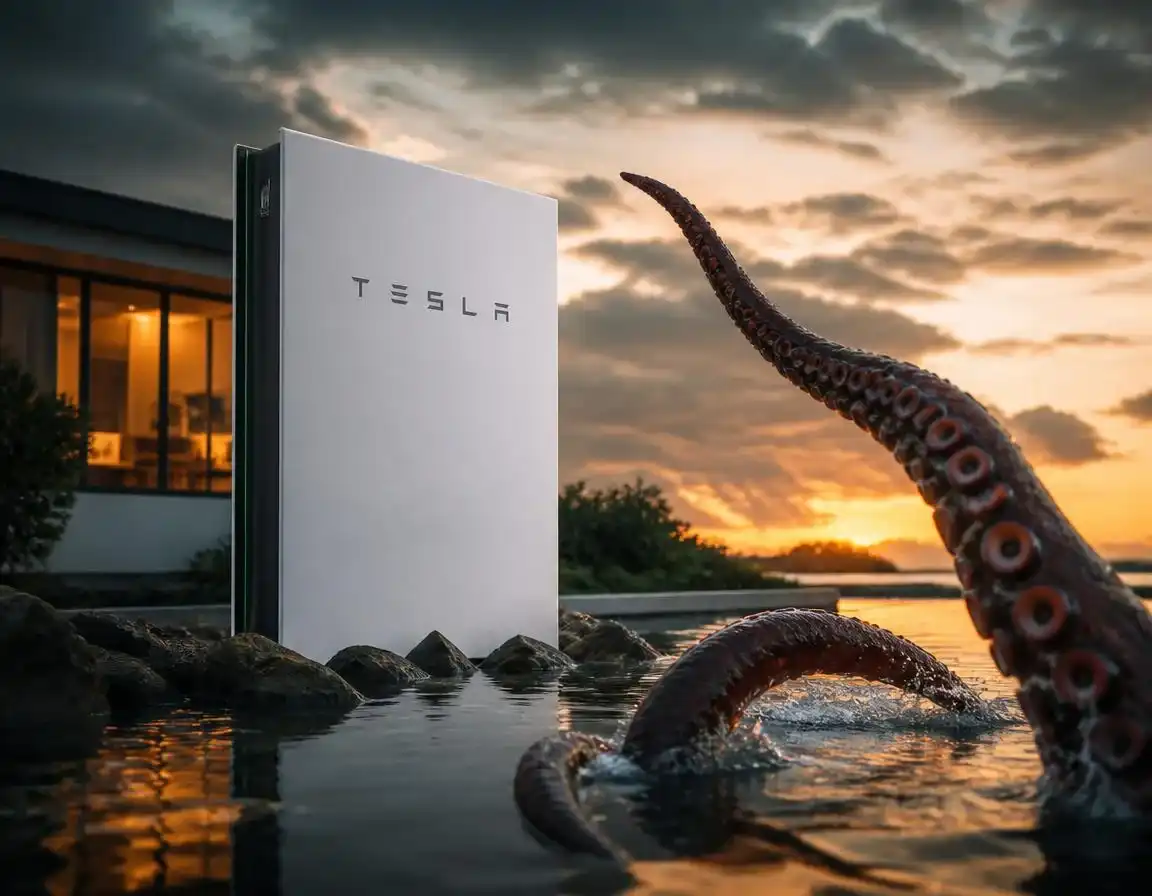
The Tesla Powerwall 2 was a very good home battery. I’ve never had a problem saying that. It gave UK homes a large 13.5 kWh usable battery, a tidy app, outdoor-rated hardware and a proper 10-year warranty at a time when many rival systems felt clunky.
But the market has moved. Tesla launched the Powerwall 3 in the UK in August 2024, with the first installations that September, and phased out new Powerwall 2 sales shortly after. Tesla’s UK Powerwall page now pushes the Powerwall 3 installation route, and its UK quote page lists Powerwall 3 configurations rather than Powerwall 2 options. So if you’re trying to buy Tesla Powerwall 2 new in 2026, you’re not really shopping a mainstream current product. You’re hunting old stock, a removed unit, or a private-sale battery.
If it’s new-old-stock, fully warranted, installed by a Tesla Certified Installer and priced well below a Powerwall 3, it can still be worth a look. If it’s only a few hundred pounds cheaper, I’d usually buy Powerwall 3 instead.
The main reason is power output. Powerwall 2 gives 5 kW continuous on-grid power, while Powerwall 3 is listed by Tesla UK at up to 11.5 kW, depending on local conditions. That difference matters if you want whole-home backup, an induction hob, a heat pump, or just fewer annoying battery limits when the kettle and oven are both on.
What the current UK search results get right — and where they’re thin
I checked the current UK search landscape before writing this, because Powerwall pricing and availability has changed fast. The pages ranking well tend to do three things properly: they explain the Powerwall 3 price, repeat the headline 13.5 kWh capacity, and give a basic Tesla-vs-alternatives comparison.
Where many are thin is the actual buying question. A search for “buy Tesla Powerwall 2” is not the same as “what does Powerwall 3 cost?” The buyer probably wants to know whether Powerwall 2 is still available, whether used units are safe, what a fair discount looks like, and what paperwork can bite them later.
What most pages cover well
- Powerwall 3 installed cost ranges.
- Basic capacity and warranty figures.
- Solar self-consumption benefits.
- Smart export tariff opportunities.
What I’m adding here
- Whether Powerwall 2 is still realistically buyable.
- Used-battery red flags before you pay.
- How much cheaper it must be to make sense.
- VAT, MCS, SEG and commissioning checks in one place.
Can you still buy a Tesla Powerwall 2 in the UK?
Not through the normal Tesla UK route. Tesla stopped selling the Powerwall 2 as new stock in the UK in late 2024, and its UK quote form now asks you to select Powerwall 3 options, including “1 Powerwall 3 Without Gateway” and “1 Powerwall 3 With Gateway”. Tesla’s UK product page still shows Powerwall 2 specs for comparison, but the installation call-to-action is for Powerwall 3.
That leaves three possible Powerwall 2 routes:
| Buying route | How likely? | What I’d check first | My view |
|---|---|---|---|
| New-old-stock from an installer | Possible, but uncommon | Full Tesla warranty, invoice date, serial number, Gateway, MCS handover pack. | Worth considering only with a serious discount. |
| Second-hand private sale | More likely | Age, remaining warranty, removal method, ownership transfer, whether Tesla will recommission it. | Proceed carefully. Cheap can become expensive. |
| Refurbished/reinstalled unit | Rare | Who guarantees the battery, who guarantees the installation, and whether all components are included. | Only if the installer takes written responsibility. |
A battery listing on a marketplace tells you almost nothing about warranty, safe removal, firmware access, Gateway compatibility or whether an installer will put their name on the job.
What is a fair Tesla Powerwall 2 price in the UK in 2026?
This is where I’d be quite firm. A used or leftover Powerwall 2 has to be clearly cheaper than a Powerwall 3, because you’re giving up current-model support advantages, higher output and the cleaner integrated-inverter setup.
Tesla’s current UK quote page lists Powerwall 3 hardware from £5,000 without Gateway and £5,975 with Gateway, excluding VAT, delivery, installation and other costs. Once installation is added, UK installers typically quote Powerwall 3 at £7,499–£10,500 fully installed, with a straightforward standalone battery-only retrofit landing toward the lower end of that range, and jobs bundled with new solar or complex electrical work pushing toward the top.
| Powerwall 2 situation | Price I’d expect before install extras | Installed price ceiling I’d be wary of | Why |
|---|---|---|---|
| Unused old stock, full warranty | Meaningfully below Powerwall 3 hardware | Anything near a Powerwall 3 quote | You’re buying an older model, so the discount should be real. |
| 2–4 year old used unit | Only attractive with a large saving | Over £6,000 fully installed | Remaining warranty and recommissioning risk reduce the value. |
| Older unit with unclear paperwork | Very low, if at all | I’d usually walk away | The admin risk can outweigh the hardware saving. |
For a wider sense of battery pricing, the official MCS consumer page said the average battery storage installation listed on its Data Dashboard for 2025 was “just around £9,000” — right in the middle of that £7,499–£10,500 Powerwall 3 range, which is a useful sanity check on both figures.
If a Powerwall 2 quote lands within about £1,000–£1,500 of a proper Powerwall 3 quote, I’d lean Powerwall 3. The newer model’s output advantage is too big to ignore.
Tesla Powerwall 2 vs Powerwall 3: the numbers that matter
Both batteries share the same headline energy capacity. That’s why some sellers make Powerwall 2 sound like an easy bargain. But capacity is only half the story. How quickly the battery can charge or discharge — and how much of that energy survives the round trip — is just as important in a real UK home.
| Spec | Tesla Powerwall 2 | Tesla Powerwall 3 | Why it matters |
|---|---|---|---|
| Usable energy | 13.5 kWh | 13.5 kWh | Similar overnight storage potential. |
| On-grid power | 5 kW continuous | Up to 11.5 kW | Powerwall 3 handles more big loads at once. |
| Backup power | 7 kW peak | Up to 11.5 kW | Better outage performance on Powerwall 3. |
| Round-trip efficiency | ~90% | 97.5% | Powerwall 3 wastes less energy on every charge/discharge cycle. |
| Solar inverter | Separate solar inverter normally needed | Integrated inverter and system controller | Cleaner for new solar installs. |
| Warranty duration | 10 years | 10 years | Check how much remains on any used Powerwall 2. |
| Scalability | Up to 10 units | Up to 4 units, with expansion available | Both scale, but most homes only need one. |
Tesla UK lists 13.5 kWh capacity for both models, 5 kW continuous on-grid power for Powerwall 2, and up to 11.5 kW on-grid and backup power for Powerwall 3 — the same figures used in our dedicated Powerwall 3 vs Powerwall 2 comparison and our Tesla Powerwall recall tracker.
If you want the detailed model-by-model comparison, I’d point you to our existing guide on Tesla Powerwall 3 vs Powerwall 2 in the UK. This article is more focused on the buying decision.
My second-hand Powerwall 2 checklist
I’m not against used kit. I am against vague used kit. A home battery is not a sofa, and “worked fine when removed” is not enough.
Ask the seller for
- Original invoice and installation date.
- Serial number before viewing.
- Proof the unit was not flood-damaged or dropped.
- Confirmation the Gateway is included, if needed.
- Photos of the current installation and removal process.
Ask the installer for
- Whether they will install a customer-supplied unit.
- Full labour, Gateway, meter and commissioning cost.
- Whether the finished job gets proper handover paperwork.
- Whether your existing solar inverter is compatible.
- What warranty they provide on their workmanship.
Leased, finance-linked or builder-owned solar and battery equipment can create a mess when you sell your home. If the paperwork is unclear, don’t inherit someone else’s problem.
If you already have solar and you’re mainly trying to store surplus generation, read our guide to adding a battery to existing solar panels in the UK before buying anything. The inverter compatibility check can change the whole price.
The recall you should ask about before buying used
This is the one thing most “buy Powerwall 2” pages skip entirely, and it matters for exactly the second-hand shopping this article is about. In September 2025, the Australian Competition and Consumer Commission confirmed a Tesla recall covering Powerwall 2 units built with a batch of lithium-ion cells from a third-party supplier found to overheat, with some units smoking or catching fire. The US Consumer Product Safety Commission followed in November 2025 with its own recall (CPSC 26-092), covering around 10,500 units sold between November 2020 and December 2022 — 22 overheating reports in total, including five fires, all causing only minor property damage, with no injuries reported.
Tesla remotely discharges any affected unit that’s still online and replaces it free of charge — some owners are even receiving a Powerwall 3 as the swap — though owner reports through 2026 describe the physical replacement itself taking two to three months in some cases. Worth knowing too: Australia’s own recall window has since been extended further, to units sold right up to 23 August 2025, so the safe assumption if you’re buying second-hand is that any Powerwall 2 built before that date is worth a two-minute Tesla app check. Powerwall 3 is not affected.
No UK-specific recall has been issued, but the affected cells shipped in a specific production batch regardless of destination market, so a small number of UK installs likely fall inside the window. Our dedicated Tesla Powerwall recall tracker keeps this updated as more information becomes available, including what to do if your unit is affected and how the replacement process has actually gone for owners.
Serial number, warranty, Gateway and ownership paperwork all matter — but for any Powerwall 2 from this era, a two-minute recall check belongs on that list too.
VAT, SEG, MCS and planning: the boring bits that save you money
This is the admin section, but don’t skip it. The wrong installer or missing paperwork can wipe out the value of a bargain Powerwall 2.
0% VAT on battery installs
HMRC says a zero rate applies to installations of certain energy-saving materials from 1 May 2023 to 31 March 2027, and from 1 February 2024 the list includes “batteries for storing energy converted from electricity”. It also says supply-only sales of energy-saving materials are standard-rated, so the detail of who supplies and installs the battery matters. Our UK Solar Grant & VAT Savings Checker tool is a quick way to see what applies to your own situation before you get quotes.
Smart Export Guarantee
Ofgem describes the Smart Export Guarantee as a government-backed scheme requiring participating electricity suppliers to pay eligible small-scale generators for low-carbon electricity exported to the grid. SEG rates are set by suppliers and must be above zero, with payments based on export meter readings.
For real-world context, Octopus’s standard variable SEG rate currently sits at a few pence per kWh, though its fixed export tariffs run considerably higher — and Which? has reported that export payments can vary widely, from roughly 1p to 25p per kWh across the market, so shopping around still matters.
If you’re using a battery to shift export into peak windows, our Best SEG Tariff Rates UK 2026 guide is the next place I’d look, and our piece on making money from home battery storage covers the wider arbitrage and VPP picture.
MCS-certified installation
MCS says battery storage can be installed with new solar, added to an existing solar system, or installed on its own for cheaper off-peak charging. It also says you should check an installer’s certification status through the MCS online search when getting a quote, before signing, and before installation starts.
SolarBriton has a dedicated explainer on what MCS certified solar installers actually mean in 2026. I’d use it as a pre-signing checklist.
Planning permission
The Planning Portal says solar panels and equipment on residential buildings and land may be permitted development, meaning no planning application is needed, provided limits and conditions are met. A Powerwall itself is usually an electrical/storage installation issue rather than a planning fight, but listed buildings, flats, conservation areas and unusual external locations deserve a local check.
For installer checks, use the official MCS battery storage guidance. It explains what a certified battery installation should include and why the certificate matters.
Who should buy a Powerwall 2 — and who should skip it?
Powerwall 2 can make sense if…
- You find unused stock with a full 10-year warranty.
- The installed price is far below Powerwall 3.
- You already have a compatible solar inverter.
- You don’t need high-output whole-home backup.
- The installer is happy to support the exact unit.
I’d skip it if…
- The discount is small.
- The seller can’t prove history or ownership.
- You’re installing solar from scratch.
- You have an EV, heat pump or high peak loads.
- You want the cleanest current Tesla setup.
If you’re buying a fresh solar-plus-battery package in 2026, I’d normally start with the current Powerwall 3 quote and compare that against other batteries. Our Tesla Powerwall UK cost guide covers the current model pricing in more detail, and our solar battery storage UK guide gives the wider market view — including where a second-life EV battery might undercut either Tesla option if raw cost per kWh matters more to you than badge or warranty length.
If grants or VAT relief are part of your decision, check our Solar Panel Grants UK 2026 guide too. Just remember: there isn’t a universal “free Tesla battery” grant for ordinary households.
My final buying advice
I’d treat Powerwall 2 like a good used car. Solid product, proven design, still useful — but no longer the shiny thing in the showroom.
If the paperwork is clean and the price is properly low, it may still be a sensible battery for a UK solar home. But if you’re being asked to pay close to current Powerwall 3 money, I wouldn’t overthink it. Buy the newer model, get the higher output, get the simpler install, and keep your warranty and commissioning route boring.
Is the unit fully warrantied? Who is responsible for commissioning and app transfer? What is the total installed price after VAT treatment, Gateway, meter work and certification?
Frequently asked questions
In practice, no. Tesla’s UK order path now points buyers to Powerwall 3, and the quote page lists Powerwall 3 options rather than Powerwall 2. You may still see leftover stock or second-hand Powerwall 2 units advertised, but I would treat those as exceptions and check the serial number, warranty position and installer responsibility before paying a deposit.
Sometimes, but only if the price is low enough and the paperwork is clean. A used Powerwall 2 still gives you 13.5 kWh of usable storage and 5 kW continuous output, which is perfectly usable for many homes. The problem is risk: remaining warranty, installation history, removal damage, app transfer and commissioning can all turn a bargain into an expensive headache.
The UK zero-rate applies to the installation of qualifying energy-saving materials, including electrical battery storage, in residential accommodation until 31 March 2027. It does not simply make every supply-only battery purchase VAT-free. If you are buying second-hand, ask your installer how the invoice will be treated before you agree the deal.
Keep reading on SolarBriton
Sources checked
Main independent checks: Tesla UK Powerwall product and quote pages, HMRC VAT Notice 708/6, Ofgem Smart Export Guarantee guidance, Planning Portal solar planning guidance, MCS battery storage consumer guidance, the Australian Competition and Consumer Commission’s Powerwall 2 recall notice (September 2025, later extended), and the US Consumer Product Safety Commission’s recall 26-092 (November 2025). Figures cross-checked against SolarBriton’s own Tesla Powerwall 3 vs Powerwall 2 comparison and Tesla Powerwall recall tracker for consistency, September 2026.