Should You Replace a 2010s Solar System?

Should You Replace a 2010s Solar System? The Honest Maths
The short version
Most 2010s systems don’t need replacing — they need repairing. If your Feed-in Tariff is still running, ripping out working panels destroys an index-linked income stream worth far more than the extra generation new panels would bring. Replace the inverter when it dies, add a diverter or battery if the maths works, and only consider a full rip-out once FIT has ended, the system is dead, or the roof is coming off anyway.
I get some version of this email every week. “Panels went on in 2011. Inverter’s playing up. Output’s down a bit. Should we replace the lot?”
Most weeks my answer is no, and it’s not because I’m sentimental about old kit. It’s because a 2010s system usually sits on top of a contract that pays you for every unit it generates, index-linked, for twenty to twenty-five years. Ripping out working panels to gain a few hundred watts per square metre is like selling a bond to buy a raffle ticket.
But “most weeks” isn’t always. There are genuine replacement cases, and I’ve met them. Here’s the honest maths, both directions.
What a 2010s system actually looks like
Picture the typical FIT-era install: ten to sixteen polycrystalline or early monocrystalline panels, rated somewhere between 180 and 250 watts each, giving a system of 2 to 4kWp. One string inverter in the loft or on a garage wall. No battery, no diverter, no smart anything. And a folder of Feed-in Tariff paperwork in a kitchen drawer, possibly never opened since 2013.
Households paid handsomely for these. Installed prices in the early 2010s were several times what they are now — five figures for a 4kWp system was unremarkable — because the tariff was designed to make the payback work anyway. At the very earliest rates, it did, spectacularly.
That context matters, because it means the question “should I replace it?” is never just a hardware question. It’s a contract question first.
What’s worn out by now (and what isn’t)
Start with the panels themselves, because they’re the part people worry about and the part that least deserves it. Crystalline silicon degrades slowly and predictably — roughly half a percent of output a year for decent modules. A 2012 array should still be nudging nine-tenths of its nameplate rating today. Cosmetic ageing like panel yellowing and backsheet weathering looks worse than it performs.
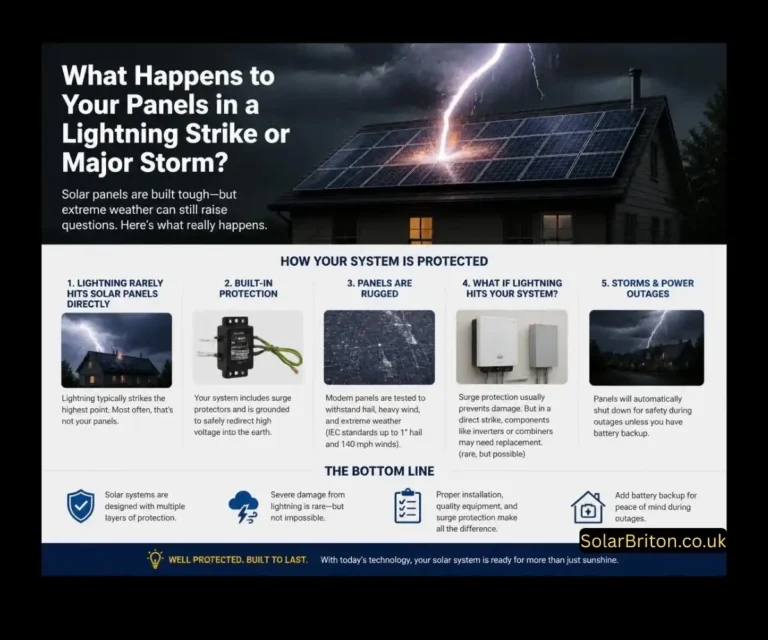
The inverter is the wear item. String inverters are full of capacitors, fans and electronics doing a hard job in a hot loft, and 10 to 15 years is a normal lifespan. If your system is from the early 2010s and the inverter has never been replaced, you’re on borrowed time — and that’s a repair bill, not a replacement decision.
Then the small stuff that causes most “my solar’s broken” calls: degraded DC connectors, tired isolators, a corroded joint, a cracked panel after a storm, rodent damage to cabling. Mounting rails and roof fixings, meanwhile, usually outlive everything else on the roof if they were fitted properly in the first place.
Gradual fade vs sudden drop: read your own data
Before anyone quotes you for anything, work out which of two stories your output is telling you. They look similar on a annual total and mean completely different things.
If you’ve got monitoring — even just an inverter display and a yearly note — compare this summer against last summer, not against the brochure. If you haven’t got monitoring, fitting some is cheaper than any other decision on this page and it turns guesswork into evidence. Our guide to solar panels underperforming walks through the checks I’d run before spending a penny.
The FIT trap nobody mentions
Here’s the part installer sales pages skip, because it kills the sale. A Feed-in Tariff system earns a generation tariff on every kilowatt-hour it produces, whether you use it, export it or let it warm the loft. That tariff was fixed at installation and rises with inflation each year — RPI-linked every April up to and including FIT Year 16 (2025/26), CPI-linked from FIT Year 17 (April 2026) onward. And it runs for 25 years from your eligibility date if that date falls before 1 August 2012, or 20 years if it falls after — a split most “2010s solar” articles miss entirely, and worth checking your own paperwork for before you assume anything.
The earliest cohort locked in 41.3p per kWh at the scheme’s April 2010 launch — after fifteen-plus years of index-linking, comfortably north of seventy pence today — against a scheme that closed to new applicants on 1 April 2019 and can never be joined again.
Now do the arithmetic on a rip-out. A 4kWp system generating 3,400 kWh a year on an index-linked early tariff is pulling in close to £2,500 annually in FIT alone, before a single unit of self-consumption. Replace it with a brand-new 7kWp array on the same roof and you’d add maybe a few hundred pounds a year in bill savings and export income — while surrendering the tariff for good. Surrender is irreversible. You cannot reapply, and you cannot hold FIT and the Smart Export Guarantee at the same time. The full policy background sits on gov.uk’s Feed-in Tariff pages, and we’ve covered how tariff values have shifted over the years in our piece on your Feed-in Tariff getting smaller.
One quirk that works in your favourSub-30kW FIT systems are paid export on a deemed 50% of generation, regardless of what actually left the property — Ofgem confirms this in its FIT year determinations. That means adding a battery or diverter doesn’t reduce your FIT export income — you keep the deemed payment while shaving your import bill. It’s one of the few free lunches left in UK solar, and it only exists for FIT households.
The trap weakens for later cohorts, to be fair. If your tariff is the single-digit rate of 2016–2019, the lock-in income is modest and the replacement maths gets properly interesting. Know which cohort you’re in before you believe anyone’s quote, mine included.
Three scenarios, honestly costed
My working assumptions — read these firstA 4kWp system commissioned in 2010 on the earliest FIT cohort (41.3p/kWh at launch, index-linked to around 75p today, RPI-linked then CPI-linked from April 2026), on a 25-year term expiring in 2035, generating 3,400 kWh/yr and fading 0.5% a year. Imported electricity priced in the high twenties per kWh. Deemed export at 50%. A 5kWh battery at around £4,500 installed, shifting roughly 1,200 kWh a year. A replacement 7kWp array at current installed prices (see our 2026 solar cost guide for live figures), exporting on a mid-table SEG rate. These are my numbers for teaching the method, not a quote — your system, roof and tariff will move every line.
| Scenario | Upfront cost | Effect on annual income | Rough 10-year net vs doing nothing | Verdict |
|---|---|---|---|---|
| A. Keep & repair | ~£1,200 inverter swap when it dies | Preserves ~£2,700/yr (FIT + self-use) | ~£26,000 retained | The default answer while FIT runs |
| B. Keep & augment | ~£450 diverter; ~£4,500 battery if you go that far | +~£120/yr hot water; +~£320/yr shifted import, export income untouched | ~£26,700, with the battery roughly breaking even on cash | Diverter: easy yes. Battery: buy for resilience or the post-FIT era, not payback |
| C. Replace now | ~£11,000+ for a new 7kWp array | +~£1,080/yr new income, minus ~£2,500/yr FIT destroyed | Negative — the FIT you give up outweighs the new income | Only with FIT gone, system dead, or roof coming off |
When scenario C stops being madness
Four situations flip the answer, and I’ve stood on roofs for all of them:
- Your FIT term has ended or is nearly over. A 2010 system’s 25-year tariff expires around 2035; a 2016 system’s 20-year tariff expires around 2036 — check your eligibility date against the 1 August 2012 cutoff before assuming which bracket applies. Once the generation payments stop, the array competes on self-consumption and export like any modern system — and a 250W panel giving up roof space to a 440W one starts looking like wasted rent.
- The system is genuinely beyond economic repair. Failed inverter on an obsolete platform, degraded cabling throughout, panels delaminated past usefulness. Add up the repair list; sometimes it approaches a new install.
- The roof is being stripped anyway. Scaffolding and re-railing are real costs. If tiles are coming off, re-powering during the works is the cheapest it will ever be.
- Your demand has outgrown the system. A 2kWp array meant nothing when the house ran on gas and a kettle. Add a heat pump and an EV and it’s a rounding error. Sometimes extension or replacement beats living with a system sized for a life you no longer have.
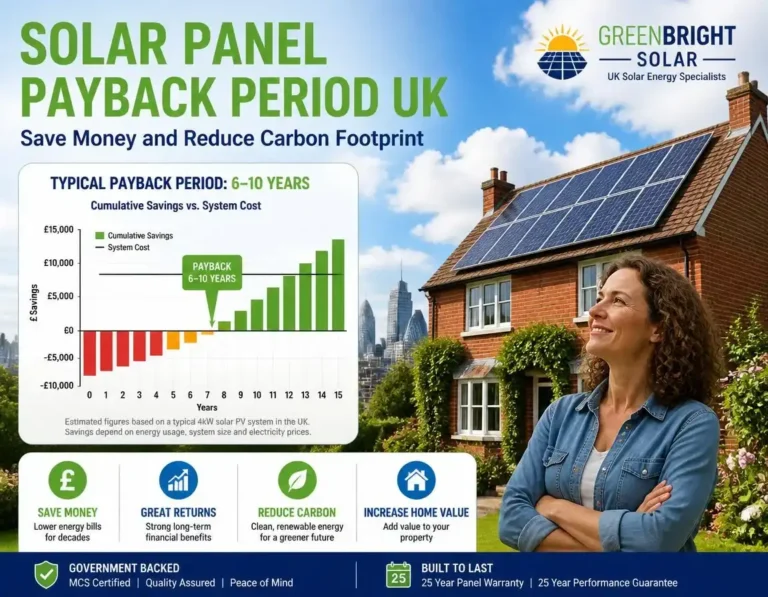
In those cases, judge the new system on its own merits — modern payback periods, SEG rates and smart tariffs — which we keep updated in our solar payback guide and our SEG rate comparison.
Upgrades short of replacement
Between “do nothing” and “rip it all out” sits the territory where most 2010s households should actually spend money:
- Swap the inverter when it fails. A modern string inverter costs a fraction of a new system, restores full output, and usually brings proper monitoring with it. Our inverter replacement guide covers prices and the choices involved.
- Fix shading and mismatch instead of blaming the panels. If a new chimney, a grown tree or a dodgy cell is dragging a whole string down, optimisers or microinverters can isolate the problem. We’ve compared microinverters against string inverters for exactly this situation.
- Divert surplus into hot water. A few hundred pounds, no tariff implications, and free showers all summer. The classic first upgrade.
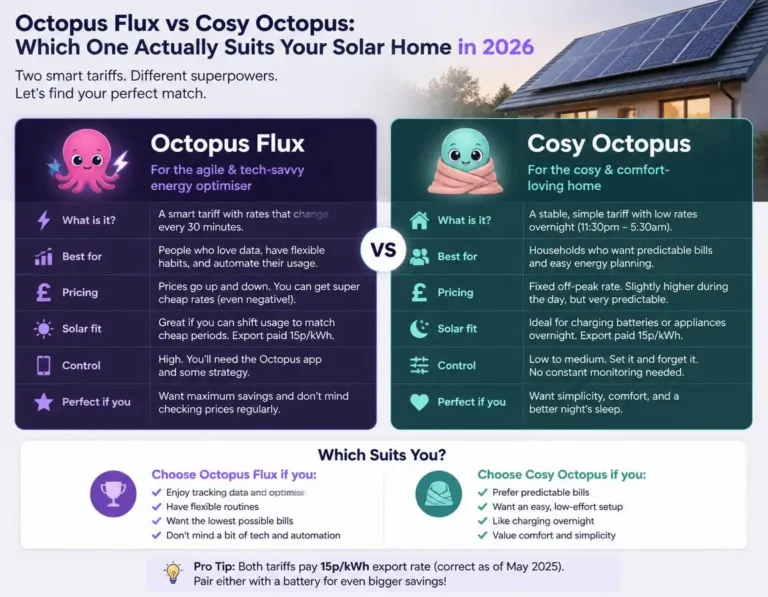
- Add storage once you’ve done the cheap stuff. With deemed export protecting your FIT income, a battery’s case rests on import savings and backup — honest numbers in our guides to diverter versus battery and adding a battery to existing panels.
Rules, paperwork and gotchas
- Talk to your FIT administrator before major works. Repairs are repairs, but capacity changes and reconfigurations need confirming in writing. Surrendering the tariff cannot be undone.
- Use MCS-certified installers for anything new. Future SEG eligibility and any grant support hinge on certified installation — and it’s your quality backstop. Here’s what the MCS badge actually means in practice.
- Check the DNO position before upsizing. Pushing capacity beyond your original registration — particularly past 3.68kW per phase — can mean notification or approval paperwork. Boring, cheap to sort early, expensive to sort late.
- Planning is usually fine, sometimes isn’t. Like-for-like and modest upgrades generally fall under permitted development, but conservation areas, listed buildings and big array changes need checking. Our planning permission guide has the boundaries.
- VAT helps, but the clock is running. The 0% rate on domestic solar and battery installation runs to 31 March 2027, after which it reverts to the standard reduced rate of 5% — it applies to replacement kit as well as brand-new systems in most cases, so confirm the specifics with your installer, and don’t plan a “someday” replacement on the assumption the 0% window stays open past 2027.
- Dispose of the old kit properly. Panels are electronic waste with recoverable value in them; they don’t belong in a skip. Here’s what actually happens to old solar panels in the UK.
My bottom lineA 2010s solar system isn’t waste yet. It’s an index-linked bond that happens to catch sunlight. Treat replacement as a financial decision with a contract attached, not a spring-clean — and nine times out of ten the maths will tell you to fix the inverter, divert the surplus, and let the old girls keep earning a while longer.
FAQs
Will I lose my Feed-in Tariff if I replace my solar panels?
Decommissioning a FIT-accredited system ends the tariff, and surrendering it is irreversible — you can’t reapply later or double-dip with SEG. Like-for-like repairs, such as swapping a failed inverter or replacing a cracked panel with an equivalent one, are generally treated as repairs rather than a new installation, but anything that changes the capacity or configuration needs a written conversation with your FIT administrator first. Get that confirmation before anyone touches the roof.
Is it worth replacing old solar panels with new, more powerful ones?
Only in specific situations: once your FIT term has ended, if the system is beyond economic repair, if the roof is being stripped anyway, or if you never had FIT at all. Modern panels roughly double the output from the same roof area, and installed prices have fallen dramatically since 2012. But while a FIT generation tariff is still running, the income you’d destroy almost always outweighs the extra generation you’d gain — run the scenarios above before quoting a rip-out.
How long should a 2010s solar system last?
Longer than most people assume. Crystalline panels typically lose around half a percent of output a year, so a 2012 array should still be producing close to nine-tenths of its nameplate rating today. String inverters are the wear item: expect 10 to 15 years, meaning one or possibly two swaps across the system’s life. Mounting frames and cabling usually outlive both if they were installed properly.