
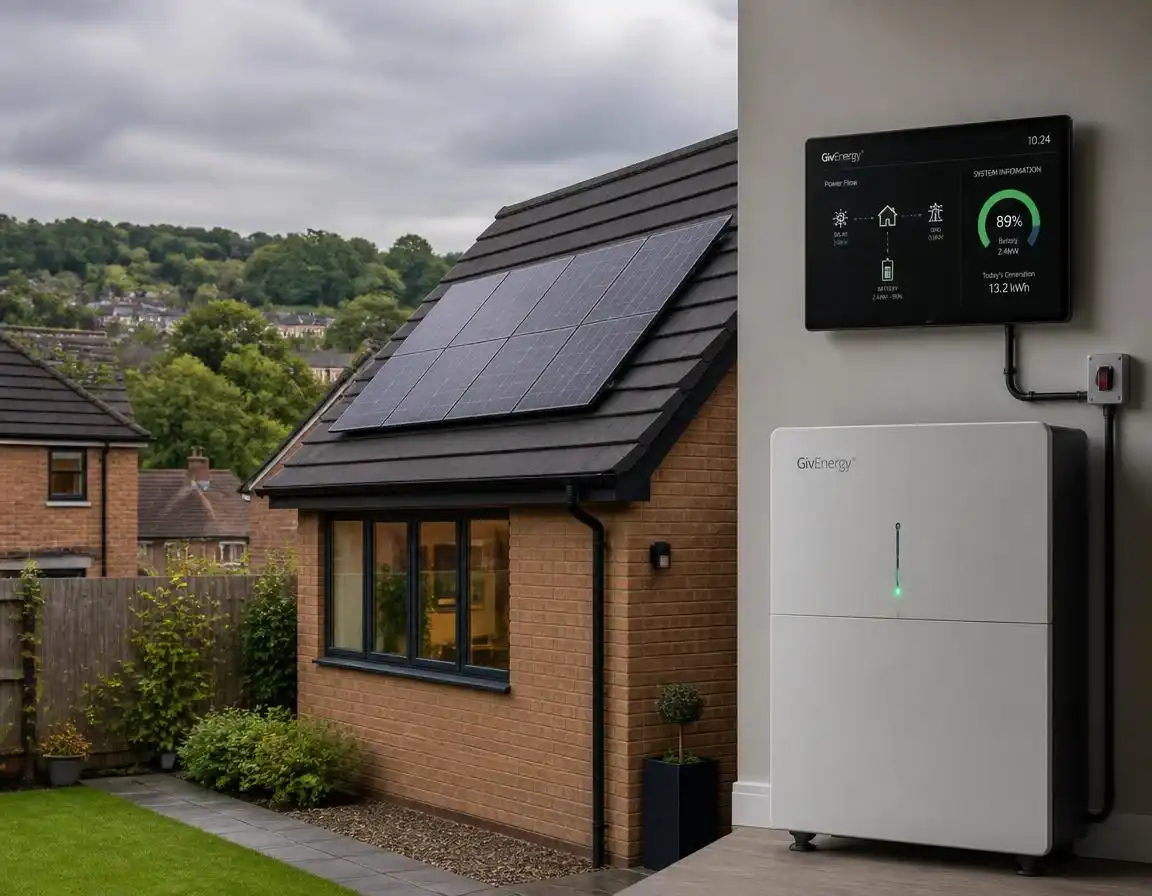
Solar Battery Storage UK

Battery storage is the question every solar homeowner — or soon-to-be solar homeowner — is asking right now. The honest answer: for most UK households with solar panels, yes, it genuinely is. Here’s the full picture, without the sales pitch.
If you’re looking at solar panels and wondering whether to add a battery — or you’ve already got panels and you’re thinking about retrofitting storage — this is probably the most important question you’ll ask before spending several thousand pounds. So let’s be direct about it.
The short version: for most UK homes with solar panels, battery storage is worth it in 2026. Not in a vague “well, everyone’s situation is different” kind of way — in a concrete, financial sense that you can model and verify. That said, there are real exceptions, and we’ll cover those too.
This guide uses actual 2026 costs, Ofgem price cap figures, and verified smart tariff rates to give you numbers you can trust. No inflated savings claims, no best-case scenarios presented as averages. For the full picture of what a battery actually looks like — sizes, chemistry, lifespan — our solar battery hub is a good place to start browsing too.
How Solar Battery Storage Actually Works
Solar panels generate electricity during daylight hours, peaking around midday. The trouble is, most UK households use the bulk of their electricity in the mornings and evenings — exactly when panels aren’t at their most productive. Without a battery, that midday surplus flows back to the grid through the Smart Export Guarantee (SEG), earning you somewhere between 4p and 25p per unit.
A battery stores that surplus and releases it when you need it later. Instead of selling a unit at 10p and then buying one back at 24.5p, you’re using the same unit for free. That’s the first saving mechanism.
The second is tariff arbitrage. On a smart tariff like Octopus Intelligent Go, grid electricity drops to around 7–9p per kWh overnight (typically midnight to 4:30am). Your battery can charge automatically during those hours and power your home through the day at full-rate prices of 24.5p+. That 17p spread per unit adds up to £200–350 per year before you even count the solar side of things.
The result of all this is that you use far less electricity from the grid at peak prices. A typical UK solar household without a battery self-consumes around 30–35% of what their panels generate. With a 5kWh battery, that jumps to roughly 70%. Add a smart tariff and a 10kWh battery and you’re looking at 80–85% self-sufficiency in summer, and meaningfully lower bills year-round.
What Does Battery Storage Cost in 2026?
Battery prices have fallen by around 90% since 2010 and are still edging downward. Here’s what you’re looking at for installed costs right now, including the hybrid inverter, installation, and commissioning:
| System Size | Typical Installed Cost | Best For | VAT |
|---|---|---|---|
| 5kWh battery | £3,000 – £4,500 | 1–2 bed homes, smaller solar systems (under 3kW) | 0% |
| 10kWh battery | £5,500 – £7,500 | 3–4 bed homes, 4kW+ solar systems — the sweet spot for most | 0% |
| 13.5kWh (e.g. Tesla Powerwall) | £8,000 – £12,000 | Larger homes, high energy users, EV owners | 0% |
| Retrofit (adding to existing solar) | +£500–1,500 on above | When you already have solar but didn’t install a battery initially | 0% |
One thing worth knowing: installing a battery at the same time as your solar panels is always cheaper than retrofitting later, typically by £500–1,500, because the installer only mobilises to your property once. If you’re getting solar quotes right now, spec the battery in from day one — even if you start with a smaller 5kWh unit and upgrade capacity later. If you’ve already got panels and you’re weighing this up, our dedicated guide to adding a battery to existing solar panels walks through the inverter checks and costs involved.
The cost per kWh of storage has fallen from around £800/kWh in 2020 to approximately £450–550/kWh in 2026. Industry analysts expect this to continue falling.
What Can You Realistically Save?
This is where a lot of articles get vague, and where it really matters to be specific. Savings depend on three things: your solar system size, your battery capacity, and whether you’re on a smart tariff. Here’s a realistic breakdown for a typical three-bed UK home with a 4kW solar system:
Every kWh you self-consume is worth roughly twice as much as a kWh you export, because you’re avoiding the 24.5p import rate rather than earning a SEG rate of around 6–15p. That asymmetry is exactly why battery storage has become standard equipment on new solar installations in the UK.
Smart Tariffs — The Bit That Changes Everything
Before smart tariffs existed, batteries were purely about solar self-consumption. Today, tariff arbitrage is often the bigger opportunity. If you’re on a flat-rate electricity tariff and you add a battery, you get good savings. If you switch to a smart time-of-use tariff at the same time, you get significantly better savings — and a meaningfully shorter payback period.
Here’s a quick comparison of the main smart tariff options for battery owners in 2026 — see our full Octopus Energy solar export tariff breakdown for how each one pays on the export side too:
| Tariff | Cheap Rate | Window | Best Export Rate | Verdict |
|---|---|---|---|---|
| Octopus Intelligent Go | 7.5p/kWh | 00:30–04:30 | ~5p (standard SEG) | Best all-rounder |
| Octopus Intelligent Flux | 7–9p/kWh | Off-peak windows | Up to 32p/kWh (peak export) | Best with solar |
| Octopus Go | 7.5p/kWh | 00:30–04:30 | — | Solid entry option |
| Octopus Agile | Varies (often negative) | Half-hourly | — | For confident optimisers |
| Flat-rate (standard) | 24.5p/kWh flat | Always | 6–25p SEG (separate) | Battery underperforms |
For export (selling surplus solar back to the grid), Good Energy’s Solar Savings Exclusive tariff currently pays 25p/kWh — the best flat-rate deal right now — and you don’t need to use Good Energy for your import electricity. It’s worth checking the full SEG rate comparison before you commit, since rates move quarterly and the best payer can change. The Smart Export Guarantee (SEG) is a government-backed scheme administered by Ofgem, which requires all major licensed energy suppliers to offer export tariffs to solar households. SEG and your import tariff are completely independent contracts — you can mix and match.
Payback Periods — Being Honest About the Numbers
Payback figures vary a lot depending on your setup, tariff, roof orientation, and usage patterns. Here’s an honest range based on real 2026 scenarios:
| Scenario | Battery Cost | Annual Saving | Payback Period | Within Warranty? |
|---|---|---|---|---|
| Solar + 5kWh battery (flat tariff) | ~£3,750 | ~£400–500/yr | 7–9 years | Yes |
| Solar + 10kWh battery (flat tariff) | ~£6,500 | ~£550–650/yr | 10–12 years | Marginal |
| Solar + 10kWh battery (smart tariff) | ~£6,500 | ~£700–800/yr | 8–9 years | Yes |
| Battery only (no solar), smart tariff | ~£6,500 | ~£200–350/yr | 18–25 years | No |
| Retrofit battery to existing solar | ~£4,500–7,000 | ~£400–750/yr | 7–12 years | Yes (typically) |
Most quality battery warranties run for 10–12 years (some to 15 years, GivEnergy offers particularly strong coverage). For the majority of solar + battery setups on a smart tariff, you’ll recoup the cost before the warranty expires — and then enjoy several more years of benefit on top. That’s where the real lifetime value lies. Want the numbers for your own roof rather than a national average? Run them through the free solar panel calculator for a personalised payback estimate.
If the upfront cost is the real barrier rather than the payback maths, it’s worth knowing you don’t have to pay for a battery outright — our guide to solar panels with no upfront cost runs through the finance options available in 2026.
Is It Worth It? The Verdict by Scenario
Rather than one blanket answer, here’s a direct verdict for the main situations people find themselves in:
- You have solar panels and are adding a battery at installation time
- You have solar and are willing to switch to a smart tariff
- You have a hybrid inverter already and significant solar surplus
- You want backup power during grid outages
- You’re buying an EV and want overnight charging integration
- You work from home and self-consume most solar during the day
- Battery only, no solar, and you’re on a flat-rate tariff
- Your solar system is under 3kW with limited surplus
- You need to replace your inverter too — wait and do both together
- You’d be better off clearing high-interest debt first
- You’re in a listed building or can’t install solar anyway
- You’re home all day and already self-consume most solar live
Best Solar Battery Brands in the UK, 2026
In 2026, the UK residential battery market is dominated by a handful of well-supported brands. The brand name matters less than you’d think — what really counts is whether the battery integrates cleanly with your solar inverter. A mismatch can cost you 10–15% efficiency year after year. Always spec panels, inverter, and battery together. For a deeper dive into pricing, warranty terms and payback for each of these models, see our full Best Solar Battery UK 2026 comparison guide.
| Brand / Model | Capacity | Installed Cost (approx.) | Warranty | Notes |
|---|---|---|---|---|
| Fox ESS H3 | 10kWh | £4,800 – £6,200 | 10 years | Top installer choice 2026; best Octopus integration; excellent value |
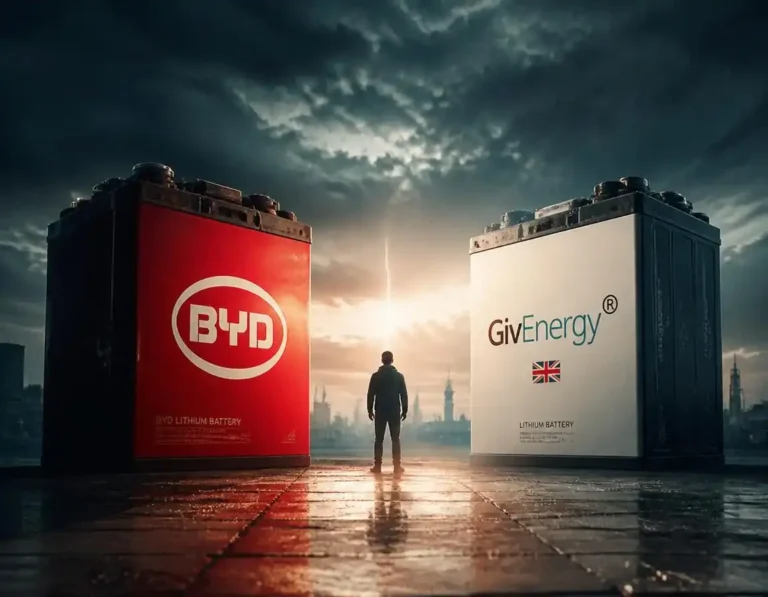
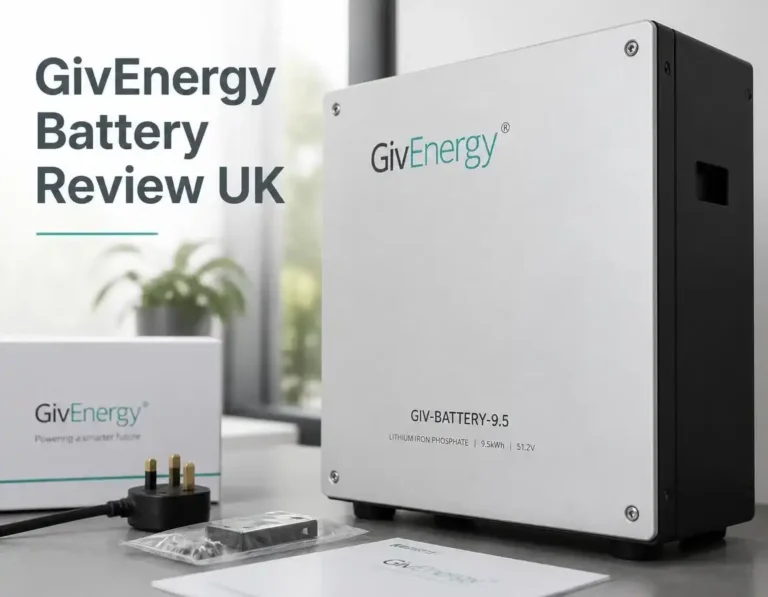
| GivEnergy All-In-One | 9.5kWh | £5,200 – £5,800 | 12 years | UK-based company, modular to 40+ kWh, strong installer support network |
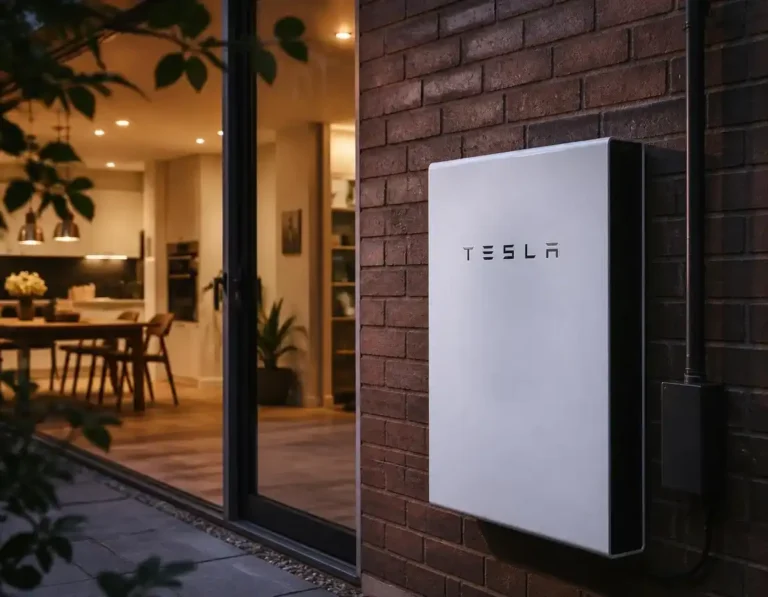
| Tesla Powerwall 3 | 13.5kWh | £8,000 – £12,000 | 10 years | Premium build, excellent app, best backup power capability |
| BYD HVS / HVM | 5–10kWh (modular) | £4,500 – £7,000 | 10 years | 10,000+ cycle life rating; arguably better engineering per £ than Tesla |
| Huawei LUNA | 10kWh | £5,000 – £5,600 | 10 years | Compact, well-built; pairs best with Huawei inverters |
| Powervault P4 | 10.5kWh | £5,500 – £6,200 | 10 years | British-made, quiet operation; good for noise-sensitive locations |
All 2026 prices include installation, hybrid inverter (where required), and commissioning by an MCS-certified installer. LFP (Lithium Iron Phosphate) chemistry is now standard across all major brands — safer, longer-cycle, and more temperature stable than older lithium-ion chemistries.
Government Help & Grants in 2026
You won’t find a universal direct grant for battery storage if you’re a typical homeowner — but there are meaningful financial incentives that reduce the cost significantly. Our dedicated Solar Panel Grants UK 2026 guide covers every scheme in far more depth than we have room for here, but the headlines are:
The UK government published its full Warm Homes Plan on GOV.UK in January 2026, describing it as the biggest public investment in home upgrades in British history. With £15 billion earmarked and 5 million homes targeted by 2030, solar panels and battery storage sit at the centre of the programme. The loan scheme in particular — expected later in 2026 — will open up government-backed financing to homeowners who don’t qualify for grant support, which covers the majority of people. If you want to check whether your property’s EPC rating puts you in range of the means-tested schemes, you can look it up on GOV.UK’s energy certificate register.
Frequently Asked Questions
- Is solar battery storage actually worth it in the UK in 2026?For most UK homeowners with solar panels — yes, genuinely. A 10kWh battery costs £5,500–7,500 installed and can save £450–800 per year when combined with solar and a smart tariff. Payback typically lands in 7–10 years, well within the 10–15 year battery warranty period. Where it’s less clear-cut: battery-only setups without solar are only really worth it if you’re on a smart tariff for arbitrage, or if backup power is a priority — the payback is 18+ years otherwise.
- How much does solar battery storage cost in the UK?In 2026, a 5kWh system costs £3,000–4,500 installed (alongside solar), a 10kWh system costs £5,500–7,500, and a 13.5kWh Tesla Powerwall 3 sits at £8,000–12,000. All home battery installations currently attract 0% VAT — a saving of around 20% on the installed cost — confirmed until 31 March 2027. Retrofitting onto existing solar adds roughly £500–1,500 in additional installation cost versus fitting at the same time as your panels.
- What government grants are available for solar battery storage?The main support in 2026: 0% VAT until 31 March 2027 (automatic, no application needed); the Warm Homes Local Grant (up to £15,000 for eligible low-income households with EPC D–G); ECO4 for those on qualifying benefits (until December 2026); and the Warm Homes Fund — a government-backed low or zero-interest loan scheme for all UK homeowners, with details expected later in 2026. Scotland has the Home Energy Scotland Loan (up to £5,000) and Wales has the NEST scheme.
All figures in this article are based on Ofgem Q2 2026 price cap data (unit rate 24.5p/kWh), MCS installer pricing data, and smart tariff rates verified June 2026. Individual savings will vary depending on roof orientation, household consumption patterns, local irradiance, and energy tariff. Always get at least three quotes from MCS-certified installers before proceeding.

9 Comments