
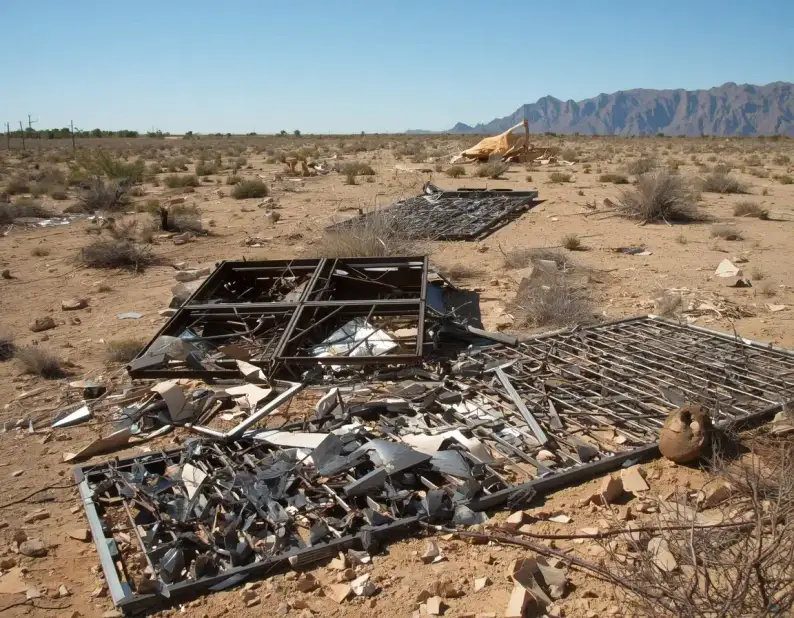
Solar Panel Theft and Vandalism

Solar Panel Theft and Vandalism: How Exposed Is Your Investment?
Solar crime is genuinely rising in the UK. But before you worry about your own roof, it’s worth knowing exactly who this crime wave is actually targeting — because it very probably isn’t you.

I see the headlines too — organised gangs stripping copper from solar farms, tens of thousands of panels vanishing overnight, six-figure losses. It’s genuinely alarming stuff, and it’s all real. But if you’ve got panels on your house roof, I want to give you the actual picture rather than let a scary headline about a Northumberland solar farm make you think your own investment is sitting there unprotected.
Short version: where your system sits changes everything. Rooftop domestic solar and ground-mounted commercial arrays are, from a crime perspective, almost two different products. Let’s go through both properly.
The crime wave is real — but look at where it’s happening

The numbers are dramatic. UK police recorded a 93% rise in solar-related crime reports between 2021 and 2022. In 2023, an estimated 75,000-100,000 panels were stolen from a single Northumberland solar farm in one organised operation, and West Mercia Police separately recovered 550 stolen panels worth over £100,000. Between January and August 2024 alone, more than 750km of copper cable was stolen from UK solar sites. Security analysts at DeterTech describe the UK as now in a “peak period” of increasingly industrialised solar crime.
Every one of those figures is about solar farms and large ground-mounted commercial sites: unmanned, remote, holding kilometres of exposed copper cable, and built faster than security has kept pace. Domestic rooftop theft, by contrast, remains genuinely rare — panels need scaffolding or a ladder plus specialist tools to remove safely, and most homeowners simply live where the crime would need to happen. If you’re weighing up a ground-mounted system for your own garden or land, it’s worth reading SolarBriton’s Ground-Mounted Solar Panels UK Cost guide with this risk profile in mind, and if you’re on a farm specifically, the Solar Panels for Agricultural Buildings guide covers the added considerations.
What actually gets stolen — and it’s rarely the panels
This surprises people: the panels themselves are usually the least attractive target. They’re bulky, hard to move quickly, and increasingly hard to resell without raising questions. The real targets are smaller, faster to remove, and easier to sell on:
Copper cabling & inverters
- Copper strips fast and sells easily on the scrap market
- A single row of ground-mounted panels can hold over a kilometre of cable
- Industrial inverters cost £3,000-£10,000+ to replace
- Inverters are often mounted somewhere accessible — a garage wall or an external enclosure
The panels themselves
- Bulky, heavy, and slow to remove without the right kit
- Roof-mounted panels need scaffolding or a ladder to reach at all
- Increasingly traceable through forensic marking schemes
- Harder to resell quietly than a length of copper cable
For a domestic system, this points to a clear practical priority: securing your inverter matters more than anything you could do to the panels on your roof. A String vs micro-inverter setup makes a difference here too — see SolarBriton’s Micro Inverter vs String Inverter guide for how the two compare on exposure as well as performance.
Does your home insurance actually cover this?
Mostly, yes — for roof-mounted panels. UK insurers generally treat solar panels fixed to your roof as part of the building’s structure, which means they’re usually covered under standard buildings insurance once you’ve told your insurer they’re there. That notification step matters more than people realise: installing solar panels is a material change to your property, and not declaring it can be grounds for an insurer to reject a claim entirely, theft or otherwise.

| Scenario | Usually covered? | Notes |
|---|---|---|
| Roof-mounted panels, theft or storm damage | Yes, if declared | Treated as part of the building under standard buildings insurance |
| Ground-mounted arrays | Often not, as standard | Usually needs separate, specialist renewable energy cover |
| Inverter, theft or failure | Sometimes excluded | Always confirm — some policies apply a lower sub-limit |
| Accidental damage | Rarely, as standard | Typically an optional add-on, not automatic |
| Copper cable theft | Varies by policy | A known claim category — worth asking specifically |
Warranty and insurance are also commonly confused, and it’s worth being clear on the difference: your manufacturer’s warranty covers faulty equipment, not theft or vandalism. SolarBriton’s Solar Panel Warranty guide and dedicated Solar Panel Insurance UK 2026 guide both go into this properly — worth ten minutes with your policy documents alongside them.
Schools, farms and commercial sites need to take this more seriously
If you’re responsible for a larger installation, the calculation genuinely changes. Schools, farms, and commercial premises are exactly the “soft target” profile criminals look for: valuable equipment, often unoccupied outside working hours, and sometimes lighter security than a residential property. SolarBriton’s guides for Solar Panels for Schools and Solar Panels for Commercial Property both cover site-specific considerations worth factoring in alongside the security measures below. A properly MCS-certified installer will also be able to advise on anti-theft fixings and enclosure options appropriate to your specific site.
Practical steps that actually reduce your risk
- Anti-tamper fixings. Roof bolts that need a specialist tool to remove are a genuine deterrent against the opportunistic end of the problem.
- Secure your inverter. Indoors, in a garage, or in a locked enclosure — anywhere other than an easily accessible exterior wall.
- Forensic marking. Schemes like SmartWater let police trace recovered equipment back to you, and act as a visible deterrent in their own right.
- Monitor your generation. A sudden, unexplained drop in output is often the first sign something’s wrong — SolarBriton’s Solar Panel Monitoring System guide and Best Solar Monitoring Apps 2026 cover the right setup for catching this quickly.
- CCTV and fencing for ground-mount. Non-negotiable for any array that isn’t on an occupied roof.
- Regular visual checks. Folded into a normal maintenance routine — see SolarBriton’s Solar Panel Maintenance UK 2026 guide.
If you’ve got a standard rooftop array on an occupied home, don’t lose sleep over the solar farm headlines — your actual risk is low, and a bit of common-sense security (secure inverter, declared insurance, anti-tamper fittings) covers you well. If you’re going ground-mounted, or you’re responsible for a farm, school or commercial site, treat security as a real line item in your budget, not an afterthought — the crime data backs that up clearly.
If it does happen to you
Report theft to the police via police.uk as soon as you notice it, and get an incident number for your insurer. Then contact your insurer to start a claim, and your installer if you need a replacement fitted — an MCS-certified installer is also who you’ll need for any replacement work to keep your Smart Export Guarantee eligibility intact.
Frequently asked questions
How common is solar panel theft in the UK?
It depends entirely on the type of installation. Theft from domestic rooftop solar remains genuinely rare, since panels need scaffolding or a ladder plus specialist tools to remove, and most homeowners live on site. Ground-mounted arrays and commercial solar farms are a completely different picture: UK police recorded a 93% rise in solar-related crime between 2021 and 2022, and over 750km of copper cable was stolen from UK solar sites between January and August 2024 alone. If your system is roof-mounted on an occupied home, your actual risk is low. If it’s ground-mounted, remote, or on unoccupied land, the risk is real and rising.
Does home insurance cover solar panel theft?
Usually, yes, for roof-mounted panels, since insurers typically treat them as part of the building structure once you’ve told them the panels are installed. This notification is essential: failing to declare a material change like solar panels can void a claim entirely. Ground-mounted panels are treated differently and often fall outside a standard buildings policy, meaning you may need separate, specialist cover. It’s also worth checking specifically whether your inverter is included, since some standard policies exclude it or apply a lower sub-limit.
What’s the most commonly stolen part of a solar system?
Copper cabling and inverters, not the panels themselves. Copper is easy to strip, hard to trace, and sells well on the scrap market, while industrial inverters cost £3,000-£10,000 to replace and are often mounted somewhere accessible, such as a garage wall or an external enclosure at ground level. For a domestic system, keeping the inverter secured indoors or in a locked enclosure does more to reduce your practical risk than anything you can do to the panels themselves.





One Comment