
Solar Panel Maintenance UK 2026 – Annual Checklist, Costs & Expert Tips

Good news: solar panels are genuinely low-maintenance. But “low” doesn’t mean “zero”. Here’s exactly what to do (and what never to do) to keep your system earning its keep for 25+ years.
I get asked this a lot — “do my solar panels actually need maintaining?” And the honest answer is: yes, a little. No moving parts, no filters, no oil changes — but the glass does get dirty, the inverter will eventually need swapping out, and a neglected system quietly bleeds efficiency for years. A small amount of annual upkeep protects what is, for most households, a £5,000–£10,000 asset. Here’s what that looks like in practice.
How Often Should You Clean Solar Panels in the UK?
Once or twice a year is right for most UK homes. Our rainy climate does a decent job of washing away light dust, especially on panels angled at 15 degrees or more. What rain doesn’t shift is stubborn bird droppings, spring pollen, coastal salt spray, and traffic film. Even a single bird dropping on one panel can reduce that panel’s output by up to 30% on a string-inverter system — because one shaded cell drags the whole string down.
The sweet spot for cleaning is late April or early May — after the worst of pollen season and just before your peak summer generation months. An optional second clean in early October isn’t a bad idea if you live near trees, a farm, or a busy road.
Check out Solar panels north facing roof
🗓️ Best Months to Clean Solar Panels – UK 2026
Check out Solar panels for renters uk
📉 How Much Output Does Soiling Actually Steal?
Source: professional cleaning data from UK installer case studies, 2026. On a 4kWp system earning ~£700/year, 10% soiling = £70 in lost savings annually — more than the cost of a clean.
DIY vs Professional Cleaning – Which Is Right for You?
| Method | Cost | Best For | Safe? |
|---|---|---|---|
| DIY (pole & soft brush) | £40–£120 kit (one-off) | Ground-floor or single-storey installs | ✓ Yes |
| Professional clean | £60–£180 per visit | Two-storey, 12+ panels, lichen, warranty requirements | ✓ Always safe |
| Annual maintenance contract | £100–£300/year | Hands-off owners wanting clean + inspection included | ✓ Best value |
| Pressure washer | — | Absolutely nothing — voids most panel warranties | ✗ Never |
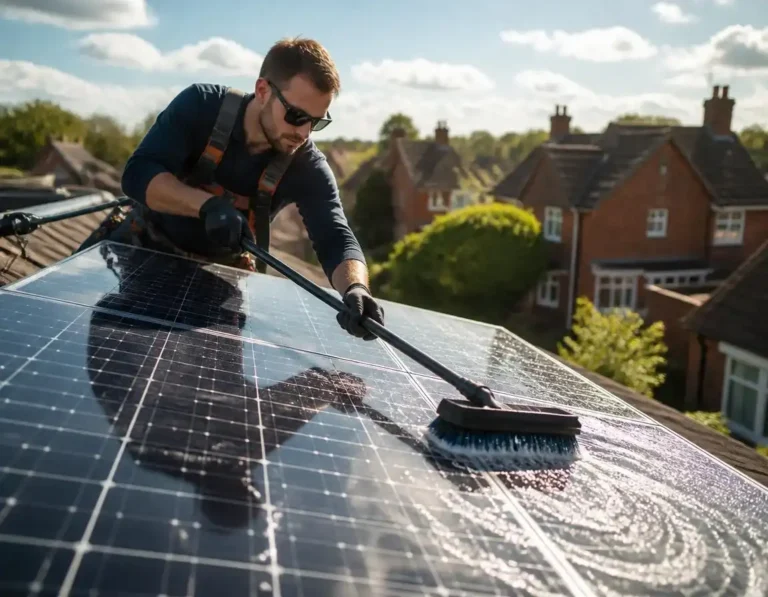
Tap water leaves mineral deposits that reduce efficiency. Use deionised or purified water from a telescopic water-fed pole with a soft brush. Never climb on the roof. Never clean hot panels in direct midday sun — thermal shock can crack the glass.
Check out Solar panels for caravan
Monitor Your Output Monthly
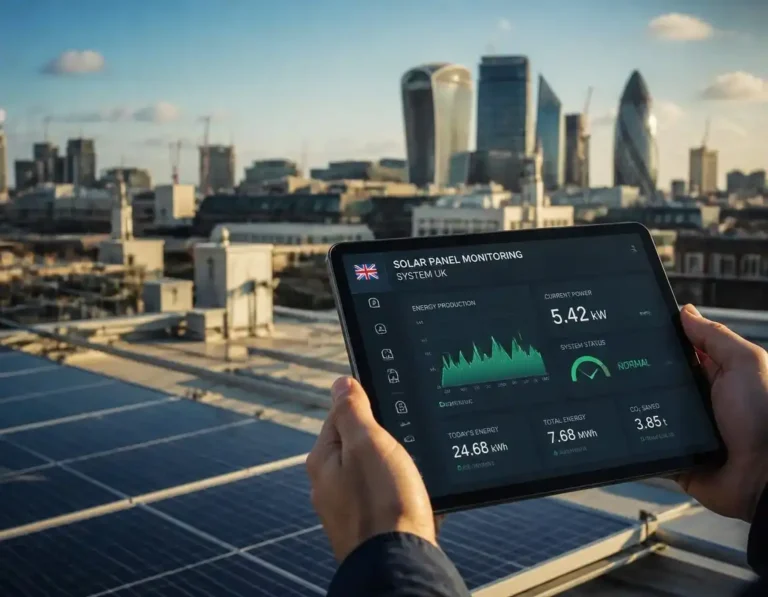
Every modern solar system comes with a monitoring app (GivEnergy, SolarEdge, Solis Cloud, Tesla, etc.). Spend two minutes checking it once a month. A sustained drop of 5% or more over two to three weeks — with normal weather — usually means it’s time for a clean or a professional check. You can validate your expected output against your region at the EU’s free PVGIS tool. Keeping your generation healthy also maximises the payments you earn under the Smart Export Guarantee (SEG), the government scheme that pays you for electricity you export to the grid.
The One Component You’ll Definitely Replace: the Inverter
Your solar panels will likely outlive two inverters. Standard string inverters last 10–15 years; a 2023 study by Bern University found 34% of inverters fail by year 15. Budget for a like-for-like replacement at £700–£1,100 (parts and labour) at the 12–15 year mark. Inverter replacement is notifiable electrical work under Part P of the Building Regulations in England and Wales — always use an MCS-certified installer. If you have a battery, its useful lifespan is typically 10–12 years before it needs upgrading.
Check out Solar panels for Garden Shed UK
✅ Your Annual Solar Panel Maintenance Checklist (UK 2026)
Check out how many solar panels are required in the U.K.
Solar Panel Maintenance Cost UK – 2026 Summary
Per visit; single-storey from £60, two-storey from £120. Contracts save 20–30%.
Clean + inspection; best value for most households.
Expected once at year 12–15. Like-for-like, including labour.
One-off cost; stainless mesh lasts 10–25 years.
❌ Use a pressure washer | ❌ Tap water (leaves mineral deposits) | ❌ Abrasive cloths or sponges | ❌ Clean during midday heat | ❌ Climb on the roof yourself | ❌ Ignore a drop in output for more than 2–3 weeks
Keep Your System Generating — Book a Check
If your panels are more than 3 years old and have never been professionally inspected, now is a good time. Always use an MCS-certified installer for any electrical work — you can verify credentials on the official MCS register.
Find an MCS-Certified Installer →Frequently Asked Questions
Most UK solar panels need cleaning once or twice a year. The best times are late April or early May (after pollen season, before peak summer generation) and optionally early October. UK rainfall handles light dust naturally, but stubborn bird droppings, pollen, and traffic film need a proper clean. Panels near coastal areas, farmland, or busy roads may need more frequent attention.
A professional clean costs £60–£180 per visit depending on system size and roof height. Single-storey systems with 6–8 panels cost around £60–£100; two-storey systems with 12–16 panels cost £120–£180. Annual maintenance packages (clean plus inspection) typically run £100–£300 per year. The inverter will need replacing once at year 12–15, costing £700–£1,100 including labour.
Yes — DIY cleaning is safe for ground-mounted or single-storey panels. Use a soft brush or telescopic water-fed pole with deionised or purified water only. Never use tap water (it leaves mineral deposits), never use a pressure washer (it voids most warranties), and never clean hot panels in direct midday sun. For two-storey or difficult-to-access roofs, always hire a professional with proper insurance. Never attempt to clean roof-mounted panels by climbing on the roof yourself.

5 Comments