

Adding a Battery to Existing Solar Panels UK: 2026 Cost & Savings Guide

Adding a Battery to
Existing Solar Panels in the UK
Everything you need to know — costs, inverter checks, how much you can save, and which government support is actually available right now.
Adding battery to existing solar panels UK
A retrofit battery stores what your panels generate during the day so you can use it in the evening — instead of buying expensive electricity from the grid.
If you’ve already got solar panels on your roof and you’re watching the export payments tick over while still paying peak-rate electricity in the evenings, you’ve probably wondered whether adding a battery makes sense. Honestly? For a lot of UK households in 2026, it does — but the answer isn’t the same for everyone, and some of the numbers being thrown around online are a bit optimistic. So let’s go through it properly.
Why people are adding batteries to existing solar systems
Without a battery, a typical UK home only uses around 40% of what its solar panels actually generate. The rest gets exported to the grid — at Smart Export Guarantee (SEG) rates of roughly 4–15p per kWh, depending on your supplier. That same electricity would cost you around 24–25p per kWh to buy back in the evening. That gap — 10p to 20p per kWh — is exactly where a battery earns its keep. It stores the surplus your home can’t use during the day and hands it back to you when your panels have stopped generating. Add a time-of-use tariff like Octopus Go or Intelligent Octopus Flux on top of that, and the battery can also charge cheaply overnight from the grid at 7–12p per kWh, giving you another layer of savings.
The two ways to connect a battery to existing solar panels
This is the bit that trips most people up. When you’re retrofitting a battery to a system that’s already running, there are two main approaches — and your existing inverter largely decides which one your installer will recommend.
- Battery connects before the main inverter
- Slightly more efficient — fewer conversion steps
- Usually needs a hybrid inverter fitted
- May mean replacing your existing inverter
- Best value if your inverter needs replacing anyway
- Battery connects after the inverter, to the AC circuit
- Works with most existing string inverters
- No inverter replacement needed in most cases
- Slightly less efficient but usually cheaper to retrofit
- The most common retrofit approach in the UK
Your installer will check your existing inverter as the very first step of any survey. Most retrofits end up being AC-coupled, simply because it avoids the cost of swapping out a perfectly good inverter. If your inverter is old or due for replacement regardless, going DC-coupled can actually work out cheaper overall.
Check out the best solar battery
How much does it cost to retrofit a battery? 2026 UK prices
These are realistic installed prices including the current 0% VAT rate, which applies to all home battery storage until 31 January 2027.
| Battery Size | Typical Installed Cost (2026) | Best Suited To | Annual Saving (est.) | Suitability |
|---|---|---|---|---|
| 4–5 kWh | £3,500 – £4,500 | 1–3 bedroom homes, 4 kW solar system | £200 – £350 | Good all-rounder |
| 7–8 kWh | £5,000 – £6,500 | 3–4 bedroom homes with higher evening usage | £300 – £450 | Popular size in UK |
| 9.5–10 kWh | £6,500 – £8,000 | Larger homes, heat pump or EV owners | £380 – £550 | EV or heat pump homes |
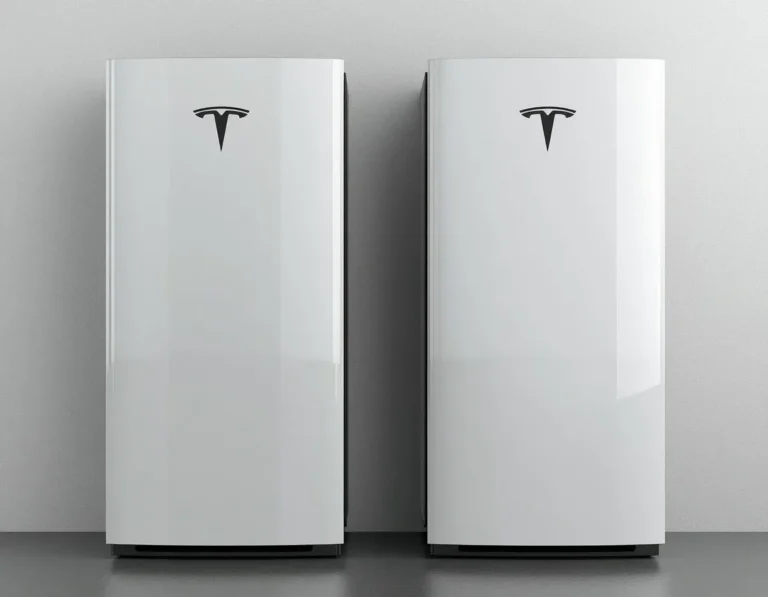
| 13.5 kWh (e.g. Tesla Powerwall 3) | £8,500 – £10,000 | High-usage or off-grid-leaning households | £400 – £600+ | Premium / large homes |
Source: UK installer market data, Energy Saving Trust, Ofgem Q1 2026 price cap at 24.5p/kWh. Savings assume a 4 kW solar PV system on a standard single-rate tariff. With a time-of-use tariff, annual savings typically increase by a further £100–£250.
What a battery actually does to your solar self-consumption
📊 Solar Self-Consumption: Before & After Adding Battery Storage
Check out how many solar panels are required in the U.K.
Payback period — what’s realistic in 2026?
A battery retrofit on its own has a longer payback period than solar panels did at the start. Be a bit wary of anyone promising you’ll earn it back in five years on a standalone retrofit — the numbers rarely support that on a standard tariff.
Saving: ~£200–£350/yr
Saving: ~£350–£550/yr
With vehicle charging optimised
Grid arbitrage only
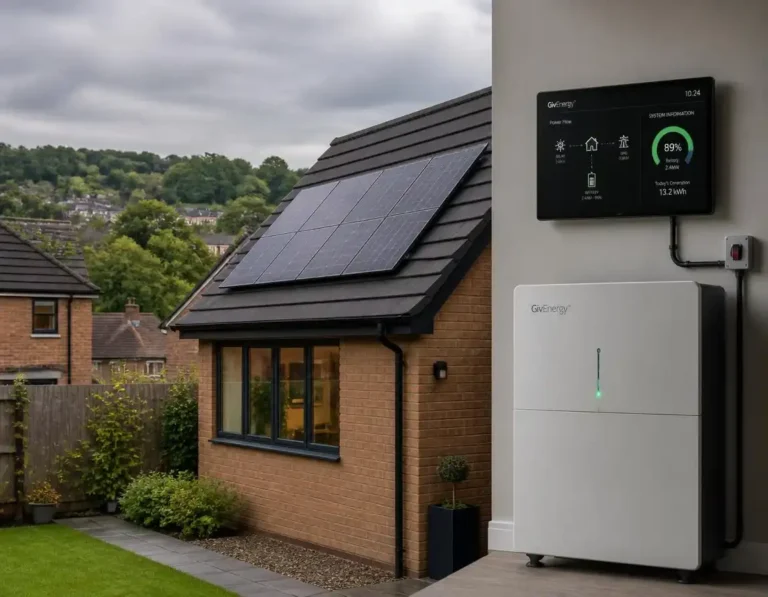
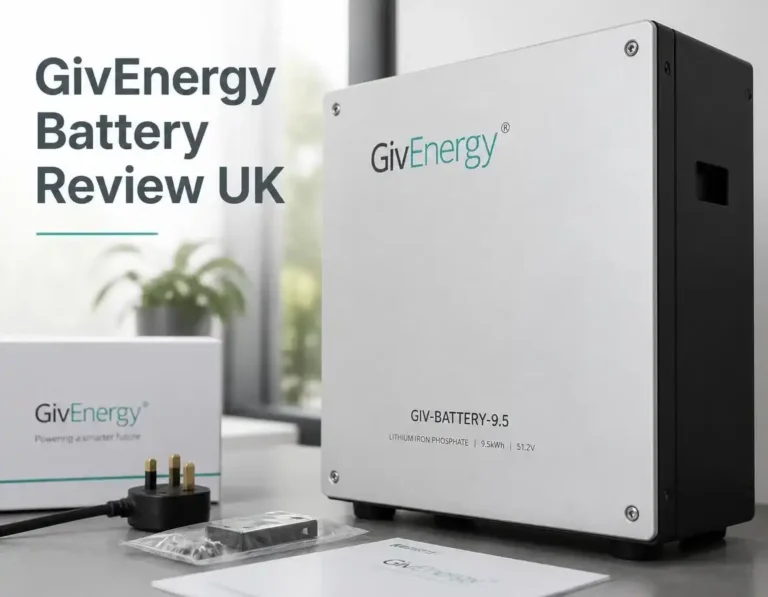
The sweet spot is pairing a battery with a time-of-use tariff. Octopus Intelligent and Octopus Flux have been particularly popular in 2026, and the Tesla Powerwall 3 — which gained native Intelligent Octopus Flux integration in early 2026 — has become one of the most sensible buys right now. (It’s worth noting that GivEnergy, previously a major recommendation, entered administration in April 2026. Already-installed units continue to work, but we wouldn’t suggest buying new GivEnergy kit until the situation is resolved.)
Check out Solar Panel Grants U.K.
Government support — what’s actually available in 2026
Beyond the VAT relief, the picture varies depending on your household income. The government’s Warm Homes Plan — the biggest home energy upgrade programme in British history, launched in January 2026 and backed by £15 billion — includes tailored packages for lower-income households covering solar, batteries, insulation and clean heat. You can check what your household might qualify for on the GOV.UK Warm Homes Plan page.
| Support Available | Who It’s For | How Much | Status (June 2026) |
|---|---|---|---|
| 0% VAT on battery & installation | All UK homeowners | ~£700–£1,600 saving | Open now |
| Warm Homes Local Grant | Low income (under ~£36k), EPC D–G | Up to £15,000 (full package) | Open via local authority |
| ECO4 Scheme | Benefits recipients, vulnerable households | Free solar + battery possible | Closing end 2026 |
| Warm Homes Fund (consumer loans) | Broader homeowner base | Low/zero interest loans | Expected late 2026 / 2027 |
| Smart Export Guarantee (SEG) | Any solar household exporting surplus | 4–15p per kWh exported | Ongoing |
Five things to check before you buy a battery
⚡ Our pre-purchase checklist
- Inverter compatibility: Ask your installer to check whether your existing inverter supports AC-coupled storage, or whether a hybrid inverter upgrade is needed. Don’t assume — get it confirmed in writing.
- Battery size vs your actual evening usage: Pull up three months of electricity bills and look at your evening consumption. A 5 kWh battery suits most 3-bed homes, but if you have an EV or heat pump, size up.
- MCS-certified installer: Only use an MCS-certified installer — this protects you legally, keeps your insurance valid, and is required for any grant applications. The MCS website has a postcode search.
- Time-of-use tariff compatibility: Not all batteries work natively with all tariffs. Check before you buy that your chosen battery and tariff are confirmed compatible — especially important for Octopus Flux or Intelligent Octopus.
- Warranty and manufacturer stability: Aim for a battery with at least a 10-year warranty. With GivEnergy having entered administration in April 2026, check the latest status of any brand you’re considering before signing anything.
Your questions answered
Our honest take
Adding a battery to your existing solar panels in 2026 is genuinely worthwhile for most UK households — but the payback period is longer than the solar panels themselves were. The financial case is strongest if you’re willing to switch to a time-of-use electricity tariff and have a reasonably sized solar system (4 kW or more). If you’re mainly at home during the day and already using most of your solar directly, the numbers are a bit tighter.
The practical steps are simple enough: get at least two quotes from MCS-certified installers, ask specifically about inverter compatibility on your current setup, and make sure the 0% VAT is already reflected in the quote you’re given. If you’re on a lower income, check the Warm Homes Local Grant route before spending a penny — you might be entitled to far more help than you realise.

10 Comments