
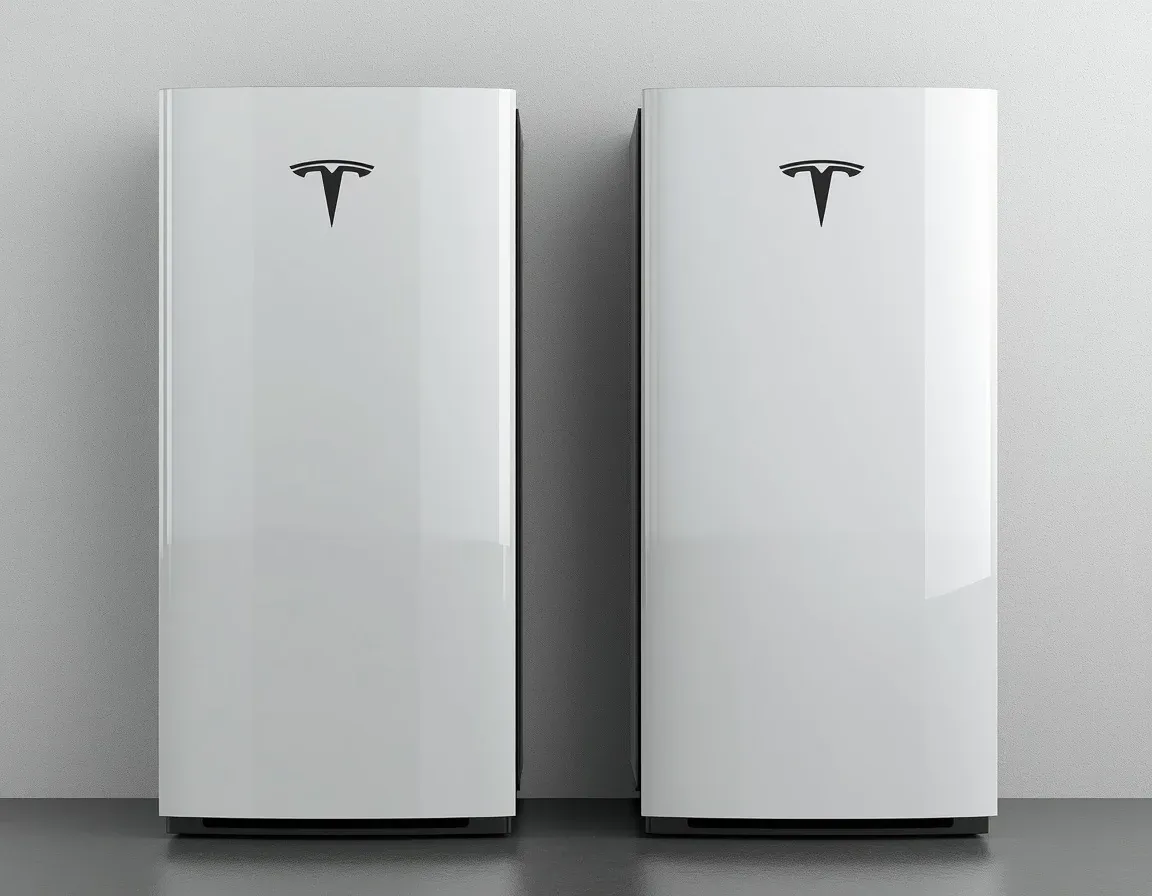
Tesla Powerwall 3 vs Powerwall 2 in the UK

Before we get into specs and prices, there’s one thing most articles on this skip: you can’t actually buy a new Powerwall 2 in the UK any more. That changes the real question here quite a lot.
Tesla stopped selling the Powerwall 2 as new stock in the UK back in late 2024, replaced entirely by the Powerwall 3. So this isn’t really “which one should I buy,” it’s “should I replace or add to a Powerwall 2 I already own.” If yours is working fine, there’s no rush, it’s still supported and holds the same headline capacity. But if you’re adding solar for the first time, want proper whole-home backup, or your setup relies on an ageing separate inverter, the Powerwall 3’s built-in inverter and more than doubled power output make a genuinely strong case.
I get asked this one a lot, usually by someone who installed a Powerwall 2 a few years back and has just seen a neighbour get a shiny new Powerwall 3 fitted. So let’s go through it properly, what’s actually different, what it costs, and whether upgrading makes financial sense or is just nice-to-have.
First things first: Powerwall 2 isn’t sold new any more
The Powerwall 3 launched in the UK in August 2024, with the first installations that September, and Tesla phased out the Powerwall 2 shortly after. If you ring round installers today asking for a Powerwall 2, you might find the odd bit of leftover stock or a second-hand unit, but Tesla itself has moved on. Every current Tesla Certified Installer will quote you the Powerwall 3.
That’s actually useful context, because it means this article isn’t really comparing two products on a shelf. It’s helping existing Powerwall 2 owners work out whether switching is worth the upheaval, and helping anyone buying fresh understand what changed and why the price sits where it does.
There’s no urgent reason to rip it out. It’s still supported by Tesla, still holds its original 13.5kWh capacity, and a well-maintained unit should keep going for years yet. Upgrading is worth considering, not mandatory.
What actually changed between the two
On paper, both batteries store roughly the same amount of energy. The real differences are in how that energy gets in and out, and that’s where the Powerwall 3 pulls ahead by quite a margin.
Powerwall 2
Discontinued UKPowerwall 3
Current modelThe built-in inverter is the change that matters most day to day. On a Powerwall 2, your solar panels feed into a separate hybrid inverter, then into the battery, adding an extra conversion step and a bit of extra kit on the wall. The Powerwall 3 skips that: panels wire straight into the battery’s own inverter, which is a big part of why efficiency and installed footprint both improve.
The power output jump matters too, especially for backup. 11.5kW is genuinely enough to run an induction hob, kettle and a few other big loads simultaneously during a power cut without tripping out, something the Powerwall 2’s roughly 5kW output could struggle with on a demanding household.
What it actually costs in the UK, 2026
Powerwall 3 pricing varies a fair bit depending on whether you’re bundling it with new solar, replacing an existing inverter, or fitting it as a standalone battery-only retrofit.
Typical UK installed price, Powerwall 3
2026 market range. Complexity and whether solar is included both move the price a lot.
Most UK installers quote the Powerwall 3 at around £9,000–£11,000 fully installed for a typical home, rising for more complex electrical work or when it’s bundled into a fresh solar installation, and occasionally a little lower for the simplest battery-only retrofits. There’s no Tesla-specific grant, but standard 0% VAT on residential battery storage applies until at least 31 March 2027, and you can still register for the Smart Export Guarantee on exported solar electricity regardless of which battery you use.
If 13.5kWh isn’t enough, Tesla sells Powerwall 3 expansion packs that add capacity at a lower cost per kWh than a whole second unit. Worth asking your installer about before assuming you need to double up entirely.
Should you actually upgrade? The honest breakdown
If any of these apply
- You’re installing solar panels for the first time
- You want proper whole-home backup during power cuts
- Your existing hybrid inverter is due for replacement anyway
- You want the highest round-trip efficiency available
- You’re adding an EV charger or heat pump and need more headroom
If any of these apply
- Your Powerwall 2 is meeting your needs day to day
- Your existing inverter still has years of life left
- You rarely lose power and don’t need heavy backup capacity
- You’d rather wait and see how prices settle
- Your budget is better spent elsewhere in the home right now
If you’re comparing the Powerwall 3 against other batteries rather than against your existing Powerwall 2, it’s worth knowing it now has real competition. The Sigenergy SigenStor in particular has become a genuine rival on spec sheets, and it’s worth reading our wider solar battery storage guide for how it stacks up against GivEnergy, Sigenergy, Sunsynk and the rest of the current UK market.
One safety note worth knowing
Tesla issued a Powerwall 2 recall in Australia over a fire risk affecting units manufactured between November 2020 and June 2022, caused by cells from a specific third-party supplier. No injuries were reported and it wasn’t a UK-issued recall, but if you own an older Powerwall 2 from that production window, it’s worth a quick call to your installer or Tesla support to confirm your unit isn’t affected, regardless of whether you’re planning to upgrade.
Whatever you decide, get quotes from a proper Tesla Certified Installer, not a general electrician bolting one on, since certification affects both your warranty and eligibility for VAT relief and SEG registration. And if you’re weighing up whether a battery earns its keep through smart tariffs like Octopus Agile or Intelligent Flux, our guide on making money from home battery storage covers exactly how that works.
Frequently asked questions
Keep reading on SolarBriton
More on batteries, storage and getting the most from your system.





4 Comments