
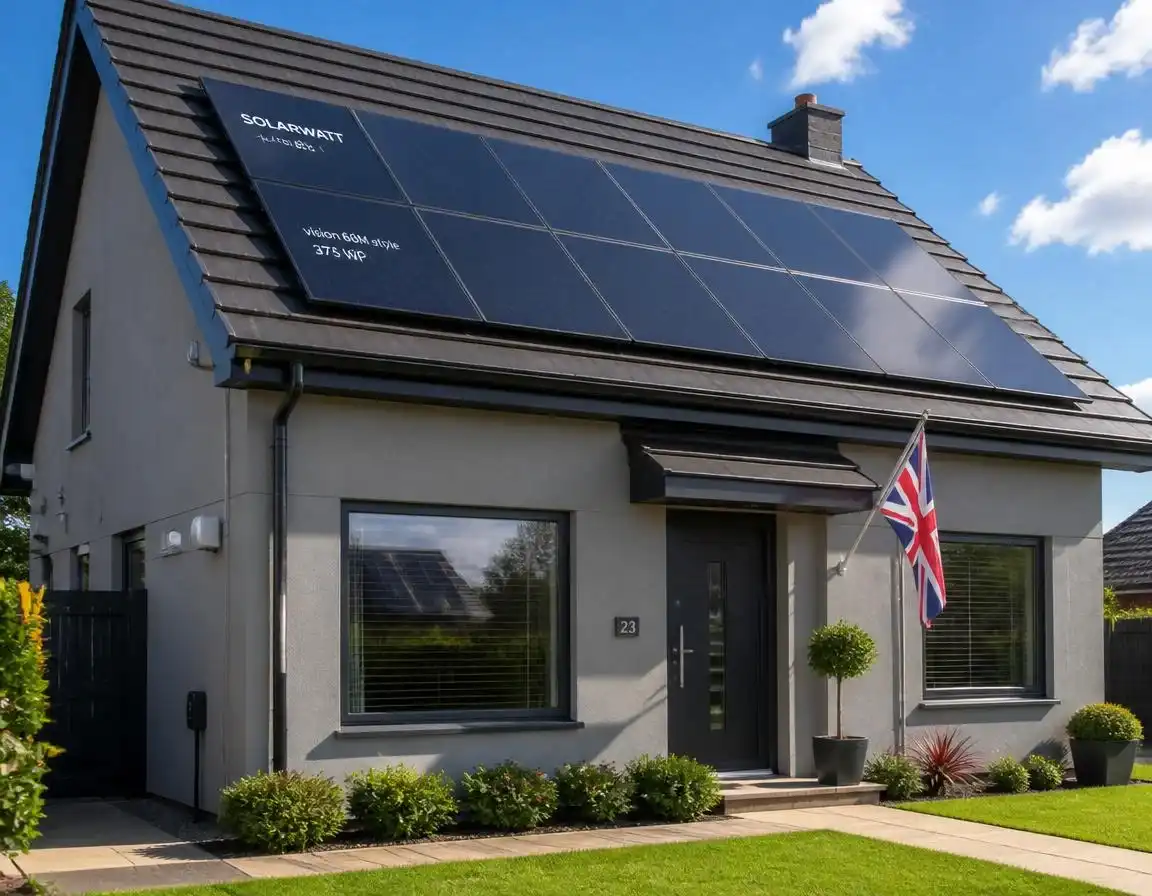
Plug-In Solar Panels UK: The Complete 2026 Guide

Plug-In Solar Panels UK: The Complete 2026 Guide
Plug-in solar is finally legal in the UK — and I reckon it’s one of the most exciting energy changes in years. Whether you rent, own a flat, or simply can’t face the cost of a full rooftop installation, here’s everything you need to know before you spend a penny.
If you’ve been keeping an eye on the energy news lately, you’ll have spotted a fair bit of buzz about plug-in solar panels. And honestly? The excitement is well earned. After years of sitting in a legal grey area, the UK finally sorted the rules in 2026 — making these compact little solar systems properly legal for the first time.
I’ve been following this story closely since Energy Secretary Ed Miliband’s announcement in March 2026, and there’s a surprising amount of confusion out there — outdated information, half-truths, and some frankly misleading marketing claims. So in this guide, I’m going to cut through all of that and give you the straight facts: what’s actually legal right now (and what isn’t quite yet), what these systems cost, how much you could realistically save, and which kits are genuinely worth your money.
What Are Plug-In Solar Panels?
In the simplest terms, a plug-in solar kit is a miniature version of a rooftop solar array — small enough to fit on a balcony rail, a garden wall, a shed roof, or even propped up on a south-facing lawn. Unlike a traditional solar installation (which needs scaffolding, a DNO-approved installer, and a significant chunk of money), these systems are designed to be portable, affordable, and — once the BSI standard lands — genuinely plug-and-play.
A standard kit usually contains two or three things: one or two solar panels (typically 400W each), a compact device called a microinverter, and a cable with a UK 3-pin plug. That’s it. In continental Europe — particularly Germany — they’re sold in supermarkets alongside garden furniture. By the time you finish reading this, they’ll be coming to UK shelves too.
How Do Plug-In Solar Panels Work?
The mechanics are straightforward once you understand them. Here’s the flow from sunlight to bill saving:
Are Plug-In Solar Panels Legal in the UK in 2026?
Right, this is the big question — and the answer is yes, but with an important caveat. Here’s the honest picture as of June 2026:
I know that second bit sounds like a faff, but here’s the thing: the electrical savings are identical whether you hardwire it or plug it in. If you want to start generating solar power now (and I’d say it’s worth it, especially through summer), the hardwired route gives you a fully compliant system today.
What the 800W limit actually means
The 800W cap isn’t arbitrary — it’s a carefully calculated safety threshold for UK ring-main circuits. A standard 13A socket can handle around 3kW of continuous load. At 800W, a plug-in solar kit feeds back well within safe limits, preventing any risk of overheating your home’s wiring. In practice, a typical setup is two 400W panels feeding into an 800W microinverter. The inverter will clip the output at 800W AC, which means on a blazing June afternoon you’ll be at the cap, but on a typical overcast November day you’ll generate whatever the panels produce.
Check out how many solar panels are required in the U.K.
How Much Do Plug-In Solar Panels Cost in the UK?
This is where it gets really interesting, because these systems are genuinely cheap compared to a traditional rooftop installation. A full 4kWp rooftop solar system with battery storage in the UK typically costs £8,000–£15,000 installed. A plug-in solar kit? You’re looking at £400–£1,200 for hardware, plus electrician costs if you go down the hardwired route right now.
| Kit Type | Size | Price Range | Annual Output | Best For |
|---|---|---|---|---|
| Basic 400W single panel | 400W | £100 – £250 | ~360 kWh/yr | Testing the waters |
| 400W starter kit (inverter incl.) | 400W | £250 – £400 | ~360 kWh/yr | Renters on a budget |
| 800W dual-panel kit (no battery) | 800W | £400 – £650 | ~760 kWh/yr | Most homeowners |
| 800W kit + 1–2 kWh battery | 800W + storage | £850 – £1,400 | ~760 kWh/yr * | Workers-from-home |
| Premium smart kit (AI-managed) | 800W + storage | £1,200 – £2,500 | ~760 kWh/yr * | Tech enthusiasts |
* Battery doesn’t increase generation — it stores it for use later, boosting self-consumption from ~35% to ~75%, which significantly increases savings. Prices as of June 2026; actual retail prices may vary.
What about electrician costs?
Until the BSI product standard arrives (expected July 2026), a CPS-registered electrician needs to make the final hardwired connection. Budget £250–£450 for this. Yes, it adds to the payback period, but it’s a one-off cost and your system is fully compliant from day one. Many people find the peace of mind is worth it. Once the product standard publishes, new buyers will be able to self-install from a 13A socket without any additional help.
Check out Best SEG Tariff Rates
How Much Could You Actually Save?
I’ll be honest with you here — some of the savings figures I’ve seen floating around in the press are on the optimistic side. The real numbers depend heavily on three things: how south-facing your panels are, how much electricity you use during daylight hours, and whether you have a battery to capture surplus generation. Let me give you the honest breakdown.
The self-consumption problem — and how to solve it
Here’s the thing that a lot of marketing for these kits glosses over. Without a battery, you only benefit when you’re home and using electricity during daylight hours. If you’re out at work 9-to-5, your self-consumption rate drops to around 30–40% — meaning up to 60% of what your panels generate just flows to the grid unpaid (plug-in solar kits can’t currently access Smart Export Guarantee payments, so that surplus earns you nothing).
The solution? Either time-shift your appliances — run your washing machine, dishwasher, and chargers during the day — or add a small 1–2 kWh battery, which pushes self-consumption up to 70–80%. Retired at home? Self-employed or work from home? Shift workers? A battery-free kit can be brilliant. Office workers with standard hours should seriously consider the battery option.
Best Plug-In Solar Kits in the UK — 2026
The market is still finding its feet in the UK, but there are already some solid options available now — and more will follow once the BSI product standard is published in July 2026. Here’s what I’d actually recommend based on the research:
- 2× 400W panels + 800W microinverter
- IP67 waterproof, 3.2 kg per panel
- 10-yr panel / 5-yr inverter warranty
- App monitoring included
- Modular battery option available
- 2× 400W panels + 800W microinverter
- Expandable SOLIX battery ecosystem
- 25-yr panel / 3–5 yr inverter warranty
- Professional-grade app & support
- Strong build quality reputation
- HMS-800W microinverter + your choice of panels
- 10-yr microinverter warranty
- Widely used across Europe
- Requires more technical confidence
- CE + UKCA marked
- 2× flexible panels + Hoymiles inverter
- UK-designed and supported
- All-inclusive kit (mounting hardware)
- Optional battery add-on
- Built specifically for UK market
| Kit | Output | Price | Panel Warranty | Battery Option | UK Availability |
|---|---|---|---|---|---|
| EcoFlow STREAM | 800W | ~£499 | 10 years | Modular add-on | Now (Amazon UK) |
| EcoFlow PowerStream | 800W | ~£720+ | 10 years | Full integration | Now (Amazon UK) |
| Anker SOLIX RS40P | 800W | ~£899 | 25 years | Built-in expandable | Now (Amazon UK) |
| Hoymiles DIY | 800W | £350–£420 | 25 years * | No (inverter only) | Now (multiple) |
| Thunder Energy Storm | 360–800W | £499 | 10 years | Optional | Now (direct) |
| Lidl UK Kit (TBC) | 800W | ~£350–£500 | TBC | Unknown | Summer 2026 est. |
* Panel warranty applies to separately sourced panels. Hoymiles inverter warranty is 10 years. Prices as of June 2026. Always verify CE or UKCA marking before purchase.
Check out Solar panels maintenance
Who Are Plug-In Solar Panels Best For?
I want to be really straightforward here, because there’s a lot of hype. These kits aren’t right for everyone — and if you’re a homeowner with a suitable south-facing roof, a proper rooftop installation is almost certainly the better long-term financial choice (4kWp rooftop vs 800W plug-in generates roughly 5× more electricity per year). That said, for certain people, plug-in solar is genuinely brilliant.
Renters who can’t alter the roof
Flat owners and leasehold properties
Retirees or home workers with high daytime electricity use
Listed building or conservation area homeowners (where rooftop solar isn’t permitted)
People who want to try solar before committing to a full installation
Households where budget is tight but a south-facing garden or shed roof is available
Homeowners with a suitable south/east/west-facing roof (rooftop solar gives far better returns)
North-facing only outdoor space — not enough output to justify the cost
Households that use all their electricity in the evenings and can’t add a battery
The key insight is this: plug-in solar is primarily designed for people who can’t access rooftop solar at all. For the UK’s roughly 9 million renting households, and millions more leasehold flat owners, this is genuinely transformative — it’s the first real route to generating your own electricity without owning the roof above your head.
Check out Solar panels for renters uk
What About Renters? Your Rights Under the 2025 Act
This is where things got genuinely exciting. The Renters’ Rights Act 2025 changed the legal landscape for tenants considerably. Under the Act, landlords cannot unreasonably refuse a request from a tenant to make energy improvements to a property. A portable plug-in solar kit that requires no structural modification to the building has a very strong case for being classed as a “reasonable” request.
Notifying Your DNO: The G98 Process Made Simple
This is the one step that catches people out — not because it’s hard, but because they don’t know it’s required. Before you connect any plug-in solar system in the UK, you need to notify your Distribution Network Operator (DNO) under the G98 process. This isn’t an approval gate — it’s a notification. You’re telling the local grid operator: “Hey, I’m adding a small generation source here.”
| Step | What You Do | When | Cost |
|---|---|---|---|
| 1. Find your DNO | Go to energynetworks.org and enter your postcode | Before connecting | Free |
| 2. Complete G98 form | Fill in the online notification form on your DNO’s website | Within 28 days of connection | Free |
| 3. Keep a record | Save your submission confirmation email | After submission | Free |
| 4. Notify insurer | Let your home insurer know about the new electrical addition | After installation | Free (usually) |
The G98 process applies to all systems under 3.68kW (16A per phase). It’s a simple online form that takes around 10 minutes. Skipping it can result in your system being disconnected by the DNO. Many installers handle this on your behalf.
Your DNO is determined by your postcode. In England, Scotland, and Wales, there are six main Distribution Network Operators: UK Power Networks (South East), Electricity North West, Northern Powergrid, National Grid Electricity Distribution (Midlands, South West, South Wales), SP Energy Networks (Scotland and North West), and Scottish & Southern Electricity Networks. Northern Ireland uses NIE Networks, which is expected to introduce a simplified G98-equivalent process for plug-in solar soon.
What about Smart Export Guarantee (SEG) payments?
I have to be upfront about this one — most plug-in solar systems can’t access SEG payments. The Smart Export Guarantee requires MCS certification, which full rooftop solar achieves but plug-in kits cannot. This means any surplus electricity your panels generate and you don’t use immediately goes to the grid for free. It’s not the end of the world — the self-consumption savings are still real — but it does mean you want to maximise your daytime electricity use to get the most out of your system.
5 Things to Check Before You Buy
Right, you’re interested — brilliant. Before you hand over any money, run through this checklist. I’ve put this together from the most common mistakes people make when buying plug-in solar kits in 2026:
Official Government Announcement — GOV.UK
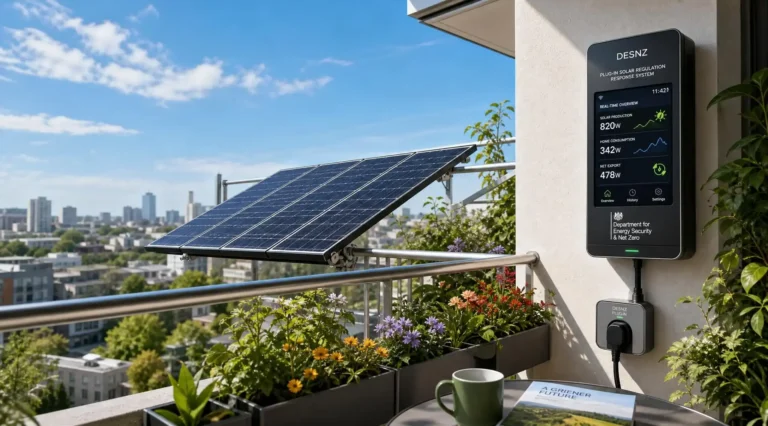
On 24 March 2026, the Department for Energy Security and Net Zero (DESNZ) officially announced the legalisation of plug-in solar panels in the UK. The announcement includes details on the government’s partnership with retailers like Lidl, Amazon, and Iceland, alongside EcoFlow as a technology partner — and confirmed a £25 million pilot programme to put plug-in kits into low-income households.
Read the official announcement on GOV.UK →- Low upfront cost (from £400)
- No planning permission needed (in most cases)
- Accessible for renters and flat owners
- Portable — takes it when you move
- Short payback period (3–6 years)
- Works on balconies, sheds, garden walls
- No scaffolding or structural work
- 20+ year panel lifespan
- Limited to 800W — much less than rooftop solar
- No SEG export payments for most systems
- BSI product standard not yet published (June 2026)
- Low savings if you’re out all day without a battery
- Some older homes need RCD upgrade first
- Can’t achieve MCS certification
- Electrician cost (£250–£450) until July 2026
Check out Solar panels for caravan
Frequently Asked Questions
These are the questions I get asked most often about plug-in solar panels in the UK. I’ve kept the answers plain and practical.



6 Comments