
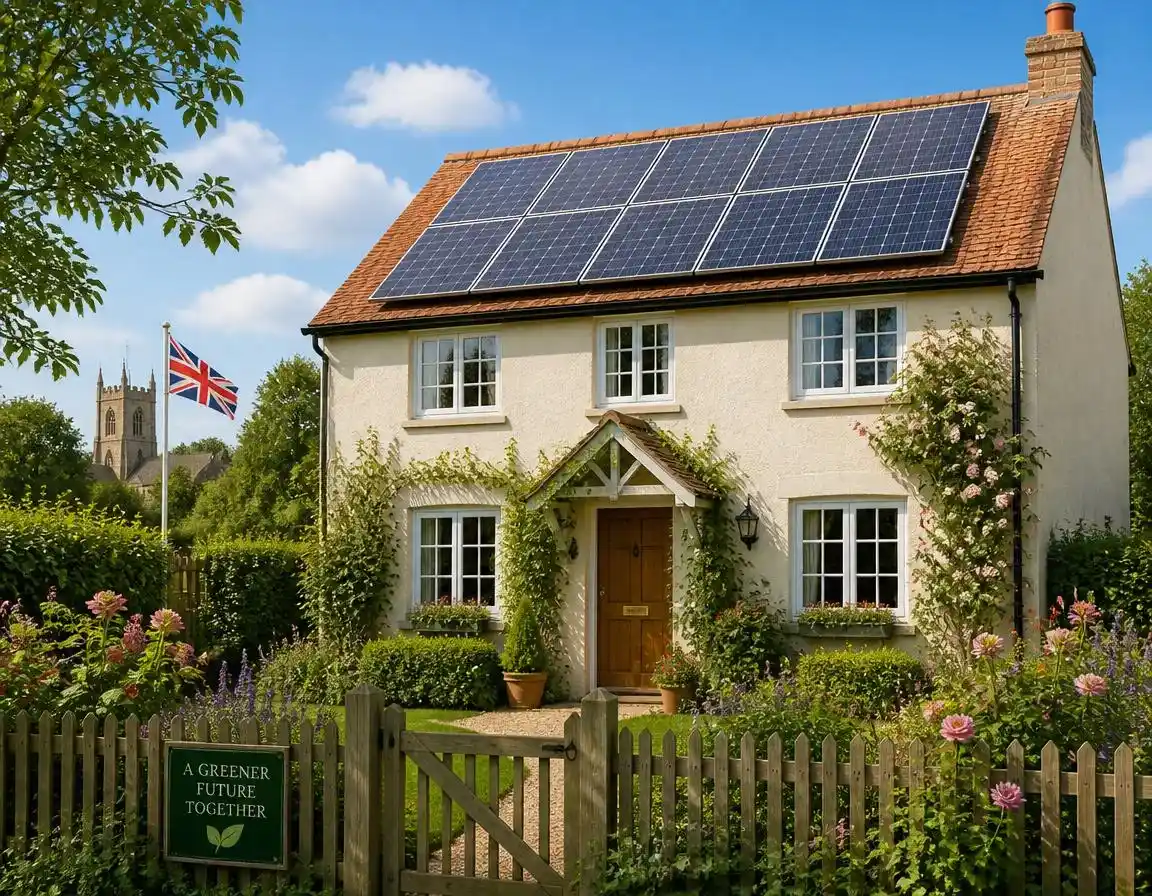
Solar Panel Planning Permission

Here’s the short version — most UK homeowners don’t need planning permission for solar panels. But there are specific rules and a handful of situations where you absolutely do. Let me walk you through all of it clearly.
For most UK homes, no planning permission is needed for solar panels. They’re classified as “permitted development” under the UK government’s permitted development framework. However, listed buildings, certain conservation areas, and non-standard installations do require formal consent. Read on to find out exactly where you stand.
Permitted Development: What It Means for Solar
Permitted development rights (PDR) are a standing consent granted by Parliament that allows certain types of work to proceed without a planning application. Solar panels on most residential rooftops fall squarely within these rights — which is good news, because it means most homeowners can install solar panels without touching the planning system at all.
In England, the rules are set out under Schedule 2, Part 14 of the Town and Country Planning (General Permitted Development) (England) Order 2015, as amended. The 2026 framework is the most permissive it has ever been for residential solar.
The Key Rules You Must Meet
Roof Projection
Panels on a pitched roof must not protrude more than 200mm from the roof slope. Most mounting systems meet this comfortably.
Roof Height Limit
Panels must not extend above the highest point of the roof (excluding the chimney). In practice this is never an issue with standard installs.
Flat Roof Projection
Since December 2023, flat roof panels can project up to 600mm — a big improvement that makes far more flat-roof installations viable without permission.
Ground-Mounted Area
Ground-mounted panels must not exceed 9 square metres in total, must be under 4 metres in height, and must sit at least 5 metres from any boundary.
The permitted development rules were updated in 2026 to increase the maximum roof area that panels can cover from 50% to 70%. This allows significantly larger systems on residential rooftops without a planning application — particularly helpful if you’re planning to add solar battery storage and want to maximize your generation capacity.
When You Do Need Planning Permission
Permitted development does not apply in every situation. These are the four main scenarios where formal consent is required before you can install.
🏛️ Listed Buildings
If your property is listed (Grade I, II*, or II), you need Listed Building Consent before installing any solar panels — and often full planning permission too. Contact your local authority first.
🪟 Conservation Areas
Permitted development rights are removed for panels on walls or roof slopes that face a highway in a conservation area. Rear and non-visible slopes are usually fine.
🌿 Ground-Mounted Systems
Exceed 9m² area, 4m height, or place the system in front of the house? You’ll need a planning application, regardless of what the roof-based rules say.
🏢 Flats & Leasehold
Permitted development applies to the building, not the flat. You’ll also need your freeholder’s written consent before installing — always check your lease first.
Rules Across England, Scotland, Wales & Northern Ireland
Certificate of Lawful Development — Do You Need One?
If you want absolute legal confirmation that your installation qualifies as permitted development, you can apply for a Certificate of Lawful Development (Proposed) from your local council. In England this costs £103 in 2026. It’s entirely optional — but some mortgage lenders and conveyancers ask for it when you sell your home, so it can be worth having on file.
Most installers will advise you on whether your installation is clearly permitted development before work starts. If there’s any doubt whatsoever, it’s always better to clarify with your Local Planning Authority (LPA) before installation, not after. You can find your LPA via the Planning Portal’s local authority finder.
In 12 years of designing solar systems across the UK, we’ve found the vast majority of standard residential installs don’t require planning permission — or any pre-application work. If your home is not listed, not in a conservation area, and your installer is fitting roof-parallel panels that don’t breach the ridge, you’re almost certainly in the clear. The same generally applies if you’re adding an EV charger alongside your panels. When in doubt, a quick call to your council costs nothing.
Ready to Install Solar?
If your roof is ready and you don’t need planning permission, there’s no reason to wait. Get a tailored quote from our MCS-certified design engineers today.
Get a Free QuoteSolar Panel Planning Permission — Quick Answers
Sources: GOV.UK Permitted Development Rights guidance, Planning Portal (2026), Town and Country Planning (GPDO) (England) Order 2015 (as amended).
↑ Back to top


4 Comments