
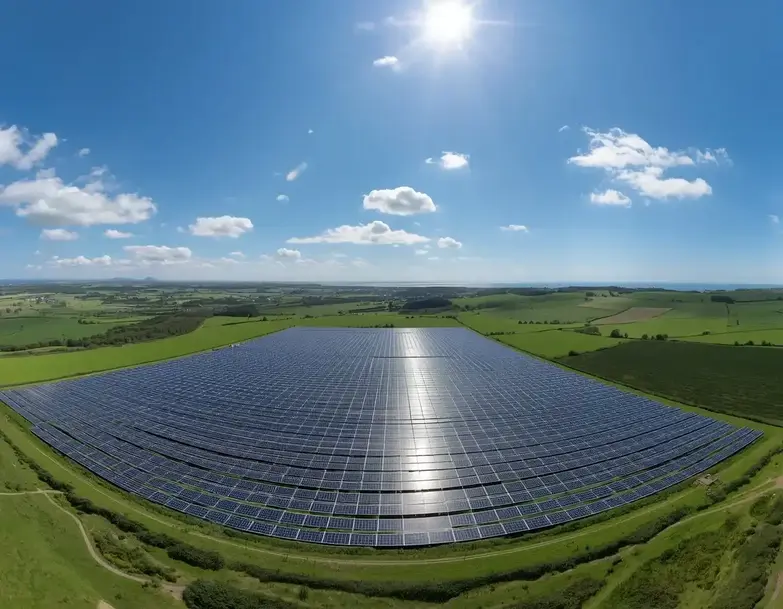
Solar Panels in the South West UK (2026)

Solar Panels in the South West: Real Costs, Output and Honest Verdicts for 2026
I’ve spent twenty years sizing, specifying and fault-finding solar panels in the South West, from Bristol terraces to coast-exposed cottages west of Truro. This page is the advice I give my own neighbours: what an array genuinely generates here, what installers are quoting in 2026, which grants still have money left in them, and the purchases I’d skip without a second thought.
Why the South West outperforms most of the UK for solar
Start with the resource, because everything else follows from it. Roofs across South West England produce around 1,015 kWh per kWp of panels per year, roughly 7% above the UK average of about 920 kWh/kWp, according to MCS irradiance datasets cross-checked against the EU’s PVGIS model. Push out to the Cornwall and south Devon coastlines and it gets better still: Cornwall sits at around 1,080 kWh/kWp, the highest county figure in Britain, with exposed western sites nudging 1,090.
That is not a marginal edge. On a 4kWp system it is the difference between roughly 3,680 kWh a year on the UK average and 4,060 kWh here — an extra 380 units you either avoid buying at 26.11p or sell through the Smart Export Guarantee. The Cornish coast logs around 1,890 sunshine hours a year, several hundred more than most of northern Britain, and it shows up directly in your generation figures.
People here have already cottoned on. Around 13% of Cornish households — 32,416 homes as of March 2026 — have MCS-certified solar, more than double the UK rate of about 5.7%, and the South West as a whole consistently ranks among the top three English regions for new installs. When I survey a street in Somerset or Dorset now, it is unusual to find zero panels on it. If you want the county-level deep dive for the far south west, my Cornwall solar guide covers the grants and council loan schemes specific to that side of the peninsula.
Solar panel output in the South West, county by county
National averages are useless for planning a system, so here is the region broken down. The bands below are interpolated between the measured Cornish yield (1,080 kWh/kWp) and the regional average (1,015 kWh/kWp) using MCS MIS 3002 irradiance data; check your exact postcode in PVGIS before you trust any of them to the unit.
| Area | Yield (kWh/kWp/yr) | 4kWp annual output | What I watch for on surveys here |
|---|---|---|---|
| Cornwall & Isles of Scilly | 1,060–1,090 | 4,240–4,360 kWh | Best yield in the UK; exposed coastal sites need marine-grade fixings |
| Dorset & south Devon coast | 1,020–1,060 | 4,080–4,240 kWh | Salt spray within ~2km of the sea; pockets of conservation area |
| Inland Devon & Somerset | 990–1,030 | 3,960–4,120 kWh | Hedgerow and tree shade; a fair share of thatched cottages |
| Wiltshire & Gloucestershire | 970–1,010 | 3,880–4,040 kWh | Cotswolds National Landscape rules; stone and listed buildings |
| Bristol & Bath | 980–1,010 | 3,920–4,040 kWh | Terraced roofs and chimney shade; east–west split arrays common |
Orientation still beats postcode. A south-facing roof at 30–40° pitch is the target; east or west costs you 10–15%; a single north-facing array is the one configuration I still talk people out of. And shade from a chimney or a neighbour’s tree can erase the entire regional advantage in one stroke — our guide to shading disputes covers your rights if that tree arrives after your panels do.
The same 4kWp system, six different postcodes
Working: each bar = regional yield × 4kWp. Yields used: Cornwall 1,080; South West 1,015; UK 920; Midlands ~900; northern England ~850; Scotland ~800 (midpoints of MCS regional bands). Bar lengths are proportional to the labelled kWh against the 4,320 maximum.
What solar panels in the South West actually cost in 2026
Prices have settled after the 2024–25 rush. These are the ranges I see on real quotes across the region right now, all at 0% VAT, with the low end a straightforward south-facing tiled roof and the high end covering scaffolding, split arrays and in-roof mounting:
| System size | Suits | Installed cost (0% VAT) | SW annual generation | Year-one value | Simple payback |
|---|---|---|---|---|---|
| 3kWp (7 panels) | 1–2 bed, low usage | £4,500–£6,000 | ~3,050 kWh | ~£590 | 7.6–10.1 yrs |
| 4kWp (10 panels) | 2–3 bed semi or terrace | £5,500–£8,000 | ~4,060 kWh | ~£789 | 7.0–10.1 yrs |
| 5kWp (12 panels) | 3–4 bed, home working | £6,500–£8,800 | ~5,080 kWh | ~£990 | 6.6–8.9 yrs |
| 6kWp (14 panels) | 4+ bed, EV or heat pump | £7,500–£10,500 | ~6,090 kWh | ~£1,180 | 6.3–8.9 yrs |
If a quote for a plain 4kWp job lands above £9,000 without scaffolding or a battery included, push back. I broke down exactly what MCS installation data says about overpriced quotes in my £10k quote analysis, and the national picture is in our 2026 UK cost guide. Adding a battery typically adds £3,000–£4,500 for around 5kWh of storage; whether that earns its keep depends on your daytime occupancy, and our battery storage guide runs that maths properly.
Grants, 0% VAT and the 2026 deadlines that matter
Three schemes are live in the South West right now, and two of them have hard end dates:
- 0% VAT on domestic solar and batteries — worth roughly £1,000–£1,500 on a typical system. Confirmed until 31 March 2027 under HMRC’s VAT Notice 708/6, then it reverts to 5%. This applies to every quote on this page.
- ECO4 — fully funded panels for households on qualifying benefits with poor EPC ratings. Extended by government to 31 December 2026, and there is no confirmed successor scheme, so this window genuinely closes.
- Warm Homes: Local Grant — up to £30,000 of funded measures including solar PV for owner-occupiers and private renters with an EPC of D–G and household income of £36,000 or less. Runs to March 2028 and is delivered through local councils, including Cornwall Council and its Lendology loan partnership for those just above the grant thresholds.
Export income: what your surplus earns here
Because South West roofs generate above the UK average, export tariff choice matters more here than almost anywhere else — a 4kWp system with no battery exports around 2,400 kWh a year, and the gap between a lazy tariff and a good one is worth £200–£400 annually. The 2026 ladder in brief: time-of-use tariffs such as Octopus Intelligent Flux peak near 32p/kWh but need a battery and Octopus import; installer-exclusive fixes run 20–25p (Good Energy, EDF, OVO); bundled fixes sit at 15–16.5p (British Gas, E.ON Next); and the best open-to-all rate is Fuse Energy at 13p/kWh with no import switch required. Standard variable tariffs at 3–4p are the ones to avoid.
You need an MCS-certified install and a working smart meter to register, payments are tax-free for households, and you can keep your import supplier while selling exports elsewhere. I keep a full comparison, including the eligibility small print, in our best SEG tariff rates guide; for a longer view of when the whole system breaks even, see the UK payback period guide.
Planning permission: AONBs, listed buildings and thatched roofs
The South West has more designated landscape per square mile than almost anywhere in England — the Cornwall, Devon, Dorset and Cotswolds National Landscapes (the renamed AONBs), dozens of conservation areas, and a huge stock of listed and thatched property. The good news is that roof-mounted solar remains permitted development in conservation areas and National Landscapes provided panels stay below the ridge, project no more than 200mm from the roof slope, and are not fitted to a wall that faces a highway. The Planning Portal sets out the national limits, and our planning permission guide translates them into plain English.
The exceptions that catch people out here: listed buildings always need listed building consent; ground-mounted arrays in designated areas usually need full planning permission; flat-roofed homes in conservation areas may need prior approval; and some councils have Article 4 directions that remove permitted development rights entirely, so a two-minute call to your planning officer is cheap insurance.
Coastal homes: salt, wind and storm-proofing your array
Within a couple of kilometres of the sea — which in the South West is most of Cornwall, much of Devon and Dorset, and the Somerset coast — salt-laden air is the thing that kills solar installations early, and it kills the mounting gear before the panels. My non-negotiables on coastal jobs: marine-grade anodised aluminium rails, stainless steel fixings (A4 grade on the exposed western coast), panels with salt-mist corrosion certification, and cable management that does not trap spray against the frame.
Wind loading matters too. MCS installers must calculate ballast and fixing strength for your exposure zone, and exposed headland sites west of Penzance or around Portland sit in the highest bands in England — which is one reason the cheapest quote is often the wrong one here. Annual visual checks of clamps and rails after the winter storms take ten minutes and catch loose fixings before they become a leaked roof or a lost panel. The full coastal specification checklist, including cleaning and pigeon-mesh advice, is in our coastal property solar guide.
Choosing a South West solar installer without getting stung
The region is well served: national firms run crews down the M5 every week, and there is a strong bench of local MCS firms in Exeter, Plymouth, Bristol and Truro who know the local roof stock and planning officers by name. Either can be excellent. What I check, every time:
- MCS certification, verified independently at mcscertified.com — not just a logo on a van. No MCS certificate, no SEG income, full stop.
- Three written quotes on the same system size and panel tier, so you are comparing price rather than specifications.
- An insurance-backed workmanship guarantee (HIES or equivalent), because a 10-year workmanship promise from a company that dissolves in year three is wallpaper.
- DNO paperwork handled for you. Our network operator is National Grid Electricity Distribution; systems exporting up to 3.68kW per phase are a simple G98 notification after install, while bigger export needs G99 approval first — a good installer sizes the inverter with that rule in mind.
My verdict: should you go solar in the South West in 2026?
✅ In its favour
- Best-in-UK solar resource: 1,015 kWh/kWp regional average, 1,080 on the Cornish coast
- 7–10 year payback on 25-year warranted kit, at 0% VAT until March 2027
- Strong export options, from 13p open-to-all up to 32p peak with a battery
- Deep local installer market and genuine grant routes for lower-income homes
❌ Against, or skip
- Single north-facing arrays under 2kWp still do not earn their keep
- Thatched and heavily listed homes can be uninsurable or consent-heavy
- Coastal spec costs real money — cheap mounting gear fails first here
- Any 4kWp quote over £9,000 without scaffolding or storage included
The actual answer, not “it depends”: if your roof faces within 90° of south, is largely unshaded, and you plan to stay put for a decade, buy a 4–5kWp MCS-certified system outright or on interest-free finance before 31 March 2027, register a fixed SEG tariff of 12p or better on commissioning day, and only add a battery if you are out during the day or charge an EV overnight. On a South West roof that combination is the best domestic solar proposition in the country right now — and the numbers above are why I say so.
Frequently asked questions
Are solar panels worth it in the South West in 2026?
Yes — the South West is one of the two strongest regions in the UK for rooftop solar. Panels here produce around 1,015 kWh per kWp a year, about 7% above the UK average, and a typical 4kWp system saves and earns roughly £790 in its first year at current price cap and export rates. On a £5,500–£8,000 install that is a payback of roughly 7–10 years on equipment warranted for 25, so the maths is comfortably positive for most unshaded south-facing roofs.
How much do solar panels cost in the South West in 2026?
Expect £4,500–£6,000 for a 3kWp system, £5,500–£8,000 for the typical 4kWp home system, and £7,500–£10,500 for 6kWp with scaffolding and a split array at the top end. All of those figures are at 0% VAT, which applies to domestic installs until 31 March 2027. Adding a 5kWh battery usually adds £3,000–£4,500.
Do I need planning permission for solar panels in a South West conservation area or National Landscape?
Usually not. Roof-mounted panels remain permitted development in conservation areas and National Landscapes (formerly AONBs) as long as they stay below the ridge, project no more than 200mm from the roof slope, and do not sit on a wall facing a highway. Listed buildings always need listed building consent, ground-mounted arrays in designated areas usually need full planning permission, and local Article 4 directions can remove permitted development rights, so check with your council before ordering kit.
How much electricity will a 4kWp system generate in the South West each year?
Around 4,060 kWh on the regional average yield of 1,015 kWh per kWp, rising to about 4,320 kWh on the Cornwall coast where yields reach 1,080 kWh per kWp. That covers more than a typical household’s entire electricity use, which is why pairing panels with a battery or a diverter pays off better here than in most of the UK.
Is Cornwall really the best place in the UK for solar panels?
On yield, yes. Cornwall tops UK regional tables at around 1,080 kWh per kWp a year — roughly 17% above the national average — and around 13% of Cornish homes already have MCS-certified solar, more than double the UK rate. The rest of the South West is not far behind: Dorset and south Devon coasts run within a few percent of Cornwall, so the honest answer is that the whole peninsula is prime solar territory.
