Zonal Electricity Pricing

Zonal Electricity Pricing: Why Octopus Wanted Regional Prices, and What It Means for Solar Owners
This one ran for three years, got genuinely heated, and then got decided without half the country noticing. Here’s what zonal pricing actually was, why Octopus Energy fought so hard for it, why the government said no, and what’s actually happening to your electricity market instead in 2026.
The short version
Zonal pricing would have split Great Britain into several regions, each with its own wholesale electricity price based on local supply and demand. Octopus Energy campaigned hard for it, arguing it would cut bills. The government rejected it in July 2025, choosing to keep one national price instead, reformed through a package called Reformed National Pricing. As a solar owner, the honest answer is that nothing about your SEG rate or bill has changed because of this decision, though the wider reforms could shape your local grid over the next few years.
I’ll be upfront: if you’ve searched this because you saw Greg Jackson talking about it on the news and assumed it was still up for debate, it isn’t, not anymore. The decision was made back in July 2025, and a follow-up plan landed this April. But it’s a genuinely interesting story, and if you’ve got solar panels, understanding what almost happened (and what’s happening instead) is worth five minutes.
What zonal pricing actually meant
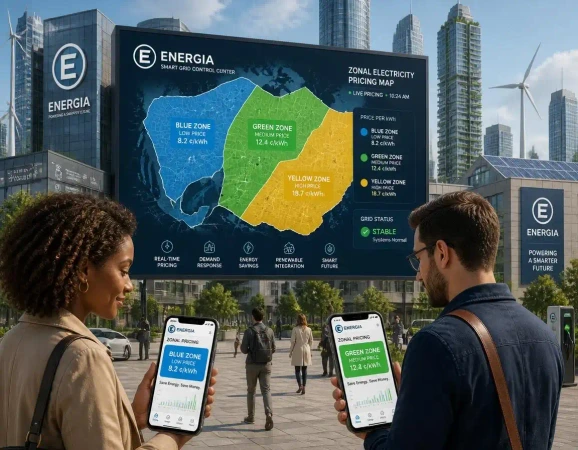
Right now, and for the foreseeable future, everyone in Great Britain pays the same wholesale electricity price, whether you’re in the Highlands or Central London, regardless of how much local generation or demand there is nearby. Zonal pricing would have changed that, splitting the country into several pricing zones, each with its own wholesale price set by local supply and demand.
Areas with lots of generation and not much local demand, think wind-heavy parts of Scotland, could have seen lower wholesale prices. Areas with high demand and less local generation, think London and the South East, could have seen higher ones. The idea was to give a genuine financial signal to build new power stations, factories and data centres in the right places, rather than wherever happened to have space.
☀️ Quick clarification for solar owners
This is about wholesale market economics, not sunshine. It has nothing to do with how much your panels generate. Our own SEG rate comparison shows the sunniest parts of Cornwall only beat Scotland by around 11% on generation, a genuinely minor gap. Zonal pricing was about grid congestion and local supply-and-demand balance, a completely separate thing from how much light hits your roof.
Why Octopus fought so hard for it
Octopus Energy, the UK’s largest energy supplier, became zonal pricing’s most vocal backer. Founder Greg Jackson argued that the current national system forces everyone to pay prices based on the most expensive generator running at any given moment, usually gas, even in areas awash with cheap wind and solar power. Octopus commissioned analysis from FTI Consulting suggesting zonal pricing could save UK consumers somewhere between £55 billion and £74 billion by 2050, largely by cutting the huge sums currently spent paying wind farms to switch off when the grid can’t handle their output (known as curtailment) and paying gas plants elsewhere to switch on instead.
The campaign got personal and pretty public. In the days before the government’s decision, Jackson accused opponents of running “the most aggressive lobbying campaign” Downing Street insiders had ever seen, and said he’d been “gaslit by vested interests” who stood to lose from a shake-up of the status quo.
Who didn’t want it, and why
Zonal pricing had serious opponents too, including Scottish renewable energy giant SSE, trade body RenewableUK, and several unions. Their central argument was about investor confidence: splitting the market into zones would make future revenues far less predictable for anyone building a wind farm or solar farm today, since nobody could say for certain which zone would end up cheap or expensive years down the line. That uncertainty, they argued, would raise the cost of financing new renewable projects, potentially cancelling out any savings from better price signals. Scotland’s government also raised concerns that a zonal system could specifically disadvantage Scottish renewable generators.
Three years of review, one decision, one delivery plan, more decisions still to come.
Reformed National Pricing, explained simply
Rather than splitting the market up, the government chose to keep a single national wholesale price and reform how the system works around it. On 21 April 2026, DESNZ published the Reformed National Pricing (RNP) Delivery Plan, setting out how this will actually happen.
A simplified illustration, not a map of the actual (never finalised) proposed zones.
| Feature | Zonal pricing (rejected) | Reformed National Pricing (chosen) |
|---|---|---|
| Wholesale price | Would vary by region | Stays the same across GB |
| Investor certainty | Lower, harder to predict revenue | Higher, single predictable price |
| New project siting | Price signal alone drove location | “Siting and investment levers” and connection rules steer location instead |
| Backed by | Octopus Energy, NESO, Energy Systems Catapult | SSE, RenewableUK, most incumbent generators |
| Implementation timeline | Would have needed years of market redesign | Delivery Plan published Apr 2026, further decisions due H2 2026 |
The RNP Delivery Plan introduces “siting and investment levers”, including a new concept called Connection Capacity Thresholds, essentially limits on how much new generation of a given technology (wind, solar, batteries) can connect within a specific zone over a set period. It also sets out a Strategic Spatial Energy Plan (SSEP), intended to map out where new generation and storage should go, though its first draft has already slipped to early 2027, a year later than originally planned.
So what does this mean for your solar panels?
Here’s the honest, unglamorous answer: for your day-to-day bill and export income, almost nothing has changed. SEG export rates are still set by your supplier, not your postcode, and that hasn’t shifted because of this decision. If you’re comparing rates today, our SEG rate comparison and Octopus Energy export tariff guide reflect the current, nationally-set market, and that’s not about to become regional any time soon.
Where it’s genuinely worth paying attention is further out. Had zonal pricing gone ahead, solar owners in generation-heavy areas could have seen a mixed picture, cheaper electricity to import on a cloudy day, but potentially less valuable exports if the local market was already flush with solar and wind. Areas with high demand and less local generation might have seen the opposite. That trade-off is now off the table. Instead, the practical thing to watch is how the new siting rules and Connection Capacity Thresholds affect grid capacity and curtailment in your specific region over the next few years, which could still influence things like how quickly a new solar farm near you gets connected, or how often local generation gets curtailed.
🔋 A battery still helps either way
Whatever happens at the wholesale level, a home battery gives you control that policy debates can’t take away, storing your own cheap daytime solar to use in the evening rather than relying on whatever the grid is charging. If you’re weighing that up, our guide to making money from home battery storage and our piece on getting paid to share your battery with Tesla, Octopus or Axle cover ways to make the most of one regardless of how the wider market shakes out.
Octopus hasn’t dropped it
Octopus Energy didn’t take the rejection quietly. Within days, it launched a new ad campaign under the banner “We’ll keep fighting for you,” and Greg Jackson set the government three tests for whatever replaced zonal pricing: could it cut bills by £100 to £150 a year, could it be delivered by 2028, and could it meaningfully reduce the need for new pylons. As recently as June 2026, Octopus submitted written evidence to a parliamentary committee arguing the reforms since the rejection have moved too slowly, pointing to the SSEP’s delay to 2027 and separate transmission charging reforms not expected until 2029. Whether Reformed National Pricing satisfies Octopus’s own tests is still, genuinely, an open question.
Common questions
Is the UK getting zonal electricity pricing?
No. The government rejected zonal pricing on 10 July 2025 and confirmed Great Britain will keep a single national wholesale electricity price. Instead, the system is being reformed through a programme called Reformed National Pricing, with the delivery plan published in April 2026.
Why did Octopus Energy want zonal pricing?
Octopus argued that regional pricing would better reflect local supply and demand, cut the huge sums spent paying wind farms to switch off and gas plants elsewhere to switch on, and could save UK consumers between £55 billion and £74 billion by 2050 according to its own commissioned analysis. The government ultimately judged that the investor uncertainty a regional system would create outweighed those potential savings.
Does this affect my SEG export rate or the value of my solar panels?
Not directly, and not yet. SEG export rates are still set nationally by each supplier rather than varying by region, and that hasn’t changed as a result of this decision. What’s actually changing is how new, large-scale generation projects get sited and connected to the grid, which could affect local grid capacity over the next few years, but it doesn’t change your export income or import price today.