
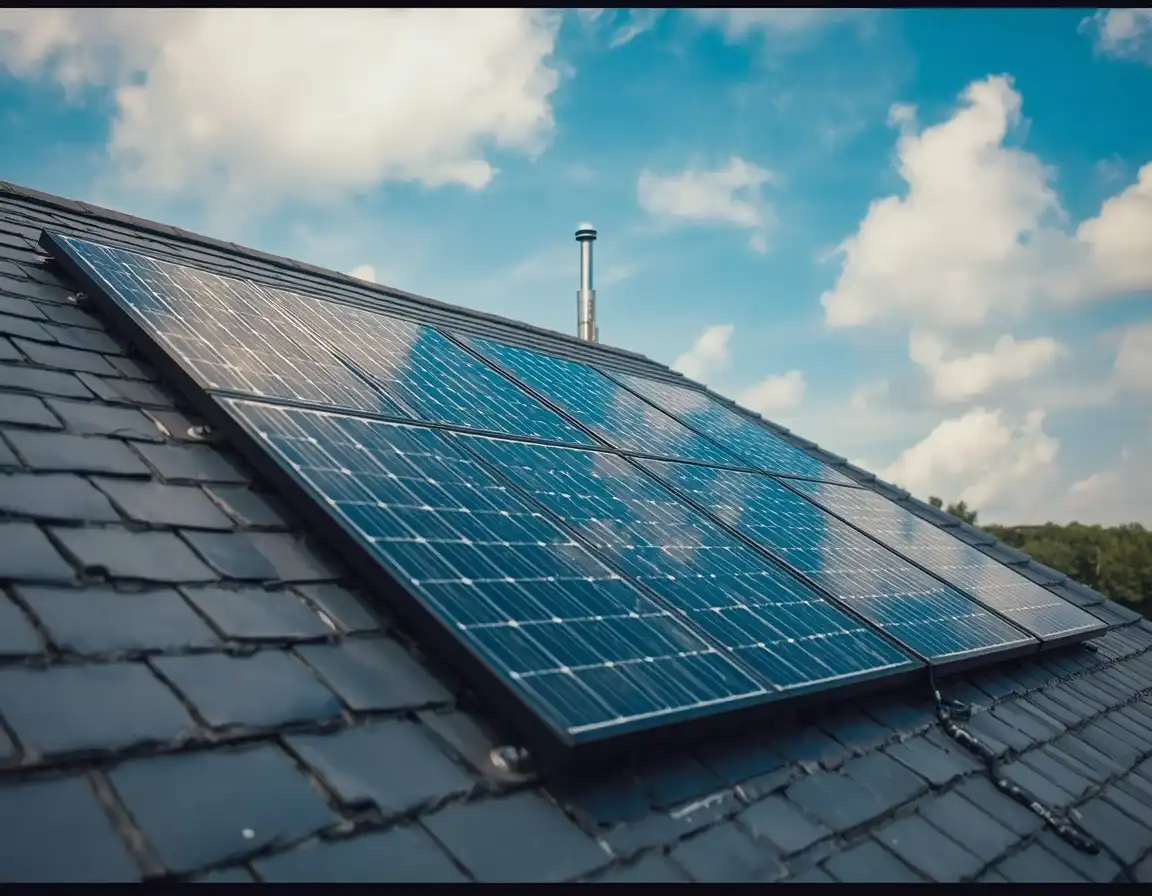
Solar Panels on a Slate Roof

Solar Panels on a Slate Roof: The Problems and How to Avoid Them
Solar panels work fine on slate, but the job is slower and fussier than on concrete tiles. The real risks are cracked slates, leaks round the brackets and bolting panels to a roof that’s nearly worn out. Get the roof checked first, insist on flashed brackets or slate hooks, and expect to pay extra for the labour. Do that and slate is no barrier. If an installer skips the roof check, I’d walk away.
🧱 Yes, but slate isn’t like other roofs
You can fit solar panels to a slate roof. Plenty of Welsh, Cornish, Scottish and Victorian roofs already carry them. What you can’t do is treat it like a concrete-tile job, because slate fights back.
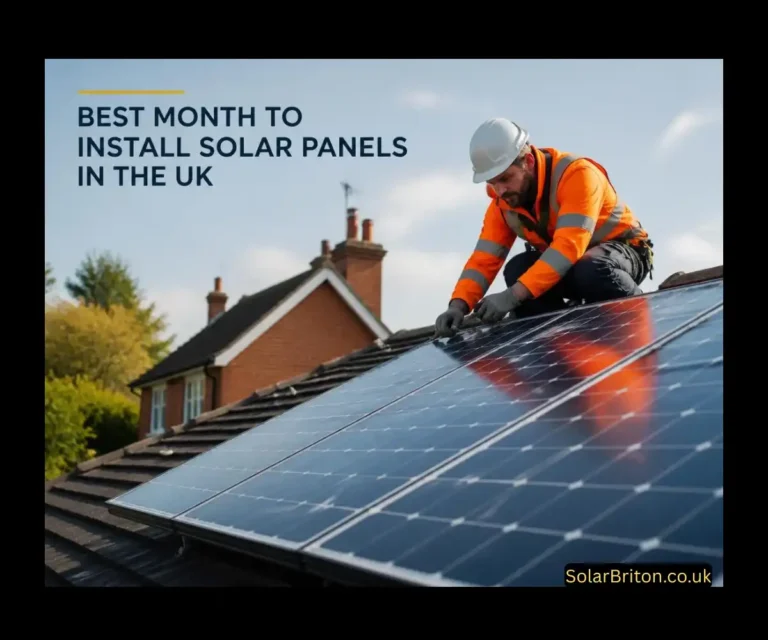
On concrete tiles, an installer lifts a tile, fixes a bracket to the rafter and drops the tile back over the top. Slate won’t allow that. Every slate is nailed on individually, it’s brittle, and it overlaps the ones around it. So each one has to be released with a slate ripper, a flat hooked tool that pulls or cuts the nail, rather than levered out. Once the bracket is in, the slate is cut to fit around it. That’s slow, fiddly work, and it’s why slate installs usually run a day or two longer.
Some guides say there are no real drawbacks. I don’t buy that. The drawbacks are real. They just live in the detail, and the detail decides whether you get 25 quiet years or a damp loft.
Below, I take the problems in the order I’d check them, then planning rules, costs and the questions I’d ask before signing anything.
🔨 Cracked and broken slates
This one happens on the day, so I’d raise it first. Slate is hard, but it splits along its grain, and an old slate that has spent a century baking and freezing can snap if someone tries to wriggle it free. A good crew pulls or saws the nail, sets every slate aside and replaces any that break. A bad one drills or hammers straight through, which can crack the slate or weaken it enough to let water in months later.
Before you sign, get three things in writing: who pays for broken slates, where the replacements come from, and whether they’ll match. That last one matters more than it sounds. SPAB, the society that advises on old buildings, says new slates should generally match the type, colour, texture, size and thickness of the existing ones. It also points out that many quarries have closed, although natural slate is still available.
Red flag: an installer who says a few breakages are normal and that’s your problem. On a very old roof, some cracked slates are a fair risk. Refusing to agree in advance who fixes them isn’t.
There’s a rule on this too. The MCS installation standard (MIS 3002) says that where slates would be displaced and leave gaps bigger than the ones already there, they must be notched or flashed. A gap round a bracket isn’t a cosmetic matter. It’s a requirement.
💧 Leaks around the brackets
Every bracket is a hole in the roof’s defences, and the flashing is what closes it. Flashing is a thin sheet of lead, zinc or similar that tucks under the slates above and laps over the ones below, so water runs round the bracket instead of through the gap. Get it right and a slate roof with panels stays as dry as it ever was. Get it wrong and water creeps along the batten for months before a damp patch turns up in the loft.
That slow creep is the sneaky part. Leaks after an install are usually a fitting fault rather than a panel fault, and they tend to seep rather than gush. If you spot a stain or a damp smell after the work, tell your installer straight away. Small leaks get worse quickly. I’ve covered the damp side in more detail in our guide to solar panels causing roof damage and damp.
The MCS standard says a system shouldn’t harm the weathertightness or structure of the building for its whole life. It also says pitched-roof systems must use mounting kits certified to MCS 012, and that brackets shouldn’t put load on the slates themselves unless they’re designed to spread it and have passed the relevant MCS 012 test.
Worth knowing: since May 2025, an updated version of MCS 012 has knocked several mounting products off the certified list, and a grace period has let installers keep using some of them. So “it’s MCS-approved” isn’t enough. Ask for the make and model of the mounting kit and look it up in the MCS Product Directory before you sign.
🕰️ Is your slate roof too old for solar?
Slate itself is tough. Historic Environment Scotland says a lifespan of 100 years or more is quite common. What usually fails first is everything holding it up. Iron nails rust through, battens rot and slates start to slip. Roofers call the nail problem nail sickness, and Historic Environment Scotland lists it among the commonest causes of slate roof trouble.
Fitting panels means disturbing slates across the whole array. On a healthy roof that’s fine. On a tired one, you can make weak spots worse. As a rule of thumb, a couple of slipped slates is a repair job. Slipped slates in several places across the same slope point to a wider fixing failure until a proper inspection says otherwise.
| What you can see | What it usually means | What I’d do |
|---|---|---|
| One or two slipped or cracked slates | Isolated damage | Repair them, then fit solar |
| Slipped slates in several places, rust stains, exposed nail heads | Nail sickness spreading | Get a roofer’s report and re-fix or re-slate that slope first |
| Slates flaking or peeling in layers | Poor-quality or worn-out slate | Ask a slate roofer whether it can be lifted at all |
| Sagging roof line, or soft, damp battens | Timber or structural trouble | Bring in a structural engineer before anything else |
| Re-slated recently under a guarantee | New fixings could affect the cover | Read the guarantee wording first |
If there’s work to do, do it first. Taking panels off later so a roofer can reach the slates underneath means paying for scaffolding twice, plus the removal and refit itself. Published quotes for a typical 10-panel system run from roughly £500 to £2,500, depending on who does it and how much scaffold is needed, and that’s before the roofer’s bill. Our solar panel removal cost guide has the breakdown.
Tell your installer how old the roof is. A good one will flag the problem before you ask.
⚖️ Weight and roof structure
Panels are heavy in bulk. Rails and modules together add roughly 12–15kg to every square metre of roof. Most post-war roofs cope with that. Roofs built before 1950 sometimes have rafters that are undersized by modern standards, and that’s where trouble starts.
The MCS standard says the installer must have the roof structure checked by someone competent. It goes further. A structural engineer should be consulted when anything looks unusual: signs of structural distress, past alterations such as notched timbers or a heavier roof covering, a roof shallower than 30°, snow traps like dormers, valleys and parapets, or a traditional cut roof with hips or valleys.
One more rule that bites on small roofs. Panels shouldn’t sit within 400mm of any roof edge unless extra fixings and timbers are added. On a narrow terrace, that can shave a panel or two off the design. Our guide to solar on a Victorian terraced house shows how that plays out.
📜 Planning, conservation areas and listed buildings
Slate is the classic covering on period homes, so this is where planning trips people up most. Here are the England rules for an ordinary house, as they stand now.
| Your situation | Planning permission? | What I’d do |
|---|---|---|
| Unlisted house, no local restrictions | Usually not. Panels can stick out no more than 200mm from the roof slope and must stay below the highest part of the roof, chimney excluded. | Ask your installer to confirm this in writing |
| Conservation area | Usually not on a roof slope. Panels can’t go on a wall, balcony or roof enclosure that fronts a highway. | Ask the council whether an Article 4 direction removes the right on your street |
| Listed building | Yes. Listed building consent is needed. | Talk to the conservation officer before you collect quotes |
| Scotland, Wales, Northern Ireland | Different rules | Check with your local council |
Read the small print: plenty of guides say panels can’t go on a road-facing roof slope in a conservation area. The England order as it currently reads names walls, balconies and roof enclosures, not roof slopes. So the real gatekeeper is often a local Article 4 direction. That’s why I’d always ask the council first. I’m not a planning lawyer, and they have the final say.
Historic England says listed building consent is always needed for panels on a listed building, but that they’re generally acceptable on non-principal roof slopes. It also says solar slates can work in some cases, though not on prominent slopes, because they don’t usually copy the look of real slate convincingly. More detail in our guides to solar panel planning permission and solar panels on listed buildings.
💷 What it really costs
The government’s latest cost data (DESNZ, 2025/26, drawn from MCS-certified installs) puts the median price for systems up to 4kW at about £1,780 per kW. For a 4kW system, that’s roughly £7,100.
Nobody publishes an official slate premium, so treat what follows as a spread of what’s out there. One comparison guide put slate around 30% above a standard install back in 2024. A 2026 guide puts specialist mounts at £500–£1,000 extra. The extra day or two of labour explains most of it.
From 1 April 2027 the rate is due to rise to 5%, and the government hasn’t said it will extend the zero rate. Full pricing is in our solar panel cost guide.
Two money traps to watch. First, the zero rate only applies when one company supplies and fits the system, and roof repairs may not qualify, so ask for repairs to be itemised separately. Second, no MCS certificate generally means no Smart Export Guarantee. SEG rates in 2026 run from roughly 4p to 16p per kWh depending on supplier, and Outgoing Octopus dropped from 15p to 12p on 1 March 2026. Our SEG rates comparison keeps the current league table.
🛡️ Warranties, insurance and who’s liable
Three guarantees can collide on a slate roof: the panel and inverter warranties, your installer’s workmanship guarantee, and any guarantee your roofer gave you. The MCS standard says that where the roof covering is under warranty, the warranty provider should be consulted, because new fixings can affect it. If you’ve had the roof re-slated recently, dig out the paperwork before you book anyone.
Ask your installer for the workmanship guarantee in writing. Check that it names leaks and damaged slates around the fixings, and says how many years it lasts. Then tell your home insurer about the panels. Our guides to solar panel warranties and solar panel insurance explain what’s normally covered.
🔧 Hooks, in-roof and solar slates
There isn’t one right fixing method. The best choice depends on how old the slate is and whether the roof is due for replacement anyway.
| Method | How it works | Good for | Watch out for |
|---|---|---|---|
| Flashed brackets | Slates lifted, bracket fixed to the rafter, flashing added, slates cut round it | Sound slate in good condition | The quality of the cutting and the flashing detail |
| Slate hooks or plates | Some makers design them so slates don’t need cutting and the load is spread | Old, brittle slate you want to disturb as little as possible | Not every installer uses them, and the kit must be MCS 012 listed |
| In-roof panels | Panels replace the slates in the array area and sit flush | A roof that’s being re-covered anyway. See our guide to in-roof solar panels | Dearer to retrofit, typically 5–10% less efficient, and warranties are often around 15 years |
| Solar slates | Slate-look PV tiles replace the roof covering | Some conservation-area and listed-building cases | Often quoted at 50–100% more than standard panels, and Historic England says they rarely match real slate |
If the roof really isn’t up to it, ground-mounted panels are the fallback. They have their own planning limits, so check before you buy. Our ground-mounted solar guide covers the costs.
✅ Questions to ask your installer
Tick these off as you go. If an installer bristles at any of them, that tells you something.
Not sure who to shortlist? Start with our guides to choosing a solar installer and what MCS certification actually means.
If you take one thing from this page: get the roof looked at before you get the solar quotes. Everything else on this list gets easier once you know what state the slate is in.
❓ Solar panels on a slate roof: FAQs
Will solar panels damage my slate roof?
Not if the job is done properly. A good installer releases slates without snapping them, fixes brackets to the rafters, flashes every fixing and cuts slates neatly round the brackets. Damage comes from shortcuts, like drilling through slates or skipping the roof check. Get weak or slipped slates repaired before the panels go on, and get the installer’s guarantee for leaks in writing.
Do I need planning permission for solar panels on a slate roof?
Usually not in England, if the panels stick out no more than 200mm from the roof slope and stay below the highest part of the roof. Listed buildings always need listed building consent, and conservation areas can have local Article 4 directions that remove the usual right. Scotland, Wales and Northern Ireland have their own rules, so check with your council before you sign.
How much extra does solar cost on a slate roof?
There’s no official figure. Published estimates run from around £500–£1,000 for specialist mounts up to roughly 30% on top of a standard installation, mostly for the extra labour, which is usually a day or two. A typical 4kW system costs around £7,100 before any slate premium, based on the government’s 2025/26 cost data. Roof repairs are extra, so ask for them itemised.



One Comment