
Solar Panels on a Victorian Terraced House in London: The Complete 2026 Guide

Solar Panels on a Victorian Terraced House in London:
The Complete 2026 Guide
If you own a Victorian terraced house in London and you’ve been on the fence about solar panels, I’m here to give you the straight facts. I’ve pulled together the latest 2026 data — real costs, genuine savings, planning rules, and which government schemes are actually worth your time.

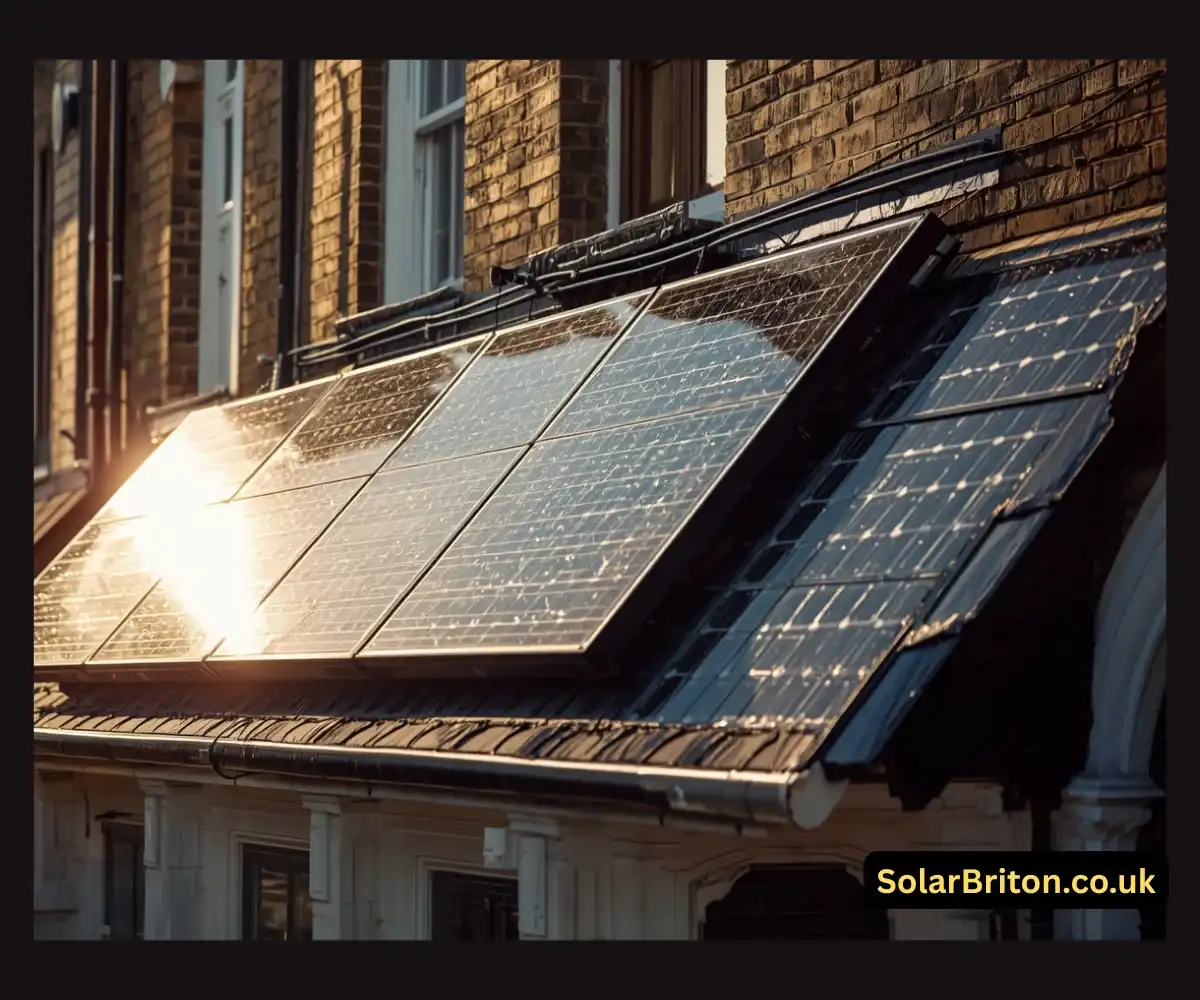
Modern solar panels delivering clean energy from a classic London rooftop.
London’s Victorian terraces are iconic — but they’re also expensive to run. With electricity prices still elevated after the July 2026 price cap rise (up to £1,862/yr), more homeowners are turning to solar as a long-term fix. The great news? Your Victorian terrace is very likely a solid candidate, and the financial case in 2026 is genuinely compelling.
In this guide I’ll take you through everything: roof suitability, planning permission, what it’ll cost, how much you’ll save, which government schemes to tap, and how to choose an installer who actually knows their way round an old London rooftop.
Is My Victorian Terrace Suitable?
Almost certainly, yes. Victorian terraces in London typically have pitched roofs at around 40–45 degrees — very close to the optimal angle for UK solar generation. The rear roof is usually free from major obstructions, giving you a clean surface to work with. A standard terrace has roughly 16–22m² of usable rear roof space, which is enough for 8–12 modern panels and a system output of 3.5–5kWp — more than enough to cover 50–70% of your household’s annual electricity use.
Check out how many solar panels are required in the U.K.
London’s Solar Advantage — Don’t Underestimate It
Many people assume London is too cloudy for solar to make financial sense. I understand the scepticism, but the data tells a different story. London receives 1,020 kWh of solar irradiance per kWp per year — roughly 20% more than Manchester or Edinburgh, and comparable to northern France. That directly translates into bigger savings and a shorter payback than you’d get almost anywhere else in the UK.
Source: PVGIS / Photovoltaics.co.uk, 2026. South-facing roof assumed.
Check out the Best Solar Battery in the UK
Roof Orientation & System Size: What to Expect

South-facing rear roofs provide the cleanest, most productive solar surface on a London terrace.
The direction your roof faces has the biggest single impact on your output. South is ideal, but south-east and south-west are nearly as good. If your rear faces north and your front faces south, you’ve got a real decision — front-of-house installations are permitted development in most of London, but conservation area rules add a layer of complexity covered in the next section.
| Roof Orientation | Output vs South | Verdict | Notes for London Terraces |
|---|---|---|---|
| South | 100% | Ideal | Peak midday generation; maximum annual yield |
| South-East / South-West | ~95% | Excellent | Almost as good; recommend without hesitation |
| East | ~82% | Good | Morning peak; suits households home in the evenings |
| West | ~82% | Good | Afternoon peak; great for London commuters with evening energy use |
| East + West split | ~80% | Good | Broader daily generation profile; excellent for battery pairing |
| North | ~62% | Not advised | Low yield; rarely economical on its own |
Check out Best SEG Tariff Rates UK
Planning Permission in London: What the Rules Actually Mean
This is where Victorian terraces in London get slightly more complicated than elsewhere in the UK. Around 30% of London falls within a conservation area, so it’s worth confirming your status before you book a survey. The good news is that even in conservation areas, rear-roof installations are almost always permitted development — it’s street-visible, front-elevation panels that can trigger extra steps.
| Scenario | Permission Needed? | Action |
|---|---|---|
| Standard terrace — rear roof | No | Permitted development — book your survey |
| Conservation area — rear (non-visible) roof | Usually no | Rear installation typically fine; confirm with your borough |
| Conservation area — front/street-visible roof | Possibly | Prior approval may be needed — straightforward in most cases |
| Listed building (any elevation) | Yes | Listed Building Consent required; flush in-roof systems (e.g. Viridian Clearline) commonly approved |
| Unsure of your status | Check first | Certificate of Lawful Development — £103 in London boroughs, 2026 |
Check your property’s conservation area status on your local borough’s planning map or via the official Planning Portal before committing to anything. A good installer should also run this check for free during their site survey.
Check out Solar panels for Garden Shed UK
What Does It Cost in 2026?
Installation costs in London have settled at a competitive level in 2026. A typical Victorian terrace needs a 3.5–4kWp system — that’s around 8–10 modern high-efficiency panels. VAT on solar installations remains at 0% until at least March 2027, so double-check that every quote you receive reflects this before signing anything.
| System Size | Panels | Cost (0% VAT applied) | Annual Generation | Ideal For |
|---|---|---|---|---|
| 3kWp | 7–8 | £5,500–£7,000 | 2,800–3,100 kWh/yr | 2-bed terrace / smaller households |
| 4kWp | 9–10 | £6,500–£9,000 | 3,800–4,100 kWh/yr | 3-bed terrace / typical London home |
| 5kWp | 11–12 | £8,000–£10,500 | 4,600–5,200 kWh/yr | Larger terrace / EV ownership |
| + Battery (5–10kWh) | — | +£2,500–£6,000 | Self-consumption ↑ to 65–70% | Commuter households; evening energy use |
Check out Solar panels for caravan
How Much Will I Save?
This is the big one. A well-positioned 4kWp system on a south-facing London Victorian terrace typically saves between £700 and £1,350 per year, combining reduced electricity bills with income from the Smart Export Guarantee. With a battery added, you push self-consumption from around 35% up to 65–70%, and your total return increases meaningfully.
| Saving Type | Annual Value | Notes |
|---|---|---|
| Reduced electricity bills | £400–£700/yr | Based on ~28p/kWh (July 2026 price cap); south-facing 4kWp system |
| SEG export payments | £200–£650/yr | Varies significantly by tariff — see table in next section |
| With battery storage | +£200–£400/yr extra | Maximises self-consumption; reduces evening grid draw |
| Property value uplift | +4–6% | Average uplift on London property value (2025–2026 studies) |
Assumes ~£1,050/yr average savings; 25-year panel lifespan; modest 2.5% annual electricity price rise. Illustrative only.
2026 Government Support: Grants, VAT & the SEG
There are three main forms of financial support on offer right now, and the good news is they can all be stacked. The 0% VAT relief alone saves the average homeowner around £1,500 on a 4kWp system and doesn’t require any application — it’s automatic.
Best SEG Export Rates — Verified June/July 2026
| Supplier & Tariff | Rate (p/kWh) | Type | Battery Required? | Est. Annual Income (4kWp) |
|---|---|---|---|---|
| Good Energy – Solar Savings Exclusive | 25p | Flat rate | No | ~£325–£375/yr |
| EDF – Export Exclusive (12m Fixed) | 24p | Fixed | No | ~£310–£360/yr |
| Octopus – Intelligent Flux (peak windows) | Up to 32p | Time-of-use | Yes | ~£400–£650/yr |
| E.ON Next – Export Exclusive | 16.5p | Fixed | No | ~£215–£250/yr |
| British Gas – Export & Earn | 12p | Variable | No | ~£155–£180/yr |
One thing worth knowing: your import and export suppliers don’t have to be the same company. You can buy electricity from one supplier and register for SEG payments with a completely different one — so always shop around for your export tariff separately.
Should You Add a Battery?
For the typical London commuter household — out during peak solar generation hours from roughly 10am to 3pm — a battery makes genuine financial sense. Without storage, a lot of the power your panels generate during the day gets exported to the grid for 12–25p per kWh, then bought back in the evening for 28p+. A 5–10kWh lithium iron phosphate (LFP) battery pushes your self-consumption from around 35% to 65–70%, and opens up higher-paying time-of-use SEG tariffs like Octopus Intelligent Flux. Budget an extra £2,500–£6,000 — and remember, the 0% VAT relief applies to batteries too when installed alongside solar panels.
Choosing the Right Installer

Always verify MCS certification before signing. A good installer should handle DNO registration and MCS paperwork on your behalf.
The Bottom Line
Installing solar panels on a Victorian terraced house in London in 2026 is one of the most financially sound home improvements you can make. With the capital’s above-average irradiance, 0% VAT until March 2027, competitive SEG export rates reaching 25p/kWh, and the Warm Homes Local Grant for eligible households, the economics have never been better aligned.
Your roof is more suitable than you probably think. Your savings will likely exceed your expectations. And the planning rules, while occasionally requiring a bit of extra paperwork in conservation areas, are far less daunting than most people fear. Get three quotes from MCS-certified installers, confirm your planning position, and you could be generating clean energy — right from your Victorian rooftop — before the end of 2026.
