Solar Panels on a North Facing Roof UK: Is It Worth It in 2026?

Solar Panels on a North Facing Roof UK — Is It Actually Worth It?
Honest numbers, real savings, and exactly what to know before you dismiss your north-facing roof and walk away from solar.
% of south-facing output by orientation
The Honest Answer
Does a North Facing Roof Rule Out Solar?
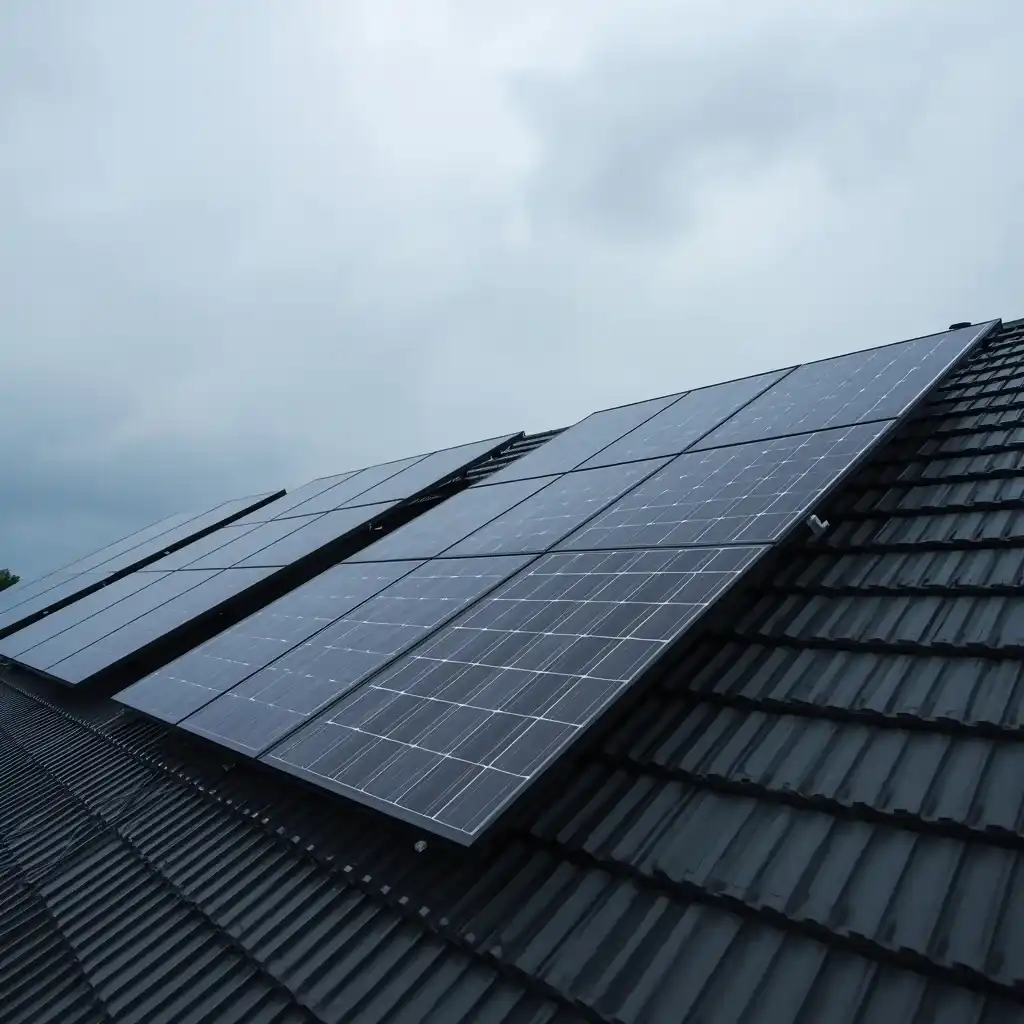
I hear this one a lot — “my roof faces north, so solar isn’t for me.” And honestly? That used to be pretty fair advice. But in 2026, it’s far more nuanced. Yes, solar panels on a north facing roof in the UK do produce less electricity — roughly 50–60% of what a south-facing system generates. However, with electricity prices sitting around 28p per kWh and panel costs having tumbled by around 60% over the past decade, the maths can still work in your favour.
The reason south-facing is always recommended comes down to simple solar geometry: in the UK, the sun travels across the southern sky year-round and never reaches true north. A north-facing roof therefore gets mostly indirect, diffuse light. What’s changed is the technology — modern N-type TOPCon panels are genuinely excellent at squeezing electricity from diffuse light, and they’re now widely available at competitive prices.
Output Comparison
How Much Do North Facing Solar Panels Actually Generate?
Below is how the main roof orientations compare for a typical 4kWp system in central England. Expect outputs around 10–15% lower in Scotland.
Here’s what those figures mean for annual generation and savings across the UK, split by region:
| Location | South-facing (kWh) | North-facing (kWh) | Est. Annual Saving | Verdict |
|---|---|---|---|---|
| Southern England | 4,000–4,200 | 2,100–2,500 | ~£470–£560 | Worth It |
| Midlands | 3,600–3,900 | 1,900–2,200 | ~£430–£490 | Worth It |
| Northern England | 3,200–3,600 | 1,700–2,000 | ~£390–£450 | Assess Carefully |
| Scotland | 2,800–3,400 | 1,500–1,900 | ~£340–£430 | Borderline |
Savings based on 28p/kWh, ~50% self-consumption. Estimates only — always get a site-specific quote from an MCS-certified installer.
Check out how many solar panels are required in the U.K.
Maximising Output
How to Get More From a North Facing Solar Installation
If you’re going ahead with solar panels on a north facing roof in the UK, how you configure the system makes a real difference.
1. Use N-Type TOPCon or HJT Panels
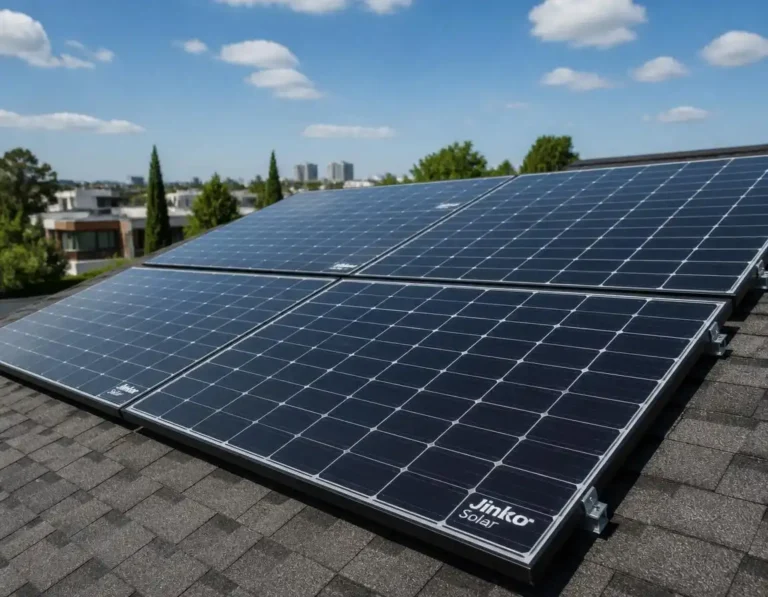
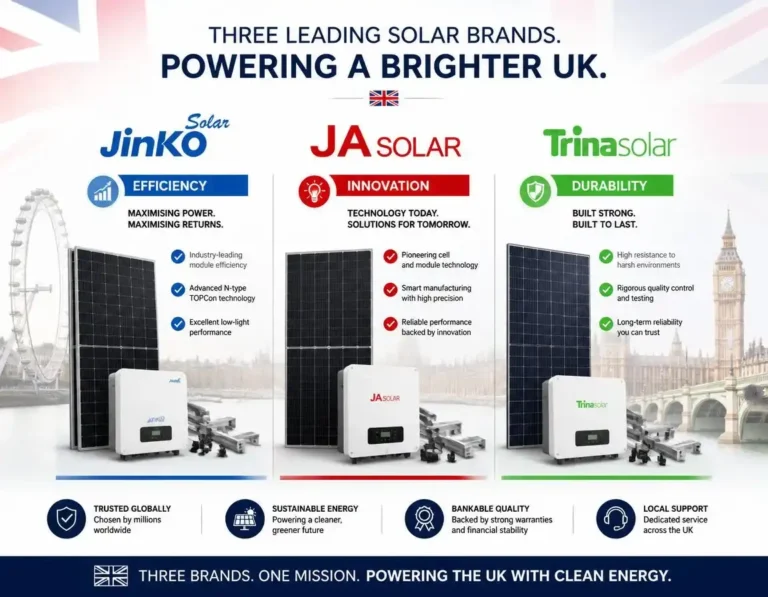
These newer cell technologies convert diffuse light more efficiently than older P-type PERC panels. In 2026, N-type TOPCon is the industry standard — Jinko, JA Solar, and Trina all offer TOPCon panels at competitive prices, typically achieving 22–24% efficiency. On a low-light north-facing roof, that extra performance compounds significantly over a year.
2. Fit Microinverters, Not a String Inverter
A standard string inverter drags the whole array down to the output of the weakest panel. On a north-facing roof with uneven irradiance, that’s a costly problem. Microinverters — such as the Enphase IQ8, which comes with a 25-year warranty — let each panel operate independently. Yes, they add around £1,000–£2,000 to system cost, but on a tricky roof, they earn their keep.
3. Add Battery Storage
A north-facing system produces a modest, steady trickle of electricity through the day. A battery lets you store that generation and use it in the evening, boosting self-consumption from roughly 30% up to 70–80% — dramatically shortening payback time.
Check out Solar panels for caravan
Costs & What You Can Earn
What Does a North Facing Solar System Cost in 2026?
A typical 4kWp north facing solar panel system in the UK costs roughly £7,000–£10,000 installed. Solar panels and installation currently attract 0% VAT until March 2027, saving around £2,000 on a £10,000 system — so there’s a genuine incentive not to hang about.
On top of bill savings, you’ll earn money for any electricity you don’t use yourself through the Smart Export Guarantee (SEG). SEG rates range from 1p to 30p per kWh in 2026, depending on your energy supplier. E.ON Next’s Export Exclusive tariff pays 16.5p/kWh fixed, no battery required. For a north-facing system exporting around 700–900 kWh per year, that’s a handy £115–£150 in annual export income on top of your bill savings.
Lower-income households should also check eligibility for ECO4 grants, which currently run until December 2026 and can cover up to 100% of solar panel costs. A successor scheme is expected, but details haven’t been confirmed yet.
✅ North Facing Solar IS Worth It When…
- Your roof has no significant extra shading from trees or buildings
- Pitch is between 25° and 45°
- You use electricity during daytime hours (working from home etc.)
- You pair it with a battery to maximise self-consumption
- You’re based in southern or central England
- North-facing panels form part of a mixed-orientation array
❌ Think Twice When…
- Heavy shading from trees or neighbouring buildings
- Roof pitch is very steep (above 60°) or near-flat
- You’re in northern Scotland with a small north-facing roof
- You’re likely to move within the next 5 years
- Projected payback stretches beyond 20 years
SEG Export Rates — 2026
Applies to north-facing systems too — orientation doesn’t affect eligibility.
Source: Purely Energy / Expertsure, 2026. You can switch SEG tariff at any time with no exit fees.
Technology Comparison
Check out Solar panels for renters uk
🔄 Alternatives Worth Considering
If the numbers still don’t stack up, these options are worth exploring:
- Ground-mounted system: Position panels at the perfect south-facing angle in your garden. Under 4m² is usually Permitted Development — no planning permission needed.
- Mixed-orientation array: Use microinverters to combine north-facing panels with any east or west-facing sections for a larger overall system.
- Flat roof tilt frames: A 15–20° southward-tilted mount on a flat roof outperforms a steep north-facing pitch — and keeps itself clean with rainwater.
Frequently Asked Questions
Your North Facing Solar Questions, Answered
Yes, absolutely. Most north-facing residential solar installations fall under Permitted Development rights, so planning permission usually isn’t needed. As long as your system is fitted by an MCS-certified installer, you’re also fully eligible for the Smart Export Guarantee. In 2026, the question isn’t really “can I?” — it’s more “will the numbers work for my specific roof?”
North-facing panels typically produce 50–60% of what an identical south-facing system would generate. For a 4kWp system in central England, that’s roughly 1,700–2,000 kWh per year instead of ~3,800 kWh — still enough to make a meaningful dent in your bills, particularly if you pair the system with battery storage.
Typically 11–13 years for a north-facing system, compared to 6–8 years for a south-facing one. Given that quality solar panels carry a 25-year performance warranty (retaining around 80% output after 25 years), that still leaves over a decade of largely free electricity after break-even — not a bad outcome at all.
N-type TOPCon or Heterojunction (HJT) monocrystalline panels are the standout choice in 2026. They perform better in diffuse and low-light conditions and degrade more slowly over time. Pair them with microinverters (such as the Enphase IQ8 with its 25-year warranty) rather than a standard string inverter to get the most from every panel independently.
Yes — roof orientation has absolutely no bearing on SEG eligibility. As long as your system is MCS-certified and you have a smart export meter, you can register for any SEG tariff. The best fixed rate in 2026 is E.ON Next’s Export Exclusive at 16.5p/kWh, available without battery storage. You can switch SEG supplier at any time with no exit fees, so it pays to shop around.

7 Comments