What Actually Happens to Old Solar Panels in the UK?

Solar panel end of life · UK 2026
What Actually Happens to Old Solar Panels in the UK?
I get asked this a lot, usually by someone who’s just had panels fitted and is already wondering about year 30. So here’s the honest answer — what really happens when a panel reaches the end of the road, who pays for it, and what UK law actually says.
Old solar panels don’t go to landfill and they don’t just get binned. UK law (the WEEE Regulations) says the company that sold you your panels has to take them back and recycle them, at no cost to you, once they reach end of life. Most of a panel — the glass and aluminium frame — is straightforward to recycle. The tricky bit is that the UK’s first big wave of solar installations is only just reaching that 25–30 year mark now, so the recycling industry here is still scaling up to meet it.
So what actually happens when a panel “dies”?
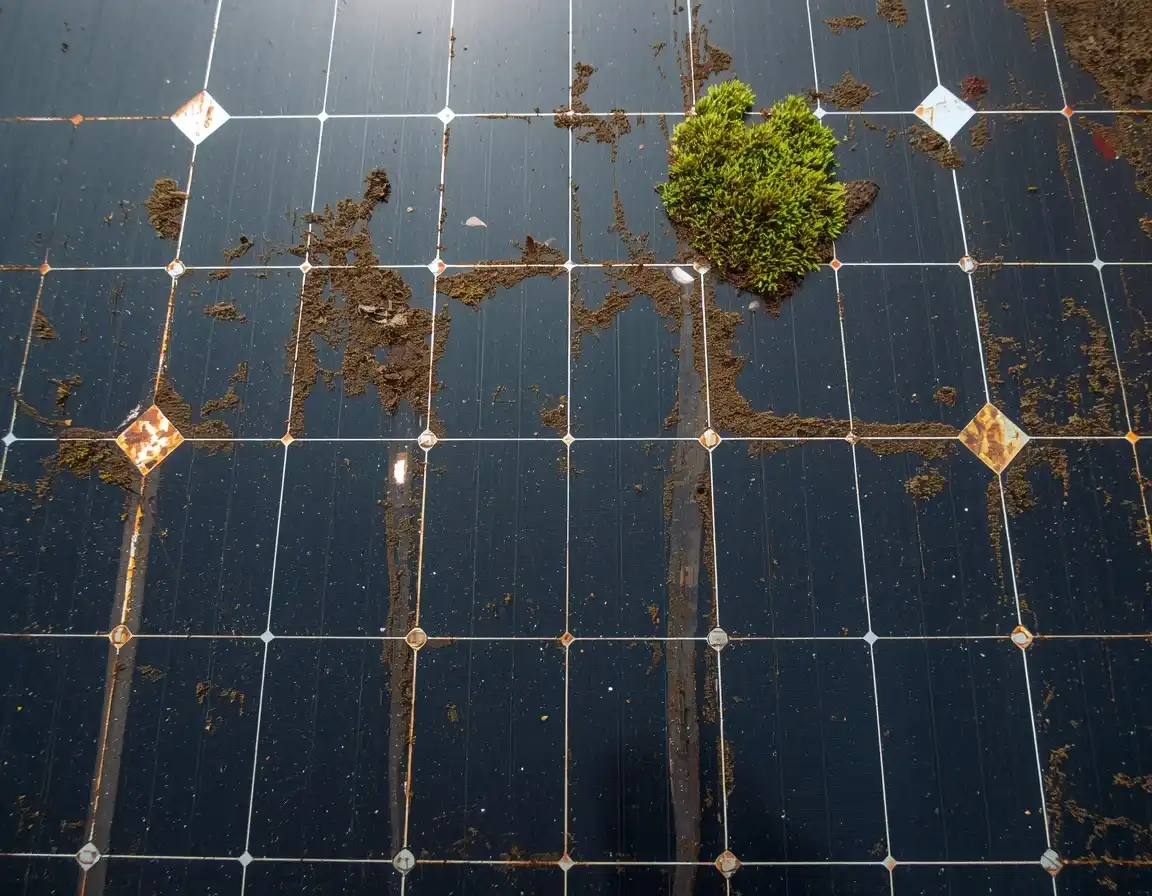
Here’s the bit that surprises most people: solar panels don’t switch off one day. They degrade very slowly, usually somewhere between 0.3% and 0.7% less output every year depending on the panel type, so a panel is still generating a useful amount of electricity well into its twenties. “End of life” usually means one of two things — the panel’s output has dropped low enough that it’s no longer worth keeping, or it’s been physically damaged (cracked glass, a hotspot, water ingress) and can’t be repaired.
When that point is reached, the panel doesn’t just get thrown away. It goes through a fairly standard journey, and it’s worth knowing what that looks like before you ever need it.
Is it actually illegal to bin a solar panel?
In a word, yes — solar panels are classed as WEEE (Waste Electrical and Electronic Equipment), specifically Category 14, and they carry the crossed-out wheelie bin symbol that means “don’t put this in general rubbish.” A licensed waste site is required to handle it as electrical waste, not general landfill. For businesses, ignoring this is a criminal offence that the Environment Agency and Defra can enforce with fines. For a homeowner, the legal duties sit mainly with the companies in the supply chain, but you still can’t legally dump it — you need to go through the proper route.
| What you might consider doing | Allowed? |
|---|---|
| Put a broken panel in your general household bin | Not allowed |
| Toss it in a builder’s skip with other rubble | Not allowed |
| Contact your original installer or the panel’s producer | Correct route |
| Take it to a Designated Collection Facility | Correct route |
| Give it away or reuse it if it still works | Encouraged first |
Worth knowing: reuse comes before recycling wherever possible. A panel producing, say, 80% of its original output is often still perfectly usable for a shed, garage or someone with lower energy needs, so a good scheme will check whether a panel can have a second life before it’s broken down for parts.
Who actually pays for it — you or the installer?
This is the part that puts most people at ease. Under the WEEE Regulations’ “Extended Producer Responsibility” model, whoever sold or manufactured your panels is legally on the hook for collecting and recycling them, and that cost is already built into what you paid at installation. You shouldn’t be charged to have panels recycled at end of life.
The one cost that usually does fall on you is physical removal — getting someone up on the roof safely, and possibly scaffolding, to take the panels down and disconnect them. That’s a separate job from the recycling itself.
A useful question to ask at installation: which Producer Compliance Scheme your installer or panel brand is signed up to, and how confident they are that scheme will still be operating in 25–30 years. It’s a good way to gauge how seriously a company thinks about the whole lifespan of what they’re selling you, not just the sale itself. If you’re comparing options, our guide to what your solar panel warranty actually covers is a good next stop.
What actually gets recovered from an old panel?
A standard panel is mostly glass and metal, which is good news — those are the easiest, most established materials to recycle. Roughly, here’s what a typical panel is made of by weight.
| Material | Share of weight | What happens to it |
|---|---|---|
| Glass | ~70% | Recycled into new glass products or used as insulation material |
| Aluminium frame | ~13% | Melted down into new frames or other aluminium goods |
| Polymers (backsheet, encapsulant) | ~8% | Harder to separate cleanly — often recovered for energy rather than reused as material |
| Silicon | ~4% | High-purity silicon can, with the right process, be reprocessed into new solar wafers |
| Copper | ~3% | Recycled into wiring and general electronics |
| Silver & other trace metals | ~2% | Small quantity but high value, so worth recovering where the process allows |
How big is this actually going to get?
Right now, honestly, not very. Most UK solar was installed within the last fifteen years, so genuine end-of-life waste is still a fairly small stream measured in the hundreds to low thousands of tonnes a year. That’s exactly why the UK’s current installed capacity of roughly 22.3GW hasn’t yet produced a mountain of dead panels — the boom years (2010–2015, driven by the old Feed-in Tariff) are only now approaching their 25–30 year mark.
Illustrative shape based on University of Birmingham research, which puts cumulative UK PV waste at around 2 million tonnes by 2050. Other industry estimates for the mid-term (2030s) figures vary quite a bit depending on methodology, so treat the curve’s shape as the key takeaway rather than any single number.
The research also flags something worth knowing about: UK solar waste volumes could outgrow current pan-European recycling capacity by around 2035, which is exactly why several dedicated UK facilities — including sites in Worcester and Dartford — have opened in the last couple of years specifically to get ahead of that curve.
What to actually do when your panels reach end of life
- 1
Check it’s genuine end-of-life first, not a fixable fault — a sudden output drop is often something simpler. Our guide to how long solar panels actually last covers what normal ageing looks like versus a real problem.
- 2
Contact your original installer or the panel’s manufacturer — under WEEE rules, they’re responsible for collection.
- 3
Ask which Producer Compliance Scheme they use, and confirm it’s still active.
- 4
If the original company no longer exists, a Producer Compliance Scheme such as PV CYCLE, or your nearest Designated Collection Facility, can usually still take the panel.
- 5
Arrange safe physical removal separately — this is usually the only cost you’ll actually face.
- 6
Ask for confirmation the panel went to an Approved Authorised Treatment Facility, not just “recycling” in vague terms.
You can check the official list of approved facilities and producer registrations on the GOV.UK WEEE public registers, and see how Producer Compliance Schemes are approved on the GOV.UK WEEE compliance scheme guidance.
Quick questions, straight answers
Yes. Solar panels are covered by the WEEE Regulations (Waste Electrical and Electronic Equipment, Category 14), so they must be collected and processed through an approved route rather than thrown away. According to the trade body Solar Energy UK, up to 99% of the materials in a panel are technically recoverable, though today’s UK facilities typically achieve real-world recovery rates of around 85–95% depending on the panel type and process used. The glass and aluminium frame are the easiest parts to recycle and make up most of a panel’s weight.
Under the WEEE Regulations’ Extended Producer Responsibility model, the company that originally sold or manufactured the panel is legally responsible for funding its collection and recycling, not the homeowner. This cost is built into the price you paid when the panels were installed. The only cost you’re likely to face is arranging physical removal from your roof, such as scaffolding or an electrician to safely disconnect the system.
You won’t personally be prosecuted under the WEEE Regulations — those legal duties fall mainly on producers, installers and waste businesses. But that doesn’t mean you can simply bin a panel or toss it in a builder’s skip. Panels carry the crossed-out wheelie bin symbol, licensed waste sites are required to handle them as electrical waste rather than general rubbish, and dumping them illegally can still fall foul of separate fly-tipping and duty-of-care rules. The straightforward route is to contact your original installer or the panel’s producer, who are legally obliged to take it back free of charge.
The short version: a solar panel’s story doesn’t end on your roof. Between the WEEE rules, the producer picking up the bill, and glass and aluminium being some of the easiest materials on earth to recycle, “what happens to old panels” turns out to have a much less worrying answer than most people expect.