
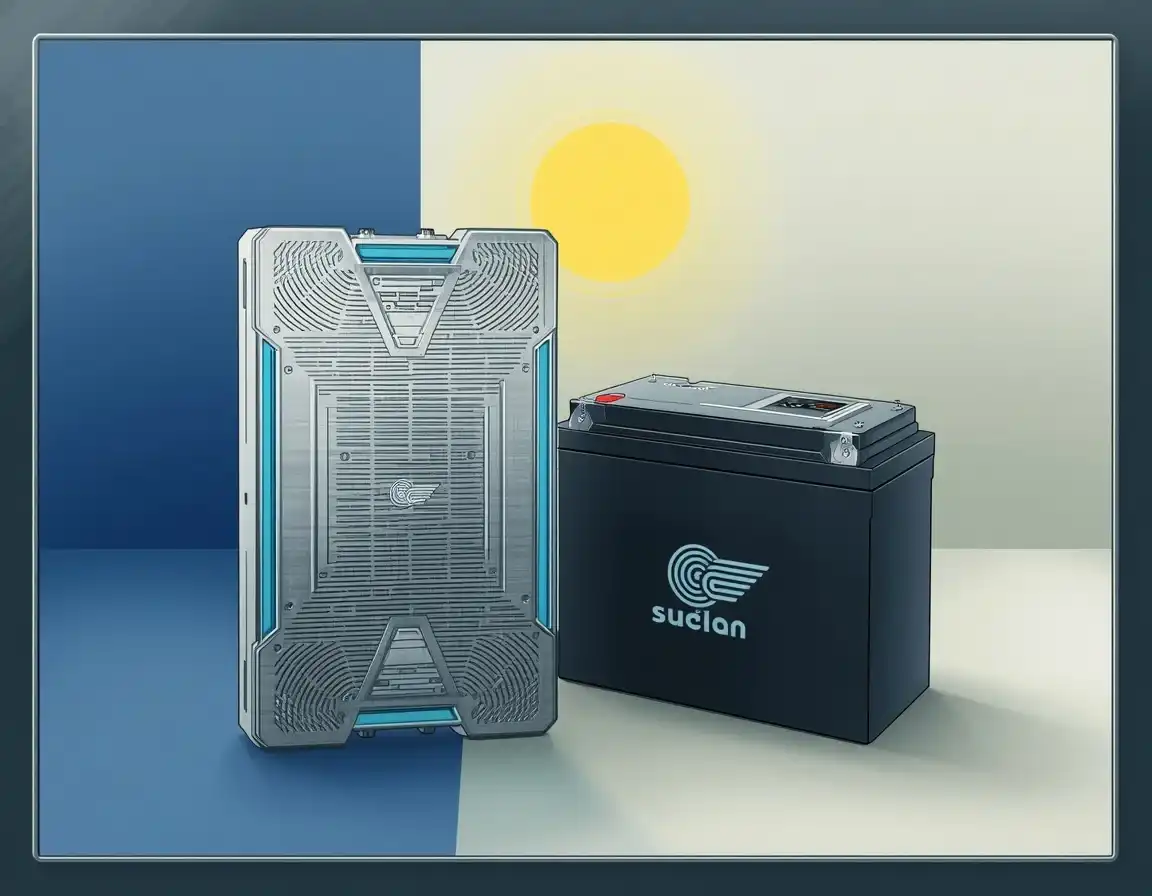
Solar Diverter vs Battery: Which Should You Buy First?

Both turn your wasted solar surplus into something useful. They just do it in very different ways, at very different prices — and getting the order right saves you real money.

If you’ve got solar panels and you’re watching your export meter tick over at a measly few pence per unit, I get why this question comes up constantly. You’ve got two obvious next moves — fit a diverter, or fit a battery — and everyone seems to have a strong opinion about which one you should do first.
Here’s my honest, unsponsored take: for most homes, the diverter comes first. Not because batteries aren’t worth it — they clearly are — but because the numbers genuinely stack up better as your opening move for most households. Let me show you why, and then cover the situations where that’s not actually true for you.
How each one actually works
Both devices solve the same basic problem: your solar panels generate more electricity than your home needs during the day, and without one of these, that surplus just gets exported to the grid at your Smart Export Guarantee rate — often as little as 4p/kWh, a fraction of what you’d pay to import it back.
Redirects surplus to hot water
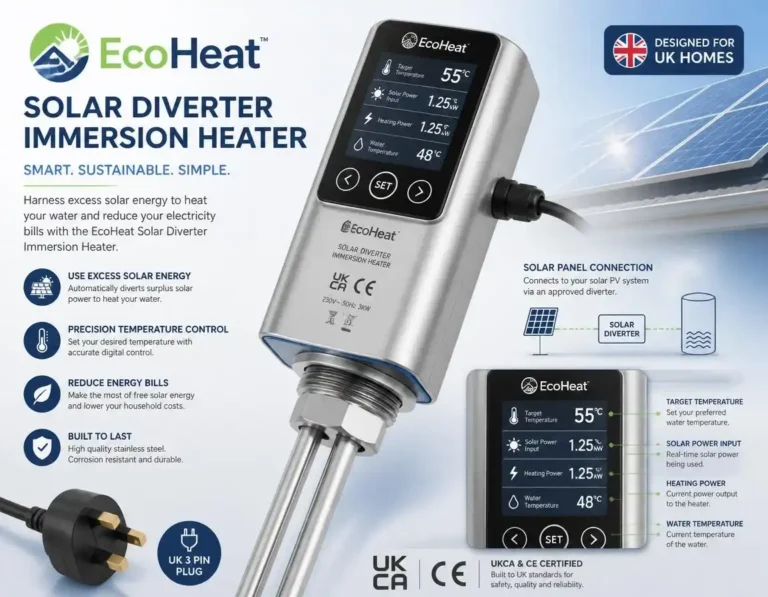
A small device (like the myenergi Eddi or Marlec Solar iBoost+) sits between your consumer unit and your immersion heater. A CT clamp watches your export in real time and sends any surplus straight to the immersion element instead, heating your hot water cylinder for free rather than exporting the electricity for pennies.
Stores surplus as electricity
A battery (LiFePO4 lithium units are the current UK standard) captures your surplus solar and holds it as electricity, ready for any use — lights, kettle, washing machine, EV charging — whenever you need it, day or night. It’s the more flexible of the two by a wide margin.
The cost gap is the whole story
This is really where the decision gets made for most people. A diverter is a genuinely small purchase. A battery is a proper investment.

| Detail | Solar diverter | Home battery |
|---|---|---|
| Typical fitted cost | £320-£700 | From ~£3,500 (10kWh), £7,000+ for bigger systems |
| What it saves you on | Hot water heating only | Any appliance, any time |
| Typical annual saving | £90-£200/year | £400-£550/year (10kWh battery) |
| Typical payback period | 3-6 years | 8-10 years |
| Works with a combi boiler? | No — needs a hot water cylinder | Yes, no cylinder needed |
| Backup power in a cut? | No | Some models, check spec |
| Warranty (typical) | 2-3 years on the device | 10 years |
A battery saves you more money per year in absolute terms, but it costs roughly 7-10 times more upfront. Run the maths and the diverter almost always pays for itself faster — which matters if you’d rather see a return quickly than tie up several thousand pounds for a decade. For the full picture on diverter products and how they’re fitted, SolarBriton’s own Solar Diverter & Immersion Heater guide goes deeper, and if you want to see current battery pricing by brand, the Best Solar Battery UK 2026 guide is the place to compare.
The one thing that decides it before cost even matters
Before you get into any of the maths above, there’s a hard filter that rules a diverter in or out completely: do you have a hot water cylinder with a spare immersion heater?
- Yes, I have a cylinder (common with older gas systems, some heat pump setups, and homes with an unvented cylinder) — a diverter is genuinely an option for you, and usually the sensible first move.
- No, I have a combi boiler — a diverter simply isn’t compatible. Combi boilers heat water on demand with no cylinder to divert surplus into, so this decision is already made for you. A battery is your only realistic route to using solar surplus beyond daytime consumption.
If you’re not sure which you’ve got and you’re weighing up switching your heating system entirely, it’s worth reading SolarBriton’s Heat Pumps in the UK guide and Solar Thermal vs Solar PV comparison, since both change what your hot water setup looks like.
Which one actually fits your home?

How your SEG rate changes the answer
Here’s a detail most comparisons skip: the value of a diverter depends heavily on what you’re currently being paid to export. If you’re stuck on a basic 4p/kWh Smart Export Guarantee rate, diverting that surplus into hot water (worth the full ~26p/kWh you’d otherwise pay to heat it another way) is a huge relative win. If you’ve shopped around and landed a strong export tariff — some pay 15p/kWh or more — the gap narrows, and a battery’s ability to time-shift your export toward peak-priced hours starts to look more attractive.
Worth checking where you actually stand before deciding anything: SolarBriton’s Best SEG Tariff Rates UK 2026 guide compares current suppliers, and if you’re specifically weighing up a time-of-use tariff built around battery ownership, Octopus Flux vs Cosy Octopus explains how that changes the battery side of this decision.
What about VAT and grants?
Both diverters and batteries are typically fitted as part of a qualifying solar installation, which currently carries 0% VAT across Great Britain — a saving worth confirming with your installer rather than assuming either way, since it applies until 31 March 2027. If you’re weighing up funding either purchase, SolarBriton’s Solar Panel Grants UK 2026 guide and UK Solar Grant & VAT Savings Checker cover what you personally qualify for. Full detail on the underlying relief is on GOV.UK’s VAT Notice 708/6, and the export payment scheme itself is explained on GOV.UK’s Smart Export Guarantee page.
Can you just get both eventually?
Yes, and plenty of households do exactly that — a diverter now, a battery later once the budget allows. It’s a genuinely sensible sequence, not a compromise:
- A diverter can only absorb as much surplus as your cylinder needs to heat up, usually a few hours of a sunny day’s generation.
- Once the tank’s hot, any further surplus goes back to exporting anyway — which is exactly the gap a battery fills.
- Retrofitting a battery onto an existing solar-plus-diverter setup is straightforward with a hybrid inverter. SolarBriton’s Adding a Battery to Existing Solar Panels guide covers exactly this scenario.
- If budget is the blocker, a second-life EV battery is worth a look as a cheaper way into storage than a brand-new unit.
If you’ve got a cylinder, start with the diverter. It’s cheap, it pays back fast, and it stops you throwing away surplus solar at pennies on the pound while you save up. Add a battery when you’re ready for the bigger jump — and once you do, you’ll get more out of it, since the diverter’s already mopped up your hot water demand and left the battery free to focus on everything else. If you’re on a combi boiler, skip straight to comparing batteries; a diverter was never going to be your answer.
Not sure what size battery would actually suit your home, once you’re ready? SolarBriton’s Solar Panel Calculator is free to use, and the Find an MCS-Certified Installer tool is a quick way to get a few quotes to compare.
Frequently asked questions
Is a solar diverter or a battery a better first purchase?
For most UK homes with a hot water cylinder, a solar diverter is the sensible first purchase. It typically costs £320-£700 fitted against £3,500-£7,000+ for even a modest battery, and pays for itself in 3-6 years by turning surplus solar into free hot water instead of exporting it at a low Smart Export Guarantee rate. A battery makes more sense first if you have a combi boiler with no cylinder to heat, since a diverter isn’t an option at all in that case.
Can I use a solar diverter with a combi boiler?
No, not for hot water. A solar diverter needs a hot water cylinder with a spare immersion heating element to divert surplus solar into, and combi boilers heat water on demand with no cylinder to heat. If you have a combi boiler, a battery is the realistic option for using your solar surplus, since it can store electricity for any appliance rather than needing a cylinder to heat.
Do I need a battery if I already have a solar diverter?
Not necessarily, but many households add one later. A diverter can only absorb as much surplus as your hot water cylinder needs, which is usually a few hours’ worth of generation on a sunny day. Once the tank is up to temperature, any further surplus goes back to exporting at your Smart Export Guarantee rate. A battery on top of a diverter lets you capture that additional surplus for use in the evening instead, which is why installing a diverter first and adding a battery later is a common and sensible sequence.

3 Comments