
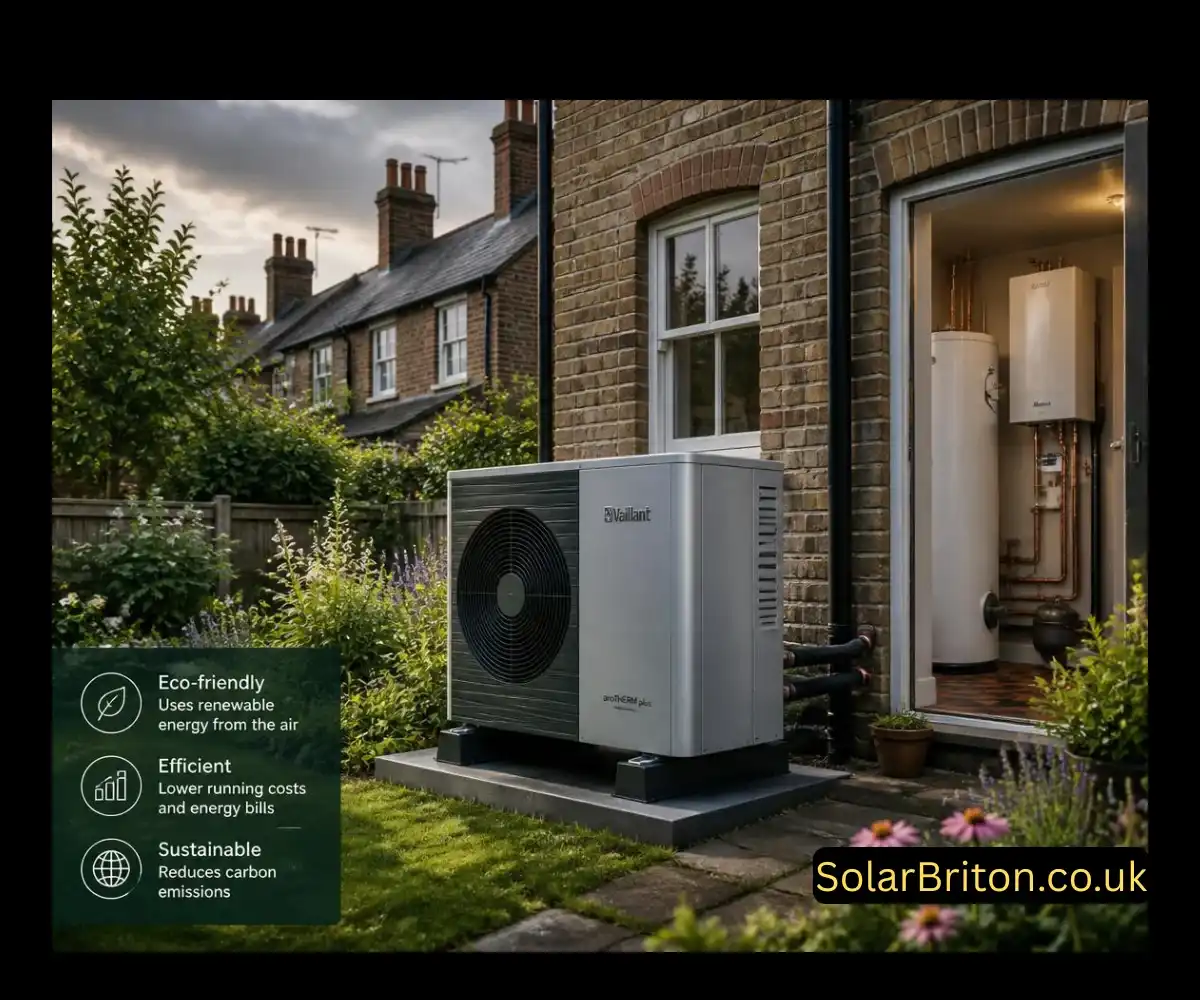
Heat Pumps in the UK

Heat Pumps in the UK: Costs, Grants & Is It Actually Worth It?
Everything you need to make a smart decision — the real numbers on installation costs, the £7,500 grant you probably qualify for, whether your home is ready, and honest running cost comparisons with a gas boiler.
Let me be straight with you: the conversation around heat pumps in the UK has been a bit of a mess for the past few years. Scary cost headlines, complicated government schemes, arguments about whether they even work in cold weather — it’s no wonder so many homeowners are still sitting on the fence.
I’ve gone through the latest 2026 data, the real-world numbers, and the policy changes so you don’t have to. The short version? For a lot of UK homes, a heat pump now makes genuine sense — especially with a £7,500 grant sitting there waiting to be claimed. But it’s not right for everyone, and I’ll tell you honestly when it probably isn’t.
What Is a Heat Pump, and How Does It Work?
Think of a heat pump as a fridge working in reverse. Instead of pumping warmth out of your food and throwing it into your kitchen, it pulls warmth from the outdoor air (even on a cold winter’s day) and pumps that heat into your radiators and hot water tank.
The clever bit is efficiency. A gas boiler burns fuel to make heat — it can never be more than 100% efficient. A heat pump moves heat rather than creating it. That’s why, for every unit of electricity you put in, a well-installed heat pump gives you three to four units of heat back. In heating industry terms, that’s a Coefficient of Performance (COP) of 3 to 4. At current UK energy prices, that efficiency is what makes heat pumps financially interesting.
Types of Heat Pump Available in the UK
Air Source Heat Pump (ASHP)
Extracts heat from outdoor air. The most popular option in the UK by far — accounts for over 90% of domestic installations. Compact outdoor unit fits most gardens.
Most popularGround Source Heat Pump (GSHP)
Uses buried pipes to extract stable heat from the ground. More expensive to install due to groundworks, but typically achieves a higher COP (4–5). Needs significant garden space.
Higher efficiencyWater Source Heat Pump
Draws heat from a river, lake, or borehole. Excellent efficiency, but only practical if you have a suitable water source on or near your property.
Specialist useAir-to-Air Heat Pump
Heats (or cools) your home via warm air circulation rather than wet radiators. No hot water cylinder needed — ideal for flats or homes without space for a cylinder. Qualifies for a £2,500 BUS grant.
Good for flatsHeat Pump Installation Costs in the UK (2026)
The honest answer on cost is: it depends on the size of your home and the type of system. Here’s how the numbers break down before and after the government’s Boiler Upgrade Scheme grant, based on 2026 market pricing:
| Property / System | Typical size | Cost before grant | BUS grant | Your net cost |
|---|---|---|---|---|
| ASHP — 1–2 bed flat / small house | 5 kW | £8,000–£10,000 | –£7,500 | £500–£2,500 |
| ASHP — 3 bed semi / terrace | 7–9 kW | £10,000–£13,000 | –£7,500 | £2,500–£5,500 |
| ASHP — 4–5 bed detached | 12–16 kW | £13,000–£15,000 | –£7,500 | £5,500–£7,500 |
| ASHP — Oil/LPG home 🆕 | Any | £8,000–£15,000 | –£9,000* | From £0–£6,000* |
| GSHP — horizontal loop | 8–14 kW | £15,000–£22,000 | –£7,500 | £7,500–£14,500 |
| GSHP — vertical borehole | 12–20 kW | £22,000–£35,000 | –£7,500 | £14,500–£27,500 |
*£9,000 grant for oil/LPG homes applies from 21 July 2026 to 31 March 2027 only. Radiator upgrades, hot water cylinders, or electrical upgrades may add £1,000–£5,000 on top of the figures above.
Many quotes don’t include everything upfront. Ask your installer to itemise radiator upgrades (if needed), hot water cylinder, any electrical panel upgrades, and scaffolding. These can add between £1,000 and £5,000 to your total cost.
Grants & Financial Support Available in 2026
The UK government has put some serious money behind heat pumps in 2026 — and it’s not just for people on low incomes. Here’s every route worth knowing about:
Deducted from your invoice upfront — no claiming back, no means test, no insulation requirement (removed April 2026). Your MCS-certified installer applies on your behalf. Runs until end of 2027.
Homes currently on heating oil or LPG get an extra £1,500 on the standard grant. Available 21 July 2026 to 31 March 2027 only. An estimated 200,000 eligible households in England & Wales.
Fully funded package for households earning under £36,000/year (or on qualifying benefits) with EPC D–G. Can include heat pump, insulation, solar panels, and smart controls. Delivered via your local council.
The supply and installation of heat pumps is zero-rated for VAT until 31 March 2027. On a £12,500 install, that saves roughly £2,500 compared to standard VAT. Automatically applied by your installer.
Combines a £7,500 grant with an interest-free loan of up to £7,500. Rural/island properties may qualify for an additional £1,500 rural uplift. Separate scheme from BUS — same principle, different administrator.
Fully-funded heat pumps for eligible households on qualifying benefits with EPC D–G. Administered via energy companies. Closing 31 December 2026 — if you think you qualify, apply now before it ends.
Yes, in some cases. You could claim the BUS grant for your heat pump and separately apply for insulation funding through the Warm Homes Local Grant — they cover different measures, so double-dipping on the same measure isn’t allowed, but combining complementary ones is. Always check with your local council and installer.
Check out Solar Panel Grants U.K.
Heat Pump Running Costs vs Gas Boiler — The Honest Numbers
This is where things get nuanced, and I’ll be upfront: the answer depends on your specific home, your tariff, and how the system is installed. Here’s the reality in 2026.
At the Ofgem April–June 2026 price cap, electricity costs 24.67p/kWh and gas costs 5.74p/kWh — a ratio of about 4.3:1. A heat pump with a COP of 3.0 effectively delivers heat at about 8.2p/kWh. A 90%-efficient gas boiler delivers heat at about 6.4p/kWh. So on a standard tariff, gas still wins slightly. But that gap nearly disappears with a heat pump-specific electricity tariff, and actually reverses if you have solar panels. And for homes on oil or LPG, heat pumps already win on running costs.
| Scenario | Annual heating cost | vs Gas boiler | Notes |
|---|---|---|---|
| Modern gas combi boiler | ~£840/yr | Baseline | 90% efficient, 12,000 kWh demand |
| ASHP on standard tariff (COP 3.0) | ~£987/yr | +£147 | Slightly more expensive on standard rate |
| ASHP on HP off-peak tariff (COP 3.5) | ~£620/yr | –£220 | The key: use a dedicated HP tariff like Octopus Cosy |
| ASHP + solar panels (self-consumption) | ~£450–600/yr | –£240–390 | Best combination for long-term savings |
| Oil boiler (replacing with ASHP) | ASHP saves ~£400–800/yr | Major win | Oil prices volatile; heat pump wins clearly |
| Direct electric / storage heaters | ASHP saves 60–70% | Large saving | Replacing electric heating is the strongest financial case |
The single biggest lever on your running costs is your electricity tariff. Specialist heat pump tariffs from suppliers like Octopus (Cosy or Intelligent), E.ON and EDF offer much cheaper electricity at certain times of day, specifically for heat pump users. Switching to one of these typically saves £200–£400 a year compared to running on a standard capped tariff. This is the step many homeowners miss.
Is Your Home Suitable for a Heat Pump?
Most UK homes can have a heat pump installed — the idea that they only work in modern, super-insulated new builds is a myth. I’ve seen Victorian terraces, 1930s semis, and stone cottages all running successfully with heat pumps. But some homes need a bit of preparation first. Here’s a practical checklist:
- Loft insulation at 270mm depth Topping up thin or missing loft insulation is the first and cheapest thing to do. You lose up to 25% of heat through an uninsulated roof. Many ECO4-eligible households can get this for free.
- Cavity walls insulated (if applicable) Most homes built between 1920 and 1995 have a fillable cavity. Without cavity wall insulation, the heat pump has to work harder, driving up your bills. Around 33% of heat escapes through walls.
- Solid walls (pre-1920s homes) Solid brick or stone walls need internal or external insulation before a heat pump is installed. This adds cost but is often fundable through the Warm Homes Local Grant for eligible households.
- Adequate radiators or underfloor heating Heat pumps run at lower flow temperatures than boilers (35–55°C vs 65–80°C), so radiators may need upsizing in some rooms. A proper heat loss survey will identify which ones, if any, need upgrading. Budget £1,000–£3,000 if upgrades are needed.
- Outdoor space for the unit You need roughly 1.2m × 0.6m of ground space with airflow clearance. Most homes with any garden or side return can accommodate this.
- Hot water cylinder An air-to-water heat pump needs a hot water cylinder to store hot water (unlike a combi boiler). If you don’t have one, factor in an airing cupboard or equivalent space and around £800–£1,500 for the cylinder.
- Flats without private outdoor space Air source heat pumps need an outdoor unit. If you’re in a flat with no private garden or external wall access, an ASHP is likely impractical. Communal or district heat networks may be a better route.
If your home has cavity walls (or you’re prepared to insulate solid walls), working double glazing, loft insulation, and adequate garden space, a heat pump will almost certainly work for you. An MCS-certified installer will carry out a full room-by-room heat loss calculation to confirm — insist on this before you sign anything.
Heat Pump Pros & Cons — Keeping It Honest
✅ Advantages
- Highly efficient: 300–400% efficiency vs ~90% for a gas boiler. That gap is significant over a 20-year lifespan.
- Lower carbon footprint: Up to 70% fewer emissions than a gas boiler — and improving every year as the grid gets greener.
- Long lifespan: 15–25 years with relatively low maintenance. Gas boilers typically last 10–15 years.
- No combustion: No flue, no carbon monoxide risk, no annual Gas Safe safety check required.
- Cooling capability: Many models can switch to cooling mode in summer — an increasingly useful feature as UK summers warm.
- Fixed running costs: Not exposed to volatile gas prices or oil delivery fluctuations.
- Grants available now: £7,500 BUS grant (£9,000 for oil/LPG) reduces the upfront cost significantly.
- Future-proof: Gas boilers will face tightening restrictions — heat pumps won’t.
⚠️ Disadvantages
- Higher upfront cost: Even after the £7,500 grant, you’ll likely spend more than a boiler replacement. Payback depends on your home and tariff.
- Running costs on standard tariff: Without a heat pump-specific electricity tariff, you may pay slightly more per year than on gas.
- Insulation may be needed first: A poorly insulated home undermines efficiency. Prep work adds cost and time.
- Some radiators may need upgrading: Not always, but you should budget for it — especially in older homes.
- Noise: Modern units are quiet (42–55 dB, similar to a fridge), but placement matters if neighbours are close by.
- Not ideal for all flats: Outdoor unit access is needed. Flats often can’t accommodate this without a communal approach.
- Takes time to install: Allow 3–5 days for a full installation, including radiator checks and cylinder work.
Planning Permission & Noise Rules (England, 2026)
Good news here: most air source heat pump installations in England fall under Permitted Development Rights, meaning you don’t need to apply for planning permission. But there are conditions you must meet:
Size & Location
Only one heat pump per property without planning permission. The outdoor unit cannot be installed on a wall or roof facing a highway. Volume of the unit must not exceed 0.6 m³.
Noise Limit
The unit must not exceed 42 dB(A) at the nearest neighbour’s window, assessed using MCS 020(a). From 28 May 2026, MCS 020(a) is the only accepted noise standard — your installer must comply.
Listed Buildings & Conservation Areas
You’ll need planning permission if your property is listed or in a conservation area with an Article 4 Direction. A ground source heat pump may be an option where an external unit isn’t permitted.
Always ask your installer to confirm planning compliance as part of their survey — a good MCS-certified installer will do this as standard.
What’s Changing in 2027? The Future Homes Standard
From 24 March 2027, the UK’s new Future Homes Standard comes into force. It’s the most significant change to building regulations in a generation, and heat pumps are central to it.
- Gas boilers will be banned in all new-build homes in England.
- Solar panels covering 40% of the ground floor area will be mandatory on most new homes.
- Air source heat pumps will effectively become the default heating system for new residential builds.
- New homes must produce 75% lower carbon emissions than homes built to 2013 standards.
- The Warm Homes Plan commits £15 billion to home upgrades — the largest ever public investment of its kind in the UK.
This doesn’t mean anyone is coming to rip out your existing gas boiler. But it does mean that heat pump technology is quickly becoming the UK standard — and that the grants and incentives available today will be harder to find tomorrow. Acting before 31 March 2027 also locks in the 0% VAT rate.
So — Is a Heat Pump Worth It in 2026?
For most UK homeowners replacing a failing boiler, if your home has reasonable insulation (or you’re prepared to improve it), and you switch to a heat pump-specific electricity tariff — yes, a heat pump is worth serious consideration. The maths have genuinely shifted this year.
The £7,500 BUS grant (or £9,000 if you’re on oil or LPG) means many people can have a well-specified ASHP installed for less than the cost of a quality boiler replacement, while getting a system that lasts 20+ years, drastically cuts emissions, and protects you from gas price volatility.
If you’re on oil or LPG, replacing electric storage heaters, or a low-income household in an EPC D–G property, the case is even stronger — a heat pump already saves you money, before you even factor in the grant.
Your next step: get a free survey from at least 3 MCS-certified installers. They’ll do a heat loss calculation, confirm your system size, and apply for your BUS grant on your behalf. The whole process — from enquiry to installation — typically takes 9–14 weeks.
Insulate first, then size the heat pump correctly. Switch to a heat pump electricity tariff the moment it’s installed. If you’re on oil or LPG, apply for the £9,000 grant before 31 March 2027. And always use an MCS-certified installer — it’s mandatory for the grant and gives you consumer protection.
Frequently Asked Questions
How much does a heat pump cost to install in the UK in 2026?
An air source heat pump (ASHP) costs between £8,000 and £15,000 fully installed. After the government’s £7,500 Boiler Upgrade Scheme grant, your out-of-pocket cost typically falls to £500–£7,500. Ground source heat pumps cost more (£15,000–£35,000 before the grant) due to the groundworks required. All qualifying residential installations also benefit from 0% VAT until 31 March 2027.
Can I get a grant for a heat pump in 2026?
Yes. The Boiler Upgrade Scheme offers £7,500 to homeowners in England and Wales — no income test required. From 21 July 2026 to 31 March 2027, off-gas-grid homes (oil or LPG) qualify for £9,000. Low-income households (earning under £36,000/year or on qualifying benefits) may also qualify for up to £30,000 of fully funded upgrades through the Warm Homes Local Grant, including heat pumps, insulation, solar panels, and smart controls — delivered via your local council.
Is a heat pump suitable for my older UK home?
Most older UK homes — including Victorian terraces and 1930s semis — can be retrofitted successfully. The key requirements are good insulation (especially loft and, where possible, cavity or solid walls), adequately sized radiators or underfloor heating, and outdoor space for the unit. A solid-wall home may need wall insulation first, which may be funded through the Warm Homes Local Grant for eligible households. An MCS-certified installer will carry out a full room-by-room heat loss survey to confirm suitability before you commit.
Sources & references: Heat Pump Association UK (HPA UK) sales data 2025; Ofgem Boiler Upgrade Scheme statistics; Energy Saving Trust; Ofgem Q2 2026 Price Cap (gas 5.74p/kWh, electricity 24.67p/kWh); MCS installation data Q1 2026; UK Government Warm Homes Plan (January 2026); Department for Energy Security and Net Zero (DESNZ) heat pump deployment statistics. All cost figures are estimates based on market data and should be verified with MCS-certified installers. Energy prices correct at time of publication (July 2026) and subject to change.

4 Comments