

What Solar Repairs Actually Cost in 2026?

What Solar Repairs Actually Cost in 2026: Panels, Inverters, Wiring & Mounting
Solar’s a doddle when it works. Panels sit there quietly making free electricity for 25-odd years. But when something goes wrong — a dead inverter, a cracked panel, a chewed cable — the repair quotes can catch people out. Here’s what each type of fix actually costs in the UK in 2026, what your warranty and insurance will and won’t pick up, and why the VAT on a repair bill often looks different to the VAT on a new installation.

The short version
Most solar repairs in 2026 cost between £100 and £900, call-out included. The big exception is the inverter, which usually needs replacing once during a system’s life, typically £700 to £1,800. Panels themselves rarely fail — wiring, connectors, mounting hardware and pigeons cause far more grief. Two things people consistently get wrong: assuming a repair is covered by the same warranty as the panels, and assuming it carries the same VAT rate as a new installation. Neither is a safe assumption — check both before you pay.
Repair Costs at a Glance
Here’s the honest picture. I’ve pulled these ranges from what MCS-registered installers and independent solar electricians are actually charging across the UK in 2026, cross-checked against Energy Saving Trust guidance and current UK trade pricing data. Your own quote will depend on where you live — London and the South East typically run 10–25% higher — how accessible the roof is, and whether scaffolding is needed.
Notice the pattern: the panels — the bit everyone worries about — are the least likely thing to cost you money. The inverter is where repairs actually bite.
Inverter Repairs & Replacement
The inverter is the hardest-working part of your system and, unlike the panels, it’s full of electronics that run hot every daylight hour. The Energy Saving Trust puts typical inverter life at around 12 years and its own ballpark replacement cost at about £800 — in practice, 2026 UK quotes span a wider range once you factor in brand, system size and whether you’re upgrading to a hybrid unit. String inverters from most manufacturers last 10 to 15 years; micro-inverters, like Enphase’s, are commonly rated for 20 to 25 years.
| Inverter job | Typical cost (fitted) |
|---|---|
| Like-for-like string inverter swap (3–6 kW) | £700 – £1,800 |
| Upgrade to hybrid inverter (battery-ready) | £1,400 – £2,600 |
| Micro-inverter / optimiser replacement (per unit) | £150 – £400 |
| Inverter repair (fans, boards — where parts exist) | £150 – £500 |
Two things push the price up. First, brand: a premium hybrid unit costs more than a budget string inverter, obviously. Second, the old-model problem — if your inverter is discontinued and the manufacturer has left the UK market, you’re almost always better off replacing the whole unit rather than hunting obsolete boards.
If your inverter is flashing fault codes, don’t assume it’s dead — some are trivial resets. I’ve written up the common ones in solar inverter fault codes explained.
Panel Repairs & Replacement
Panels fail far less often than people fear. Modern glass-fronted monocrystalline panels shrug off hail, gales and two decades of British weather. When they do fail, it’s usually one of four things: cracked glass (ladder or falling branch), water ingress causing delamination, a failed junction box, or microcracks from someone walking on them.
| Panel job | Typical cost |
|---|---|
| New panel (like-for-like, 400–450 W) | £70 – £150 (part) |
| Fitted replacement incl. roof access | £250 – £500 |
| Microcrack diagnosis & performance test | £100 – £250 |
| Bypass diode fix (can be done in-roof for some faults) | £80 – £200 |
One awkward reality: if your panels are a discontinued model, finding an exact match can be fiddly. A visibly different panel on a visible roof elevation annoys some people — and on mixed arrays, mismatched panel specs can drag the whole string’s output down slightly. It’s rarely catastrophic, but worth asking the installer about before they order.
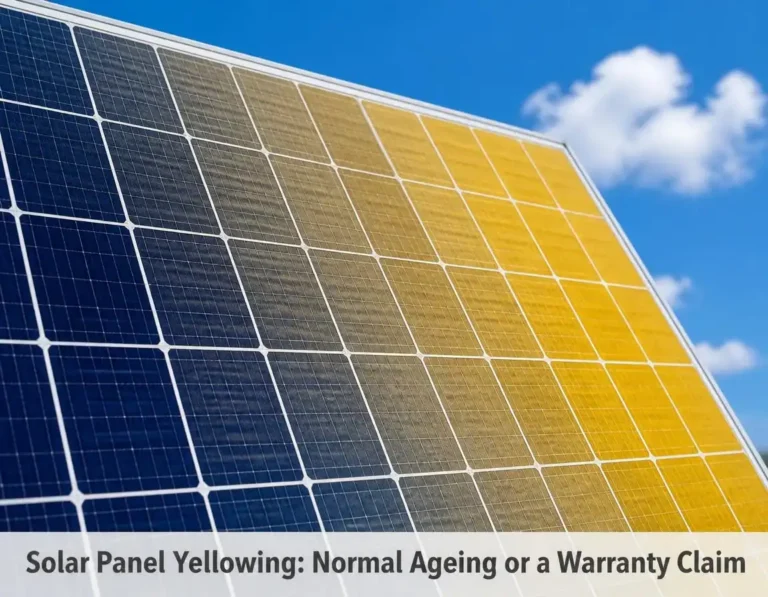
If your output has quietly dropped rather than something visibly breaking, work through our underperforming panels checklist first — the fix is often cleaning, shading or a tripped isolator, not a repair bill. And yellowing panels are a different, cosmetic-ish problem: see solar panel yellowing.
Wiring & Electrical Faults
This is the category that surprises people most, because wiring and connectivity faults hide behind symptoms that look like other failures — generation dropping, the inverter tripping, RCD nuisance trips, or the monitoring app simply going quiet. Common culprits: DC connectors degraded by water ingress, rodents chewing cables, a corroded earth bond, a rogue installer’s sloppy crimps from years back finally biting — or nothing worse than a router reset or a flat backup battery in the monitoring gateway.
| Wiring job | Typical cost |
|---|---|
| Call-out & fault diagnosis | £80 – £150 |
| Replace DC connectors (MC4-type) | £100 – £250 |
| Replace damaged cable run | £150 – £500 |
| Isolator or consumer unit fault | £150 – £450 |
| Monitoring / app reconnection | £80 – £200 |
| Full system test & re-certification | £150 – £300 |
Scaffolding is the wildcard. Most wiring faults at the inverter or consumer unit need no scaffolding at all — that keeps jobs cheap. Anything needing roof access adds £300–£900 if scaffolding’s required, or less if the crew can use a harness system on a straightforward pitch.
Mounting, Roof & Bird Proofing
Mounting problems usually show up as something you can hear (rattling in the wind) or see (a bracket lifting a tile, a drooping corner). Storms account for a fair share; botched original installs account for the rest. And then there’s the number one “repair” job in the whole sector: pigeons.
| Mounting job | Typical cost |
|---|---|
| Re-secure loose brackets/clamps | £200 – £500 |
| Replace failed roof fixings & reseal | £250 – £600 |
| Bird proofing / mesh fitting | £400 – £900 |
| Panel removal & refit for roof work | £400 – £1,500 |
| Scaffolding (if required, up to a typical terrace) | £300 – £900 |
I’ve priced bird mesh out in detail separately — see pigeon mesh costs — but the short version: mesh is cheaper than repeatedly clearing nests and cleaning droppings off the panels. And if panels need lifting so a roofer can fix a leak underneath, get the roofer and the solar electrician booked as one coordinated job. Two visits means two sets of access costs.
If a leak has appeared after an install, don’t sit on it — our piece on solar panels and roof leaks covers who’s liable and how to get it fixed properly.
Call-Out Fees & Labour Rates
Solar-qualified electricians charge more than a general domestic sparkie, and it’s worth understanding why: MCS competence, DC-side certification, and (often) the willingness to go up on a roof. There’s no single published benchmark for solar-specific rates, but here’s how they typically compare with general UK trade rates in 2026:
On top of labour, expect a fixed £80–£150 call-out fee from an MCS-registered solar installer, and £300–£900 for scaffolding if the roof needs it. Many independents also offer a fixed-price “solar health check” at £100–£250 — MyJobQuote puts the UK average for a clean-and-inspect visit at around £140 — which I think is genuinely good value every few years, since it catches hot-spotting, loose connectors and gradual underperformance before they become repair bills.
Warranty vs Insurance: Who Pays What
This is where most people overpay, partly because “warranty” on a solar system actually means several different things. Before you book any repair, work through this order:
- Product warranty — typically 10 to 12 years from most panel manufacturers, though several premium ranges now stretch to 20 or even 30 years. Covers manufacturing defects like cell cracking or a failed junction box. Usually honoured by the manufacturer, but you may still pay the labour to fit the replacement.
- Performance warranty — a separate guarantee, this time on power output rather than physical defects. It typically promises the panels will still produce around 80–90% of their original output after 25 years. This is the one protecting your long-term generation, not your repair bill.
- Workmanship warranty — your installer’s own guarantee, typically 1 to 10 years depending on the company. Covers leaks, loose fixings, dodgy wiring from the install itself. If the installer has folded, this is worthless — a very real situation in 2026, as we covered in our article on installers going bust.
- Inverter warranty — usually 5 years as standard, often extendable to 15. The part is usually free within the warranty; labour is often only covered in year one.
- Home insurance — covers storm, fire, theft and vandalism, if you’ve declared the panels. Check our guide to solar panel insurance for the traps.
VAT on Solar Repairs
It’s tempting to assume a solar repair gets the same VAT treatment as a new solar installation. It doesn’t, and getting this wrong is an easy way to be caught out by a quote.
New installations of qualifying energy-saving materials — solar panels, inverters, batteries and the associated labour, fitted as part of one project on a residential property — are zero-rated at 0% VAT until 31 March 2027, after which the rate reverts to the reduced 5%.
A repair is a different supply. Fixing or replacing a single failed component on a system that’s already up and running — a dead inverter, a cracked panel, a wiring fault — isn’t installing new energy-saving materials, so it’s generally standard-rated at the full 20%. If your repair quote shows 20% VAT, that’s normal, not something to query.
There is a genuine grey area: some installers treat a brand-new inverter or panel fitted as a replacement as supplying new qualifying material, and apply the lower rate anyway. The relief is written around “installation” rather than repair, so this isn’t guaranteed — ask your installer to confirm the VAT treatment in writing before you book, rather than assuming either way. HMRC’s own rules are set out in VAT Notice 708/6 if you want the detail. (Commercial-property repairs are different again — full 20% applies there regardless.)
Keeping Repair Costs Down
After twenty-odd years of watching people spend money they didn’t need to, here’s the boring-but-effective list:
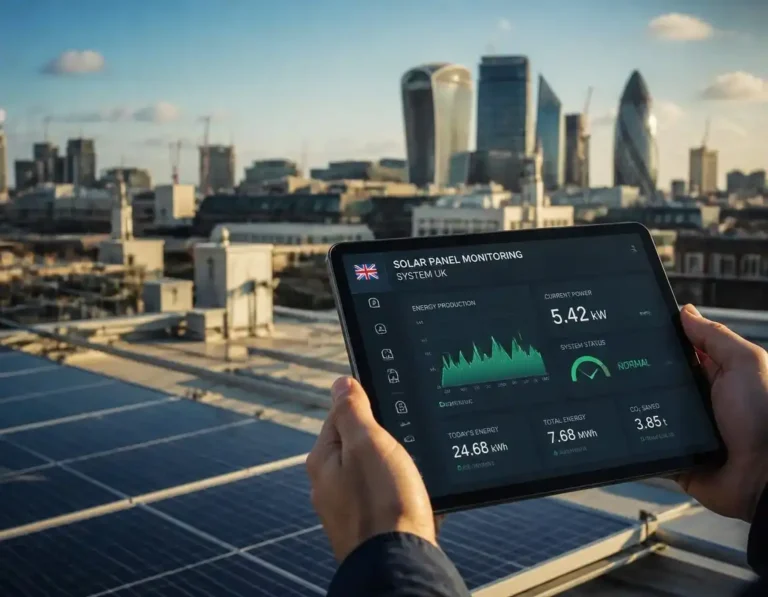
- Read your monitoring app weekly, not monthly. Gradual drops get caught early. Generation drops over weeks are usually shading or dirt; sudden drops to zero are usually the inverter or a tripped isolator.
- Register every warranty, including extensions. Manufacturers won’t chase you. The five-minute job at the kitchen table is worth hundreds later.
- Book a health check every 3–5 years. £100–£250 now beats a £500 wiring job later.
- Keep the panels clean. Cleaning costs pennies (or is free — see our DIY cleaning guide) and prevents hot-spotting that kills panels slowly.
- Get two or three quotes for anything over £500. Solar repair pricing is wildly variable — the same job, in the same city, can differ by 25–40% between quotes.
- Use an MCS-registered or qualified solar electrician. Cheap fixes by non-specialists cause the expensive callbacks, and can void what’s left of your warranty.
One more: if your system came from a company that’s no longer trading, check whether the installer still exists before you have a problem. Knowing who to call at 9am beats a panic search at 9pm — and if they’ve vanished, our guide to what to do when an installer goes bust applies just as much to repairs as mid-install.
Frequently Asked Questions
How much does it cost to replace a solar inverter in the UK in 2026?
Expect £700 to £1,800 for a like-for-like string inverter replacement on a typical UK home, including labour — the Energy Saving Trust’s own ballpark is around £800 for a straightforward swap. Upgrading to a battery-ready hybrid inverter runs £1,400 to £2,600. Micro-inverters cost £150 to £400 per unit, but you’ll pay for roof access again each time one fails.
Is solar panel repair covered by warranty or home insurance in the UK?
It depends what broke and why. Panels usually carry two separate warranties: a product warranty (commonly 10 to 12 years, sometimes 20 to 30 on premium ranges) covering manufacturing defects, and a performance warranty (typically 25 years) guaranteeing a minimum power output. Neither one covers storm damage, a roofer walking on the panels, or pigeon damage — that’s a job for home insurance, if you’ve declared the panels. Inverters carry a shorter warranty, usually 5 years as standard, and labour is often only covered in year one.
Do you pay VAT on solar panel repairs in the UK?
Usually yes, at the standard 20% rate. The 0% VAT relief only applies to installing new energy-saving materials, not to repairing a system that’s already up and running, so a repair invoice showing 20% VAT is normal rather than a mistake. New installations remain zero-rated until 31 March 2027, when the rate reverts to 5%.
Can I repair my own solar panels in the UK?
Anything beyond cleaning and reading the monitoring app, no. Working on a roof is dangerous, and anything touching the DC side of a solar system should only be done by someone qualified, because panels can’t be switched off while the sun is up. DIY electrical work on a solar installation can also void warranties, invalidate home insurance, and break Building Regulations. The one exception is plug-in balcony solar kits, which are designed for owners to install and move themselves.
Do solar repairs need scaffolding?
Only sometimes. Inverter swaps, wiring fixes at the isolator or consumer unit, and micro-inverter replacements behind the panel edge often don’t. Full panel replacement or bird proofing usually does, adding £300 to £900. Ask the installer upfront whether their quote includes access.
The Bottom Line
Solar ownership is cheap to run but not free to run. Budget mentally for one inverter replacement somewhere in the middle years, a bird-proofing job if pigeons move in, and a few hundred pounds of wiring or mounting niggles across two decades. Everything else — the panels themselves — will very likely just keep working. Check your warranty paperwork, don’t assume a repair is VAT-free just because a new installation is, and get a health check every few years. That’s the whole game.

One Comment