
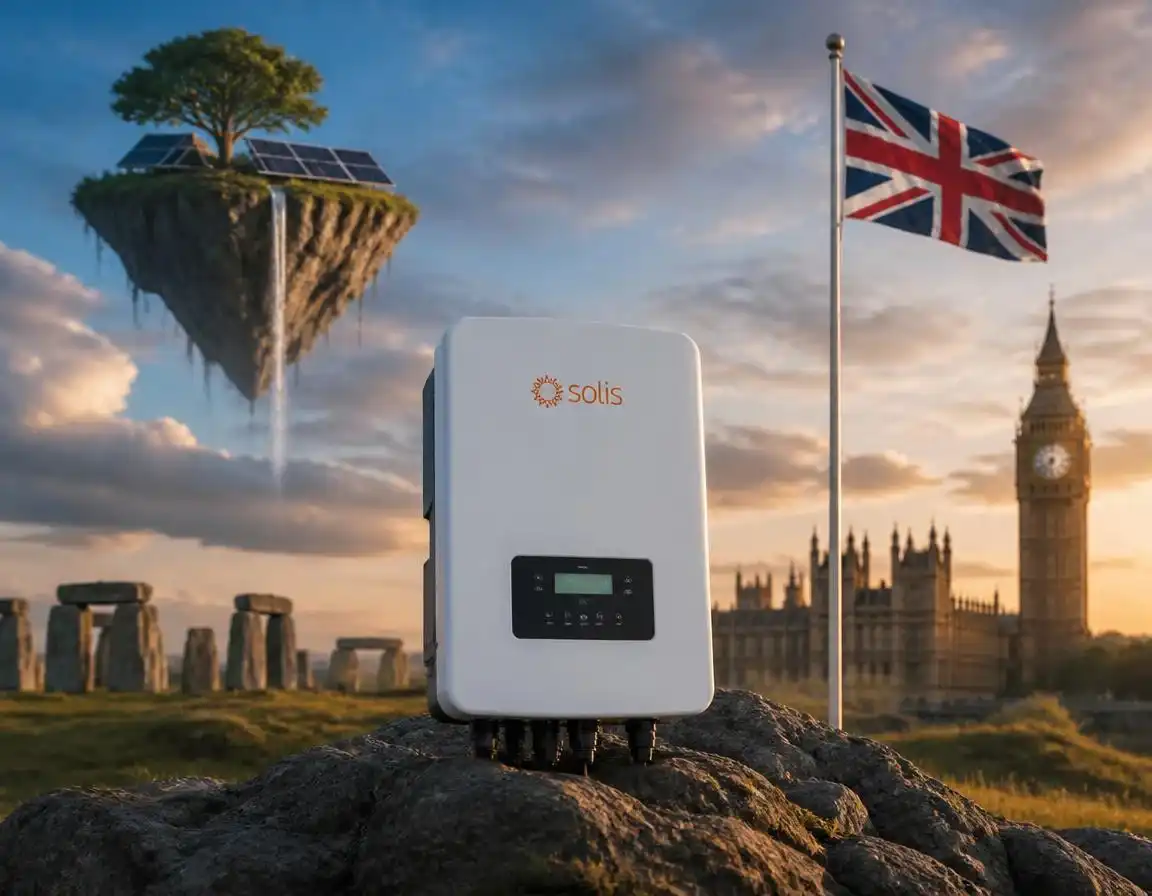
Solis Inverter Review UK 2026

Solis Inverter Review UK 2026: The Honest, No-Nonsense Verdict
☀️ The 30-Second Verdict
Solis is the inverter your installer reaches for when your budget is firm and your roof is simple. It’s made by Ginlong — the world’s third-largest inverter manufacturer by shipments — which matters, because a warranty is only as good as the balance sheet behind it. After a year of watching S6 units on real UK roofs, here’s my shorthand:
Solis S6 string
Cheapest reputable box on the UK market, fanless and silent, dual MPPT even at 3.6kW. If your roof faces one way and isn’t shaded, this is the value pick.
S6-EH1P hybrid
Open battery compatibility means you shop on price, not brand. Pair it with a decent LiFePO₄ bank and you’ve got the cheapest sensible route to self-consumption.
Shade or data nerds
Solis has no native optimiser system. Shady roof? Want per-panel graphs? You’re in SolarEdge or Enphase territory — and paying for it.
⚡ The 2026 S6 line-up, in plain English
The S6 generation is small — about 37cm tall and roughly 8kg on the string models — so it fits neatly in a cupboard, garage or loft-side wall. The whole residential family is fanless, which is why you’ll never hear it hum at midnight (if you do hear humming, that’s a different conversation — our solar inverter humming guide covers it).
| Model family | Job | Typical UK use |
|---|---|---|
| S6-1P string (0.7–6kW) | Panels only, no battery | 3.6–5kW versions are the UK volume sellers; dual MPPT from 3.6kW up |
| S6-EH1P hybrid (3–6kW) | Panels + battery in one box | The retrofit-and-store favourite; wide approved battery list |
| S6-EA1P AC-coupled (3.6–5kW) | Add storage to an existing system | Bolt a battery onto panels you already own |
| S6-3P three-phase | Bigger homes, 3-phase supply | Larger loads, rural properties with 3-phase |
🔩 Reliability: the boring brilliance
Solis quotes a 99.7% reliability rate across its installed base, and frankly the forums back the vibe: owners routinely report units sailing past eight or nine years, with the odd casualty replaced under warranty. The fanless natural-convection cooling is a big part of why — fewer moving parts, fewer failures, zero noise.
Where it’s not class-leading is raw efficiency. The S6’s 97.7% Euro efficiency — a weighted figure meant to reflect real-world, partial-load running rather than a single best-case number — sits a notch below the premium boxes, as the chart shows. In real UK conditions that gap is worth perhaps a handful of kWh a year on a typical 4kWp roof — real, but not something to lose sleep over at this price.
Euro efficiency — where the S6 really sits
Manufacturer-stated Euro efficiency (a weighted, real-world-load figure), residential class. Higher is better.
Values match the comparison tables we keep across the site (Huawei SUN2000 review; Growatt vs SolaX verdict), August 2026.
📱 SolisCloud: fine, and that’s the problem
You’ll open this app more than you’ll open your banking app for the first month. SolisCloud is simple and reliable — it shows generation, export and battery state without falling over — but it’s light on the clever stuff: no per-panel analytics (there are no optimisers to report from), clunkier tariff scheduling than the best, and setup gripes are the most common owner complaint I see. We score it 6.5/10 in our 2026 monitoring app round-up — level with FoxESS, behind SolaXCloud (7.5) and a world behind Enphase (9.0).
Two workarounds worth knowing: Tigo optimisers can feed data into SolisCloud if you go that route (though support for them sits with Tigo, not Solis), and tinkerers can pull Solis data into Home Assistant for the dashboard of their dreams.
🚨 The OV-G-V alarm: not a broken inverter
Search any UK solar forum and you’ll find the same story: blazing sunny day, and the Solis throws an OV-G-V (over grid voltage) alarm and drops off. Here’s the truth installers know: it’s usually your street, not your box. When lots of homes export at once, local network voltage climbs towards the G98/G99 limit, and the inverter is legally required to back off.
💷 2026 prices: the number that wins the job
| Unit (supply only, inc VAT) | Typical UK trade price, Aug 2026 |
|---|---|
| S6 3.6kW string (dual MPPT) | £420–£500 |
| S6 5kW string | £460–£550 |
| S6-EA1P 5kW AC-coupled (retrofit battery) | ~£660 |
| S6-EH1P 5–6kW hybrid | £850–£1,150 |
Fitted into a whole system, that keeps Solis quotes at the keener end of the bands we track across the site: a typical 4kWp system lands at £5,500–£7,500 installed, and adding a battery takes the package to roughly £9,000–£11,500. Remember 0% VAT on solar and battery installs until 31 March 2027 — the relief sits in HMRC Notice 708/6 and is worth £1,000+ on a typical job — and that export income via SEG (anywhere from 3p to 32p/kWh depending on supplier and tariff type — see our full SEG tariff comparison) is what keeps payback in the 7–12 year zone.
🥊 Solis vs the rivals, honestly
| Feature | Solis S6 | Growatt SPH | SolaX X1 G4 | SolarEdge H-series |
|---|---|---|---|---|
| Euro efficiency | 97.7% | ~97.6% | 97.6% | 98.8% |
| UK inverter warranty | 5 yrs std → 10 yrs free on registration | Up to 10 yrs std | 5 yrs → 10 free w/ battery | 12 yrs |
| Shading answer | Tigo-compatible (3rd party) | None native | None native | Native optimisers |
| App (our score) | 6.5 | 6.5 | 7.5 | 7.5 |
| Battery freedom | Wide approved list | Own ARK range | Own T-BAT | Own + limited |
| Best for | Budget + battery flexibility | Tightest budgets | Backup + polish | Shaded roofs, data lovers |
With Huawei gone from the UK residential market since January 2026 and GivEnergy in administration since April, the value fight is really Solis vs Growatt vs SolaX — and Solis wins it on battery freedom: its hybrid plays nicely with a long list of battery brands, so you can chase price when batteries are the expensive bit. Our Growatt vs SolaX verdict and Huawei SUN2000 review have the full pairwise detail.
🔋 Batteries & retrofits: Solis’ secret weapon
Three situations, three answers. New system with battery plans: the S6-EH1P hybrid, battery chosen on price and warranty (our best solar battery 2026 guide shortlists the safe ones). Panels already on the wall: the AC-coupled S6-EA1P bolts storage on without touching your existing inverter — exactly the job covered in our adding-a-battery guide. And whichever route you take, site the battery sensibly — our battery fire-safety checklist is the five-minute read that matters.
🧾 The specs table (S6-EH1P 5K, the UK volume hybrid)
| Specification | Detail |
|---|---|
| Euro efficiency | 97.7% |
| MPPT trackers | 2 independent |
| Cooling | Natural convection — fanless, silent |
| Size / weight | ~37cm tall · ~8.3kg (S6 family) |
| Battery compatibility | Open approved list (shop on price) |
| Monitoring | SolisCloud (Wi-Fi logger) · Tigo data supported |
| Warranty | 5 yrs standard · free extension to 10 yrs on SolisCloud registration · paid extensions to 20 yrs available |
❓ Frequently Asked Questions
Is Solis a good inverter brand in the UK?
Yes, for most budget-conscious UK systems. Solis (Ginlong) is the world’s third-largest inverter maker by shipments, the S6 range runs at 97.7% Euro efficiency, is fanless and silent, and comes with a 5-year warranty that’s free to extend to 10 years. The weak spot is the SolisCloud app, which is fine for checking daily generation but lighter on analytics than SolarEdge or Enphase.
How long is the Solis inverter warranty in the UK?
Solis S6 inverters ship with a 5-year manufacturer warranty as standard. Register the inverter’s serial number in SolisCloud shortly after commissioning and Solis extends that to 10 years for free — paid extensions up to 20 years are also available. The mistake to avoid: assuming the 10 years is automatic. Skip the registration step and you’re only covered for 5, so always confirm exactly what’s included on your quote and register the moment your system goes live.
Why does my Solis inverter show an OV-G-V alarm on sunny days?
OV-G-V means over-grid voltage: your local network’s voltage is rising above the G98/G99 limit as you export, so the inverter shuts off to protect the grid. It’s a network issue, not a broken inverter. Longer cable runs, big export on a weak street, and lots of solar nearby all make it likelier — your installer can adjust settings only with DNO approval.
Keep reading: Micro inverter vs string inverter UK · Solar panels cost UK 2026 · £10k+ for a 4kW quote? What MCS data shows · Best SEG tariff rates UK 2026 · Solar panel warranty UK: what’s covered · GivEnergy battery review: honest verdict after administration

2 Comments