
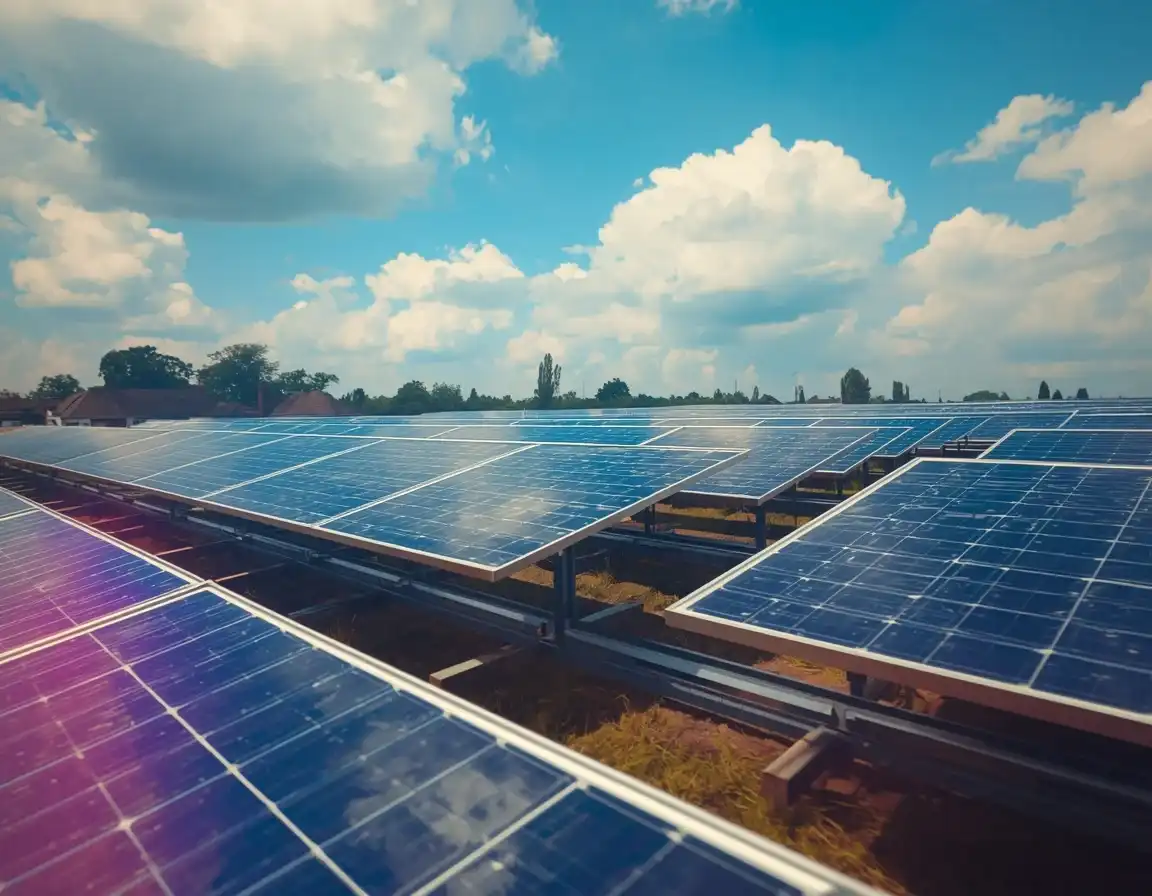
Solar Panels in the West Midlands

Solar Panels in the West Midlands: 2026 Costs, Savings & Honest Regional Advice
I’ve sized and specified solar on Midlands roofs for twenty years — 1930s semis in Solihull, Victorian terraces in Handsworth, new builds out near Coventry. The West Midlands is not the south coast, and anyone who quotes you Cornwall numbers here is selling something. Here’s what the region’s sunshine, housing stock and prices actually do to a solar system in 2026.
How much sun does the West Midlands actually get?
Enough. This is the first question I get in Birmingham and it’s the wrong worry. A clean, south-facing West Midlands roof yields roughly 850–950 kWh per kWp of panels per year — modelling for the Midlands puts an optimally pitched array at about 935 kWh/kWp, against 1,050 or so in Cornwall. That’s a 10–15% gap, not a chasm, and it’s worth remembering that panels run on daylight, not direct sunshine. A bright overcast day in Coventry still makes power.
The honest caveat is shading and orientation, not latitude. Metered data from around 150 Birmingham systems through 2024 put the middle half at 701–814 kWh per kWp — below the theoretical figure, because real roofs face west, sit behind chimney stacks, or carry old kit. That gap between “possible” and “measured” is where good design earns its keep: south or south-west slopes, minimal shading, and optimisers or microinverters where a chimney or neighbour’s tree gets in the way. If your roof is heavily shaded, our guide to microinverters versus string inverters explains the fix; if a tree is the culprit, deal with that first.
What solar panels cost in the West Midlands in 2026
Good news first: the Midlands is one of the more sensibly priced regions in England. You won’t pay the 10–30% premium that London and the South East carry on labour, and competition between local installers and the nationwide firms covering the M6/M40 corridor keeps quotes honest. England’s average installed price sits around £1,591 per kW, and West Midlands quotes cluster at or slightly below that.
| System size | Panels (420–455W) | Typical installed cost, 0% VAT | Suits |
|---|---|---|---|
| 2–3 kWp | 6–8 | £4,000–£5,500 | 1–2 bed home, low usage |
| 4 kWp | 9–10 | £5,500–£7,500 | Typical 3-bed semi |
| 5 kWp | 11–12 | £7,500–£9,000 | 4-bed, home working |
| 6 kWp | 13–14 | £8,500–£11,500 | 4–5 bed, EV or heat pump |
Those ranges match what we see nationally in our UK solar panel cost guide for 2026, and they include scaffolding, MCS certification and grid notification — the line items dodgy quotes leave out. A 5kWh battery adds £2,500–£4,000 if you fit it at the same time; our battery storage guide covers whether that’s worth it for your usage pattern. And remember everything above is quoted at 0% VAT, which runs until 31 March 2027 before reverting to 5% under HMRC’s energy-saving materials relief. On a £6,500 job, waiting past that date costs you about £325 for nothing.
A worked example — a 1930s semi in Solihull
Let me show the maths rather than wave at it. Take a 4kWp system at £6,500 installed on an unshaded south-west roof, household using 3,600 kWh a year:
Generation: 4kWp × ~900 kWh/kWp ≈ 3,600 kWh/yr.
Own use (50%): 1,800 kWh × 26.32p (Oct–Dec 2026 cap rate) ≈ £474 saved.
Export (50%): 1,800 kWh × 13p (Fuse Energy, the best no-strings SEG rate) ≈ £234 earned.
Year-one benefit: ≈ £708. Payback: £6,500 ÷ £708 ≈ 9.2 years.
Add a 5kWh battery and push self-use to ~75% and the annual benefit climbs towards £900+, cutting payback further if you’re on a time-of-use export tariff.
Nine years sits comfortably inside the 8–12 year band we quote for UK solar payback periods, and panels carry 25-year performance warranties as standard. That’s roughly 15 years of near-free electricity after the system pays for itself. If your usage is higher — EV charger, heat pump, home office — size up to 5 or 6kWp; the cost per kW falls as fixed costs spread.
Birmingham’s solar paradox — and why it’s your opportunity
Here’s the strange bit. Birmingham ranks 10th in the UK for total solar installations, yet only about 3.1% of its 423,500-ish households have panels — the lowest adoption rate of any major English city, against roughly 12% in Cornwall. I’ve written a whole piece on why Birmingham’s solar adoption is so low, and the short version is housing, not sunshine: nearly 30% terraced, a quarter flats, only 11% detached, a big private rental sector, and a fuel poverty rate of 13.8% that puts the upfront cost out of reach for the households who’d gain most.
Read that as a buyer, though, and it flips into an opportunity. The region’s semi-detached stock — 34.5% of Birmingham homes, and the dominant type across Solihull, Sutton Coldfield, Coventry and Wolverhampton’s suburbs — is close to ideal: simple pitched roofs, decent south-facing aspects, no leasehold nonsense. If you own a semi or detached house in the West Midlands with an unshaded roof, you’re sitting on one of the better solar propositions in the country, in a region where installers are hungry for work.
And what about Coventry and Wolverhampton?
The costs, cap rate and SEG income above apply just as directly in Coventry and Wolverhampton — pricing and export tariffs are set nationally, not by postcode, so nothing in this guide is Birmingham-specific. What differs a little is the housing stock. Coventry leans even more heavily terraced than Birmingham: independent analysis of local sales data puts terraced homes at over 40% of the city’s stock, a legacy of both its Victorian rows and the dense post-war rebuilding that followed the Blitz — which also means a fair share of Coventry’s roofs sit on newer, simpler pitches than you’d find in Birmingham’s older suburbs. Wolverhampton is classic Black Country: a mix of Victorian terraces and inter- and post-war estates, with average homes running a little smaller than the national norm and comparatively little new-build activity. Neither of those facts changes the maths in this guide — a south-facing semi in Tile Hill or Penn behaves exactly like one in Solihull — but if you’re on a terrace in either city, the panel-density point in our best panels for UK homes guide is worth reading before you get quotes.
Grants and local schemes in the West Midlands in 2026
There’s no universal cash grant for solar, and anyone cold-calling you about a “free government scheme” probably isn’t selling what you think. What genuinely exists right now:
| Scheme | Who qualifies | What it’s worth | Status |
|---|---|---|---|
| 0% VAT | All UK homeowners, no income test | ~5% off the whole install (£325 on £6,500) | Until 31 March 2027 |
| ECO4 | Low-income households, poorly insulated homes (EPC E–G) | Fully funded measures, solar included | Closes 31 December 2026 |
| Warm Homes: Local Grant | EPC D–G, typically household income under £36,000 | Up to £15,000 towards solar and insulation | Open, via local authorities |
| Switch Together Birmingham | Birmingham residents, any income | Group-buy quotes from vetted installers, no obligation | Running |
| WMCA retrofit programme | Region-wide, focused on social housing and low-income homes | Part of the mayor’s £167m retrofit fund; Birmingham City Council alone has been allocated £46m of it | Rolling |
Two deadlines matter. ECO4 was extended to 31 December 2026 and will not be extended again — if your household qualifies, our ECO4 deadline guide explains how supplier budgets are already tightening, so apply early. And the 0% VAT window shuts on 31 March 2027. For everyone else, the support is structural rather than cash: 0% VAT, SEG export income, and the Warm Homes: Local Grant if your income and EPC band line up. Our grants roundup keeps the full list current.
The West Midlands has a persistent cold-calling problem around “free solar” and government schemes that don’t exist. Check any installer’s certification yourself on the MCS register before a survey visit, and read our seven red flags of UK solar scams if a deal feels pushed.
Planning permission and the region’s housing stock
Most West Midlands houses don’t need planning permission: roof-mounted solar is permitted development, provided panels don’t protrude more than 200mm from the roof slope and don’t rise above the ridge. The exceptions bite harder here than in most regions. Birmingham alone has 29 conservation areas — Moseley, the Jewellery Quarter, Edgbaston’s garden estates — where consent may be required, and listed buildings need it everywhere. Flats and maisonettes don’t enjoy the same permitted development rights at all, which matters in a city where a quarter of homes are flats. Our planning permission guide covers the edge cases, including in-roof systems for conservation areas.
Terraced homes — 29.5% of Birmingham’s stock — are perfectly viable but need more care: smaller roof areas, party-wall chimneys casting shade, and sometimes shared access for scaffolding. That’s where higher-efficiency panels earn their premium, squeezing 4kWp into a roof that would only take 3kWp of older kit. See our best solar panels for UK homes in 2026 for which models actually deliver that density.
Choosing kit and installers around the Midlands
Three things I’d insist on, region-specific:
1. Use a local MCS-certified installer. MCS certification is what makes your system eligible for SEG export payments, and it’s your protection on workmanship. The West Midlands has a deep bench of them, from Staffordshire and Warwickshire firms to Birmingham-based teams — verify any of them on the MCS installer register, and browse our installer comparison for review scores and price bands. Get three quotes; on the same street they can vary by 30–40%.
2. Mind the DNO paperwork. The West Midlands falls under National Grid Electricity Distribution. Systems up to 3.68kW per phase need a simple G98 notification after install; bigger arrays need G99 approval before you commit, which can add weeks. A good installer handles this and tells you which route you’re on — a vague one won’t.
3. Buy for your roof, not the brochure. On a clean unshaded semi, value N-type TOPCon panels (Jinko, JA Solar, Trina) with a hybrid inverter are the sweet spot: cheap per watt, and a hybrid inverter means you can add a battery next year without replacing anything. On a shaded terrace, panel-level optimisation beats a fancier panel every time. Skip the premium 24%-efficiency modules unless roof space genuinely forces it — the maths rarely supports them on a Midlands semi with room to spare.
Export income: the SEG picture for West Midlands homes
Export rates are national, so a Coventry roof earns the same per kWh as a Croydon one — the difference is all in which tariff you pick, and most people never pick. The floor is grim: some default variable tariffs pay 3–4p per kWh. The best rate open to everyone without switching supplier or installer is Fuse Energy at 13p; bundle your import supply and E.ON Next’s Export Exclusive reaches 16.5p, with installer-exclusive fixes up to 24–25p from EDF and Good Energy. Add a battery and Octopus’s Flux family pays peak-window rates that have touched 32p per kWh on evening exports. On our Solihull example’s 1,800 exported kWh, the spread between a 3p default and a 13p open tariff is £180 a year for ten minutes of paperwork. We keep a live ladder of every tariff in our best SEG rates guide — check it before you sign, and again every year or two.
Our West Midlands verdict
If you own a semi or detached house with a south or south-west roof and no serious shading: install, and do it before the VAT window closes. Size 4–5kWp, value TOPCon panels, hybrid inverter, and add a 5kWh battery only if your evening usage or an EV justifies it. Expect around £700 a year and a nine-ish year payback at current cap prices.
If you’re in a shaded terrace: get two quotes with panel-level optimisation and one without, and compare 25-year generation, not headline price. If the optimised quote can’t beat the simple one by more than its extra cost over 25 years, walk.
If you’re in a flat, or renting: skip rooftop solar — the rights and the leasehold maths are against you — and look at the group-buy and grant routes above, or wait for your landlord to catch up. And if your household is low-income with an EPC of E or worse, stop reading about panels and check ECO4 eligibility today; the scheme dies on 31 December 2026.
Frequently asked questions
Are solar panels worth it in the West Midlands despite fewer sunny days than the south?
Yes, for most homes. A well-positioned West Midlands roof yields around 850–950 kWh per kWp per year, only about 10–15% below the south coast, and panels run on daylight rather than direct sunshine. At the October 2026 price cap of 26.32p per kWh, a typical 4kWp system in the region saves around £700 a year including export income, which puts payback at roughly nine years.
How much do solar panels cost in the West Midlands in 2026?
Expect £5,500–£7,500 for a fully installed 4kWp system and £8,500–£11,500 for 6kWp, in line with the England average of about £1,591 per kW. Adding a 5kWh battery costs another £2,500–£4,000. All of it qualifies for 0% VAT until 31 March 2027, after which the rate returns to 5%.
What grants are available for solar panels in the West Midlands in 2026?
There is no universal cash grant, but several routes exist. ECO4 runs until 31 December 2026 for low-income households in poorly insulated homes. The Warm Homes: Local Grant offers up to £15,000 for eligible homes with EPC ratings D to G, typically those with household income under £36,000. Birmingham also runs the Switch Together group-buying scheme, and the WMCA’s retrofit programme is funding upgrades across the region. Everyone else gets 0% VAT and SEG export income.
Do I need planning permission for solar panels in Birmingham or elsewhere in the West Midlands?
Usually not. Roof-mounted solar is permitted development, so most houses can install without applying, provided panels do not protrude more than 200mm from the roof slope. The exceptions are listed buildings, homes in conservation areas — Birmingham alone has 29 — and most flats, where the rules differ. Check before you book if any of those apply to you.
How long do solar panels take to pay for themselves on a West Midlands home?
Roughly eight to twelve years for most households, and around nine years for our typical 4kWp worked example near Birmingham. Panels carry 25-year performance warranties as standard, so after payback you are looking at well over a decade of heavily discounted electricity, plus export income on top.
The West Midlands never tops the sunshine league tables, and it doesn’t need to. Cheap-ish installs, sensible roofs, a price cap that keeps making exported-and-saved kWh more valuable, and a VAT clock ticking towards March 2027 — the region’s low adoption rate isn’t a warning sign, it’s a head start for whoever gets their quotes in first.
