Solar Panels on an Asbestos Cement Roof in the UK

Solar Panels on an Asbestos Cement Roof in the UK: Rules, Options and Costs
Updated 12 October 2026
Plenty of UK garages, sheds, bungalows and farm buildings still wear corrugated asbestos cement sheets, and plenty of their owners want solar on them. It’s a question readers send in all the time: “the roof’s a bit old, is that a problem?” When the roof is asbestos cement, it’s more than a bit of a problem. It changes the whole job. Here’s the honest picture: what the law allows, what installers will actually do, and what each route costs in 2026.
The short version
Solar works on a property with an asbestos cement roof, but rarely the way people hope. Nobody sensible drills into the sheets: it releases fibres, the sheets are fragile, and most MCS installers walk away. That leaves two honest routes: replace the sheets first (roughly £1,200 to £3,200 for a single garage, removal and new roof together), or put the panels somewhere else, such as the house roof or a ground mount. If the sheets were due for renewal anyway, combining the jobs stacks up. If not, it rarely does.
🧪 First: what have you actually got up there?
Before anyone talks panels, identify the roof. “Asbestos” covers very different materials, and the corrugated grey sheets on a 1970s garage are not the same beast as loose insulation or sprayed coating in a loft. Asbestos cement (AC sheet, as the trade calls it) is asbestos fibre locked into a cement matrix and pressed into corrugated or flat sheets. Profiles such as Big Six and Super Six went up on garages, sheds, church halls, factory roofs and farm buildings for most of the twentieth century.
The UK banned blue and brown asbestos in 1985 and white (chrysotile) asbestos, the type used in cement sheets, in 1999. The HSE’s position is that any building put up before 2000 may contain asbestos somewhere. So if your outbuilding predates the millennium and wears corrugated sheets, treat it as asbestos cement until a test says otherwise.
Anatomy of an asbestos cement sheet roof
The cues I’d note on a survey visit
A simplified elevation. None of these cues is proof on its own. Only a lab test of a sample is.
| What you can see | My working verdict |
|---|---|
| Grey corrugated sheets, bolted laps, building pre-2000 | Asbestos cement until a test says otherwise |
| Similar fibre-cement sheets from the 1980s or 1990s | Some were asbestos-free, but you can’t tell by eye. Test them |
| Soft bitumen corrugated sheeting, often black, green or red | Onduline-style product, no asbestos |
| Metal box-profile or tile-effect sheeting | Steel, no asbestos |
| Anything pre-2000 you can’t place | Take a sample or book a survey. Guessing is the expensive option |
A survey typically costs a few hundred pounds (one 2026 guide averages about £325), and extra lab samples are usually £40 to £60 each.
The good news: bonded asbestos cement left alone and in decent condition is lower risk. It’s a manage-it-in-place material. The trouble starts the moment someone cuts, drills, sands, snaps or walks on it, which is exactly what a solar install normally involves.
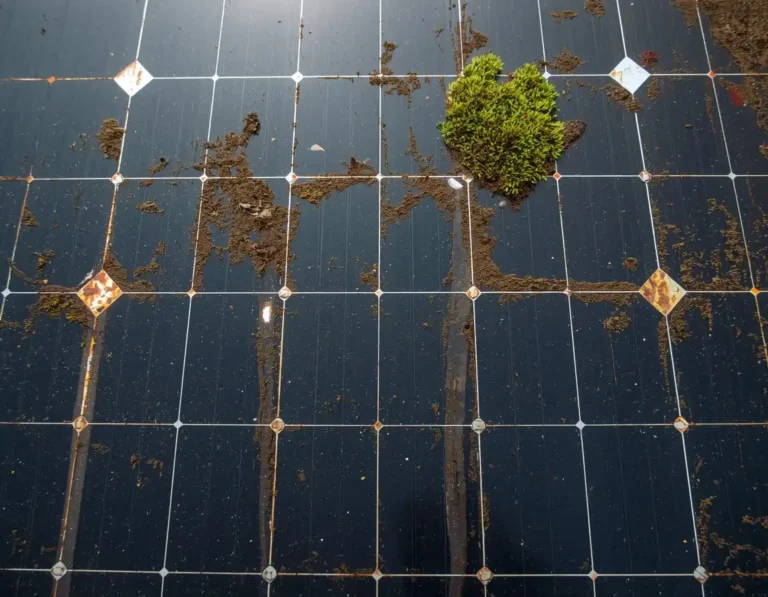
Worth knowing: moss and lichen love old AC sheets. Don’t pressure-wash or scrape them off. The HSE has task sheets for cleaning weathered asbestos cement roofing (A12) and for clearing gutters on AC roofs (A10) for a reason. That “harmless” weekend tidy-up is a fibre-releasing job.
⚖️ What UK law actually says about drilling and fixing
The framework is the Control of Asbestos Regulations 2012. It splits work into licensed work, notifiable non-licensed work and non-licensed work. High-risk materials such as sprayed coatings, insulation board and lagging need an HSE-licensed contractor. Asbestos cement sits at the lower-risk end: because the fibre is bonded in cement, most work with AC sheet, including drilling and removal, is non-licensed work that a trained, competent person can lawfully do with the right controls.
Lawful, note. Not casual. The HSE’s Asbestos Essentials task sheets set out the controls. A9 covers drilling holes in asbestos cement, A12 cleaning weathered AC roofing and A14 removing AC sheets, and an introductory sheet (A0) helps you check whether a job is notifiable. The controls include restricting access (including the space under the roof), low-speed drilling, keeping the material wet, cleaning up with the right vacuum and damp rags, and bagging every scrap as asbestos waste. That’s a long way from a bloke on a ladder with a combi drill, and it’s why the legal answer (“yes, it’s permitted”) and the practical answer (“no, nobody’s doing that on your garage”) diverge so sharply.
Three more legal threads matter. First, fragility. Old, weathered AC sheets are fragile roofing, and falls through fragile roofs are a recurring cause of deaths and serious injuries, so any work on the roof needs roof ladders or crawling boards, not boot pressure on a sheet crown. Second, the duty to manage asbestos (regulation 4) applies to non-domestic premises such as farms, lets and commercial units, which means a record and a management plan before trades start work. Owner-occupiers of their own home sit outside that duty, but landlords don’t. Third, waste. AC sheets are hazardous waste: double-wrapped, labelled and tipped only at a site licensed to take asbestos. A general skip or a fly-tip is how people end up in court, and serious breaches of health and safety law can mean an unlimited fine and prison.
🚫 Why most MCS installers will simply say no
Here’s the part that surprises people. Ring three MCS-certified installers about solar on an asbestos cement roof and two may decline to quote at all. That’s not cowardice, it’s arithmetic. Four reasons drive the refusal:
- The standards expect a sound roof. MCS requires a roof survey before fixing, and pitched-roof mounting kits are certified under MCS 012 for fixing into sound structure. A 45-year-old cement sheet that’s fragile when walked on isn’t a sound substrate, and no certified kit is tested for fixing into it.
- The load doesn’t help. Panels and rails add roughly 12 to 15kg per square metre, plus wind uplift and snow loads. Old purlins under AC sheets were often sized for the lightest covering going.
- Insurance and warranty collide. Installers carry public liability cover and offer long workmanship promises. Drilling a fibre-releasing, fragile sheet is the one job their insurer is likely to price accordingly, if it will cover it at all.
- The roof will lose the race. AC sheets from the 1960s to 1980s are at or past their service life. Even if the fixing worked, you’d be stripping an array off in a few years to re-roof, paying twice for scaffolding and labour.
A good installer won’t just refuse, they’ll redirect you: re-roof first and we’ll follow the roofer, or move the array to the house, or look at a ground mount. That’s the conversation you want. The one you don’t want is the cowboy who says drilling a few holes is fine. It’s the same roof-first logic as any fussy substrate. Our slate roof guide shows how much a covering can change the job, and slate at least isn’t hazardous. If you’re unsure whom to trust, our guide to choosing a solar installer covers the checks.
Red flag: any quote that includes fixing into asbestos cement sheets without mentioning asbestos controls, training and waste disposal, or one that promises to “just drill through” on the day. Walk away, then check whether they’re MCS certified at all.
🔀 Your four real options, in the order I’d consider them
Once we accept that nobody is drilling, the decision tree gets short. These are the four routes that actually happen on UK jobs.
Which route fits your building?
The decision tree I run through
A fifth route, overcladding, where new sheeting is fixed over the asbestos by specialists, mostly belongs to farms and commercial units. Our guide to solar on agricultural buildings says pre-2000 farm roofs need a specialist survey first.
| Route | Typical outlay (2026) | Rough payback | Makes sense when |
|---|---|---|---|
| A. Re-roof, then roof-mount | £1,200–£3,200 for a single-garage roof, plus about £5,000–£6,500 for a roughly 3kW array | Roughly 10 to 20+ years | The sheets are tired, leaking or already on your to-do list |
| B. Solar on the house instead | £6,500–£8,500 for 4kW | 7–12 years | The house roof is sound and the AC building was only bonus space |
| C. Ground or garden mount | About £6,500 for 3kW, about £9,500 for 4–5kW | 8–12 years | No decent roof anywhere on the property, but spare garden space |
| D. Overclad, then mount | Quote-based, from a specialist contractor | Depends on system size | Large pre-2000 farm or commercial roofs where stripping is prohibitive. Fixings still pass through or around the old sheets, so the contractor must follow HSE controls |
Solar prices and paybacks follow our solar panel cost guide and ground mount guide. Route A payback is my own arithmetic from those figures: a re-roof adds £1,200 to £3,200 to a 3kW system that saves about £450 to £650 a year.
What I’d steer you away from, in plain terms: drilling the sheets yourself with a hardware-store bit; reusing old AC sheets as shed walls or bed edging (leaving them in place is legal, re-purposing and re-drilling them is not a good idea); and “encapsulating” coatings sold as a fix. Sealing paint is a legitimate management tool for sound sheets, but it doesn’t turn the roof into something you can bolt rails to.
💷 What each route actually costs in 2026
Let’s put numbers on it, because this is where the decision usually makes itself. Removal prices below come from published 2026 UK cost guides, which disagree with each other, so treat them as a range and get three quotes. Solar prices come from our own guides.
| Job | Typical 2026 price | Notes |
|---|---|---|
| Remove and dispose of AC roof, single garage | £400–£1,000 | Roof sheets only, about 15 to 20m². Access and distance to the tip move it around |
| Remove and dispose of AC roof, double garage | £750–£1,600 | Bigger sheet count, bigger waste bill |
| Removal by area, any building | About £25–£80 per m² | Published guides range widely, and the rate falls on larger roofs |
| New garage roof covering | £750–£2,000 (single), £1,000–£3,500 (double) | Depends on material. Removal and the new roof together come to roughly £1,200–£3,200 (single) or £1,800–£5,000 (double) |
| 4kW roof-mounted solar, house | £6,500–£8,500 | 0% VAT included. See our cost guide |
| 3kW ground-mounted system | About £6,500 | 4–5kW is about £9,500 and the usual range for 3–5kW is £6,500–£12,000 |
| Battery add-on | About £2,000–£5,000 | Our guides quote different ranges by battery size. Same 0% VAT treatment when bundled with panels |
Removal and re-roof ranges combine several UK cost guides (MyJobQuote, BestBuilders and asbestos-survey firms, 2026). The re-roof totals are removal plus the new covering added together.
Cost per kW installed, by route
Typical 2026 totals divided by system size
Route A assumes a single-garage roof takes about 3kW (£5,000 to £6,500) plus a £1,200 to £3,200 re-roof. Route B is a 4kW house system at £6,500 to £8,500. Route C is 3kW at about £6,500 and 4 to 5kW at about £9,500.
Read the chart the way I do. Route B is the cheapest per kW because it sidesteps the asbestos entirely, and on most properties a house roof gives you more panel space than a garage. Route A only wins when the re-roof was coming anyway: share the scaffolding and access equipment, and you get one disruption window instead of two. Route C costs more than B but buys you the perfect tilt, and our ground mount guide notes ground arrays can produce 5 to 25% more than roof panels because they run cooler and you control the angle.
The maths test for route A: a 4kW house system typically saves £600 to £900 a year in total, per our cost guide, and a 3kW system £450 to £650. A garage-sized array saves a fraction of a house system. So if the only reason to re-roof is solar on a building that barely uses electricity, the payback stretches out towards forever. If the building runs a freezer, a workshop or a milking parlour, the story changes completely.
🎁 VAT, grants and export income on an asbestos job
Start with the good bit: 0% VAT on solar and battery installations runs until 31 March 2027, after which it returns at 5%. Now the bit most guides miss: that relief covers the solar installation, not the building work around it. Asbestos removal and general re-roofing are generally standard-rated at 20%, so on route A the solar half of your invoice carries no VAT and the re-roof half usually does. Confirm the VAT treatment in writing with your contractor, because I’ve seen homeowners caught out by exactly this line.
On grants, the honest 2026 position: there’s no universal handout for solar. ECO4 can fund improvements for households on qualifying benefits with a low EPC rating, but it closes on 31 December 2026. The Warm Homes: Local Grant in England can reach up to about £30,000 per eligible home, and the money is aimed at insulation, heating and solar packages, not at stripping an outbuilding’s asbestos. Treat roof removal as your own cost unless a delivery partner confirms otherwise in writing. Our grants and VAT rundown tracks every open scheme. Farmers and small businesses have a stronger stack: where the Improving Farm Productivity Grant is open it covers 25% of eligible costs, and the Annual Investment Allowance can deduct 100% of the cost against profits. Our farm solar guide and capital allowances guide cover the detail.
Export income works like any MCS-certified system, asbestos history notwithstanding. Smart Export Guarantee rates in 2026 run from about 3p to 13p per kWh on tariffs open to anyone, 12p to 16.5p when bundled with your electricity supply, and 20p to 25p on a few installer-exclusive deals, as listed in our SEG tariff comparison. You’ll need the MCS certificate from the install, which is one more reason the “we’ll drill it, cash in hand” quote is a false economy. No certificate, no export payments.
🏗️ Planning, building regs and the bits people forget
Planning is the easy part. Solar panels on a roof are permitted development within the usual limits (no more than 200mm proud of a pitched slope, below the ridge line), and re-covering a roof in similar materials doesn’t normally need permission either. Ground mounts have their own allowance of up to 9m² and 4m high, at least 5m from the boundary, and as our ground mount guide notes, not in a conservation area, AONB or on listed grounds. Listed buildings change the answer, as ever. Our planning permission guide runs the full ruleset nation by nation.
Building regulations are the bit people forget. On a house, re-roofing generally needs approval, or a contractor registered with a competent-person scheme, because the structure and the insulation have to be considered. The Planning Portal’s re-roofing guidance explains why. A small detached garage (single storey, no more than 30m², no sleeping accommodation, and either 1m from the boundary or mostly non-combustible) is normally exempt, but exemption doesn’t remove the need to check what the roof structure can carry once panels go on. Ask your council’s building control if in doubt, and make sure your roofer or installer mentions the load check. If neither does, ask why.
Two administrative footnotes. Licensed asbestos work has to be notified to the enforcing authority, but non-licensed asbestos cement work usually isn’t notifiable. “No notification” is not the same as “no rules”, and the contractor’s training and waste paperwork should still be shown to you on request. And tell your home insurer about both halves of the job. For larger farm systems, remember the grid side too: anything over 3.68kW per phase needs a G99 application to your network operator.
🧤 If the sheets are coming off anyway: doing it without doing it wrong
On route A the asbestos has to come off, and this is where a sensible homeowner can save money legally or injure someone illegally. Because AC sheet removal is normally non-licensed work, it can be done by a trained, competent contractor rather than an HSE licence holder, which keeps a single-garage job in the hundreds of pounds rather than the thousands. Some confident DIYers do their own garage roof under the non-licensed rules. It is lawful. I still advise against it, for one reason above all: you’d be working at height on a fragile roof while handling a carcinogen, and the margin for error is zero.
- Keep sheets whole. Lower them, don’t drop them. Snapping a sheet is the single best way to put fibres in the air.
- Wet and hand-tool. Damp sheets, hand tools, no angle grinders, no power saws, no pressure washers.
- Wrap and track the waste. Double-wrapped, labelled, and off to a licensed asbestos-accepting tip with the right paperwork. Never a general skip.
- Don’t re-use. Old sheets become shed walls, sty linings and garden edging across rural Britain. Every re-drilled hole is a fresh exposure.
- Check what’s underneath. If anything in the structure looks friable and crumbly rather than cement-hard, stop and get a licensed view.
Red flag: a removal quote far below the ranges above, or a contractor who can’t say where the sheets will be tipped. Cheap asbestos disposal usually means a field somewhere, and the liability for that waste can follow the person who hired them.
❓ FAQs
Can you drill into asbestos cement sheets to fit solar panels?
Legally yes, in narrow circumstances. Drilling asbestos cement is non-licensed work under the Control of Asbestos Regulations 2012, and the HSE’s Asbestos Essentials task sheet A9 sets out the controls. But it is fibre-releasing work on fragile, weathered sheets that needs training, low-speed tools and careful clean-up, and very few MCS-certified solar installers will take it on because of their insurance and warranty obligations. In practice the realistic routes are to replace the sheets or put the panels somewhere else.
Do I need planning permission to replace an asbestos cement roof and put solar panels on it?
Usually not for either job on its own. Re-covering a roof in like-for-like materials doesn’t normally need planning permission, and solar panels on a roof are permitted development within the usual limits (no more than 200mm proud of a pitched slope and below the ridge). Building regulations are the separate question: re-roofing a house usually needs approval or a competent-person contractor, while a small detached garage is often exempt, and the roof structure still needs checking for the extra load. Listed buildings and many conservation areas need formal consent.
Is it worth replacing an asbestos cement roof just to get solar panels?
Rarely, on the numbers alone. Removing and replacing a single-garage roof typically costs roughly £1,200 to £3,200 before any solar, and a garage-sized array saves far less than a house system. If the sheets are at the end of their life anyway, combining the jobs makes sense because you share scaffolding and labour. If the roof has years left in it, put the panels on the house or on a ground frame and leave the asbestos undisturbed.
🧭 The bottom line
Asbestos cement doesn’t rule out solar. It rules out shortcuts. Get the roof identified properly, accept that the sheets won’t be drilled, and the decision almost writes itself: re-roof and follow with panels if the sheets were finished anyway, move the array to the house if they weren’t, or put it on a frame in the garden if no roof qualifies. The rule I’d leave you with: the money you spend removing a hazard properly is money you’d otherwise spend twice, badly, later. Do the dull bits right and the solar on top of them will quietly earn its keep for decades.