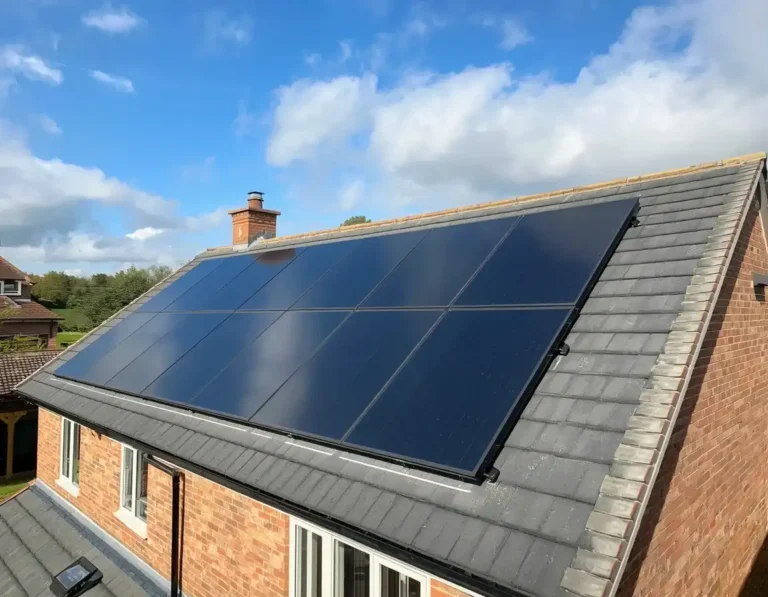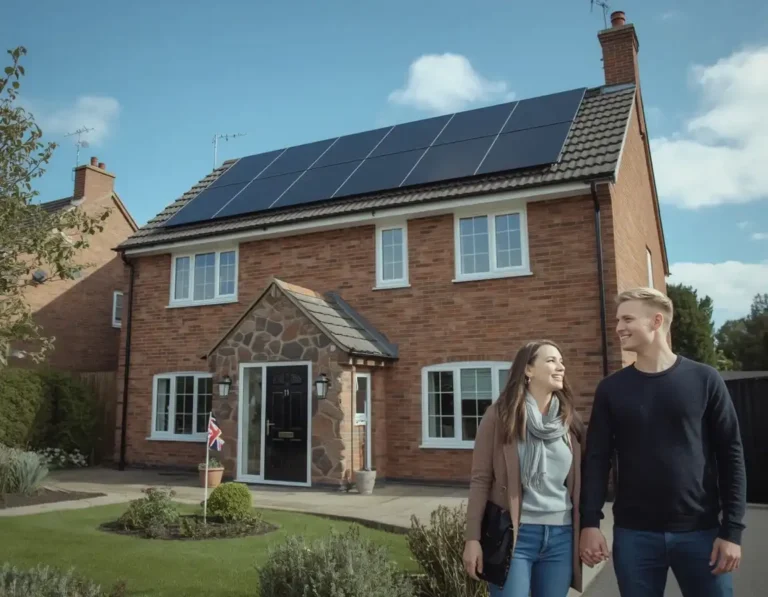
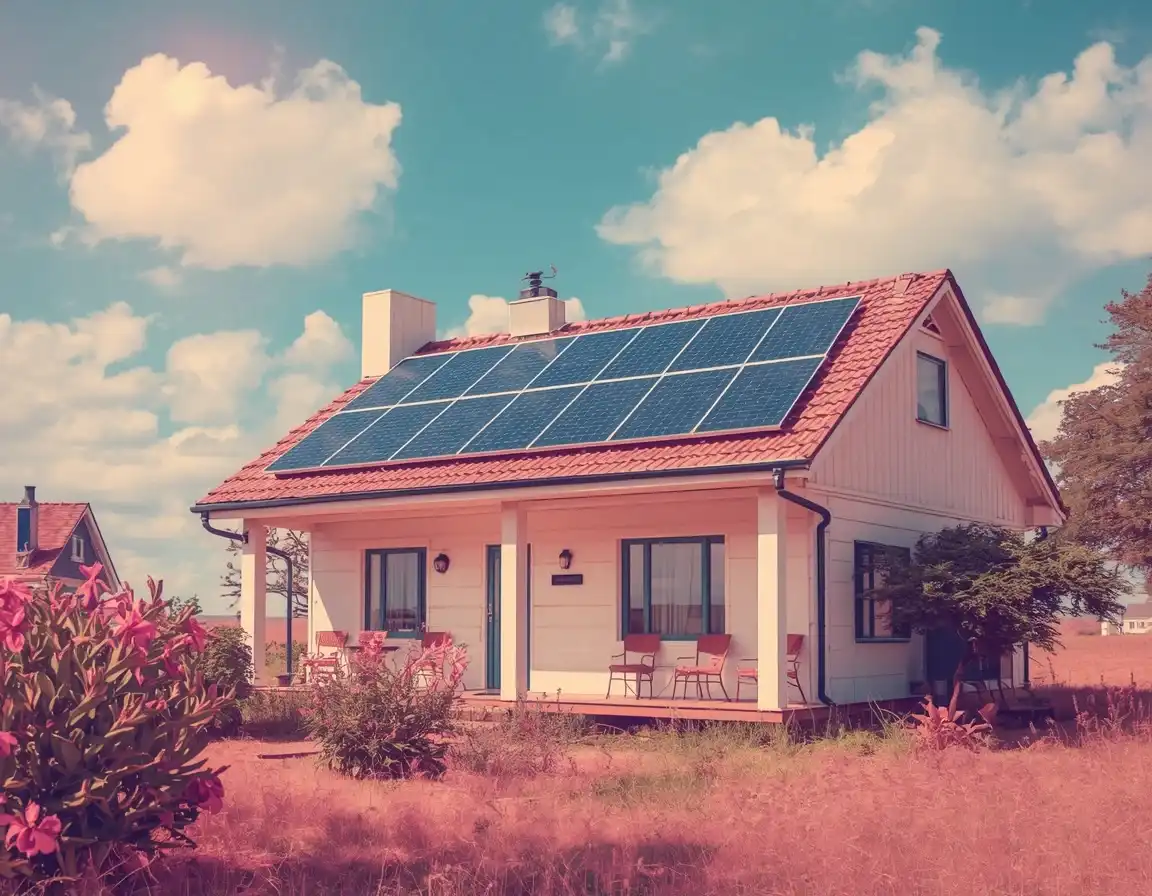
Solar panels for a 4 bedroom house

Solar Panels for a 4 Bedroom House in the UK: 2026 Size, Cost & Payback Guide
The short answer
A 4 bedroom house usually needs a 4–6 kWp solar system, roughly 10–14 panels, with 11–12 panels (about 5 kWp) the most common fit. In October 2026, with 0% VAT, a typical 5 kWp panels-only system costs £7,500–£9,000 installed (the wider 4–6 kWp range runs from about £5,500 to £11,500), or £10,000–£15,000 with a 5–10 kWh battery. Payback is typically 8–12 years; the cautious worked example below lands near 12. Size the array from twelve months of meter readings, not the bedroom count, and aim to have it installed before 31 March 2027, when VAT on installations returns at 5%.
Bedrooms don’t use electricity. People do. It sounds like a daft thing to say at the top of a guide to solar panels for a 4 bedroom house, but it’s the sizing mistake we see most often on UK quotes: a system priced off the number of doors upstairs rather than the meter readings downstairs.
So let’s do this properly. Below is how to size, price and sanity-check an array for a typical UK four-bed (semi, detached or new-build) using October 2026 figures: Ofgem’s updated usage benchmarks, the current price cap, MCS-based installed costs and the support schemes that are actually open. Where a number depends on your household, we say so instead of dressing a guess up as a fact.
How much electricity does a 4 bedroom house use?
Start with your meter, not the panel catalogue. Ofgem reset its Typical Domestic Consumption Values on 1 July 2026 to reflect falling household usage. The medium benchmark is now 2,500 kWh of electricity a year (down from 2,700), and the high benchmark, used as the reference for larger homes, is 3,800 kWh (down from 4,100). A gas-heated four-bed with a family at home often sits at or above that high band, so 3,500–4,500 kWh a year is a realistic baseline.
Then come the big movers:
- Electric vehicle: roughly 2,000–3,000 kWh a year (about 7,000–10,000 miles).
- Heat pump: roughly 3,000–4,000 kWh a year; 3,200 kWh is a common planning figure.
- Home working, electric shower, hot tub: each can add several hundred kWh.
Two houses with identical bedroom counts can therefore sit at 3,800 kWh or 9,000 kWh and need completely different arrays. Anyone who quotes off the floor plan is guessing.
Pull twelve months of bills or smart meter readings and total the kWh. Then run it through the quick sizer below or our solar panel calculator before any installer visits.
How many solar panels does a 4 bedroom house need?
A well-placed UK system generates roughly 850–950 kWh per kWp per year. Divide your annual usage by about 900 and you have a baseline system size in kWp. Then adjust: round up 10–30% if your roof allows and an EV or heat pump is on the horizon, but stay closer to the baseline if the roof is small or export rates are low, because surplus power sells for far less than imported power costs.
Mainstream 2026 panels are 420–455W, so the table uses 440W. Our guide to how many solar panels you need covers the per-panel maths in more detail.
| Annual electricity use | System size | Panels at ~440W | Roof space (incl. gaps) | Typical yearly output |
|---|---|---|---|---|
| 3,000–3,500 kWh | 3.5–4 kWp | 8–9 | ~16–18 m² | 3,000–3,800 kWh |
| 3,500–4,500 kWh | 4.5–5 kWp | 10–12 | ~20–24 m² | 3,800–4,750 kWh |
| 4,500–5,500 kWh | 5.5–6 kWp | 13–14 | ~26–28 m² | 4,700–5,700 kWh |
| 6,000+ kWh (EV or heat pump) | 7 kWp+ | 16+ | ~32 m²+ | 6,000+ kWh |
The middle two rows are where most gas-heated four-beds land, which is why a 5 kWp system of 11–12 panels is the size you’ll see on most quotes. For comparison, a typical three-bed needs about 4 kWp (see our 3 bedroom house guide), while a five-bed, or any house with an EV plus a heat pump, often needs 6 kWp or more. If your numbers push you into the bottom row, read our system sizing guide before accepting a standard package price.
Quick sizer for your 4 bed house
Enter your annual electricity use from a bill or smart meter app for an instant starting point.
Indicative only. Assumes about 900 kWh per kWp, 440W panels, roughly 2 m² per panel and 0% VAT until 31 March 2027. Single-phase homes need network operator (G99) approval for inverters above 3.68 kW. Your survey and quotes decide the final design.
Short of roof? Higher-output panels of 450–500W give the same kWp with fewer modules. Also check your supply: most UK homes are single-phase, which limits an inverter to 3.68 kW without sign-off from the network operator. Above that your installer files a G99 application. It’s routine, but allow a couple of extra weeks. Three-phase homes can go up to 11.04 kW before extra approval.
How much roof space does a 4 bedroom house need?
A modern 440W panel measures roughly 1.72 m by 1.13 m, about 1.9 m² of glass. Allow around 2 m² per panel once you include mounting gaps and edge clearances, so 11–12 panels want roughly 22–24 m² of unshaded, unobstructed roof and 14 panels about 28 m². On a typical semi-detached four-bed, one full roof slope usually takes a 5 kWp array.
South-facing still wins on paper, but don’t panic if your roof runs east–west:
| Roof direction | Output vs south-facing | What it means for a four-bed |
|---|---|---|
| South | 100% | Best output; the benchmark for every figure in this guide. |
| East or west | ~80–85% | Still a solid option. A split east–west array spreads generation across morning and evening, which suits households out at work. |
| North | ~50–60% | The hard case. See our north-facing roof guide before ruling it out. |
Dormer windows, a chunky chimney breast and a TV mast can quietly remove a third of a roof slope. Ask installers to measure the clear rectangle, not the whole slope, and compare quotes on usable panel count.
Solar panels for a 4 bedroom house: UK cost in 2026
Solar and battery installations in Great Britain carry 0% VAT until 31 March 2027. The prices below are fully installed (panels, inverter, mounting, scaffolding, labour and MCS certification) for a standard tiled roof, with no VAT added.
| Configuration | Typical installed price (2026, 0% VAT) |
|---|---|
| 4 kWp (9–10 panels), solar only | £5,500–£7,500 |
| 5 kWp (11–12 panels), solar only | £7,500–£9,000 |
| 6 kWp (13–14 panels), solar only | £8,500–£11,500 |
| 5 kWp + 5 kWh battery | £10,000–£13,000 |
| 5 kWp + 10 kWh battery | £11,500–£15,000 |
MCS-based data puts the average England price at about £1,591 per kWp (March 2026), which makes a 5 kWp system roughly £8,000 on average. Wales runs near £1,510 per kWp and Scotland near £1,660. Cost per kW falls as systems grow, because scaffolding, survey and paperwork cost about the same for 8 panels as for 14, which is why the jump from 4 to 5 kWp costs less than you’d expect.
Installations revert to the 5% reduced rate, not the full 20% rate. On a typical 5 kWp job that’s roughly £375–£450 extra, or £500–£650 with a battery. It’s real money, but far smaller than the four-figure savings you’ll see claimed elsewhere. No extension has been confirmed at the time of writing, so check the position when you book.
One blunt warning. If a quote for a straightforward 5 kWp panels-only system on an easy roof lands well above £10,000, slow down: quotes for the same job often differ by £1,500–£2,500. We broke down the numbers in our piece on what MCS data really shows about £10k quotes, and the full pricing picture, region by region, lives in our 2026 solar panel cost guide.
What will it save, and how long is the payback?
Two pots of money, never one. First, every unit you generate and use yourself avoids buying it from the grid. The Ofgem price cap for 1 October to 31 December 2026 averages 26.32p per kWh for electricity (plus a 54.83p daily standing charge), and domestic electricity is temporarily VAT-free until 31 March 2027. The cap is reviewed quarterly; the January–March 2027 level is due to be announced on 25 November 2026.
Second, surplus power earns Smart Export Guarantee (SEG) payments. Fixed tariffs run from about 3p to 16.5p per kWh, the best no-strings deals sit around 12–13p, installer-exclusive offers reach 20–25p, and battery-linked time-of-use tariffs advertise peak rates of 23p–32p but come with conditions. Rates change on 30 days’ notice, and our SEG rate comparison tracks the table.
Here is a deliberately cautious worked example: a 5 kWp array on a south-ish roof generating about 4,400 kWh a year, in a household using about 4,300 kWh. We value imported electricity at 26.3p per kWh and assume 45% of generation is used at home without a battery.
| Worked example (5 kWp) | Used at home | Year-one benefit | Typical cost (mid-point) | Simple payback |
|---|---|---|---|---|
| Panels only, 7p export tariff | ~45% (1,980 kWh) | ~£690 (£521 saved + £169 export) | £8,250 | ~12 years |
| Panels only, 13p export tariff | ~45% | ~£835 (£521 + £315) | £8,250 | ~10 years |
| + 5 kWh battery, 7p export | ~70% (3,080 kWh) | ~£905 | £11,500 | ~13 years |
| + 10 kWh battery, 7p export | ~80% (3,520 kWh) | ~£990 | £13,250 | ~13 years |
That’s the cautious end: an £8,250 install earning about £690 pays back in roughly twelve years. Pay £7,500 and move to a 13p export tariff and the same array breaks even in about nine. That spread is why panels-only systems in the 4–6 kWp band generally land between 8 and 12 years, which matches our full UK payback analysis, where 5 kWp systems save about £700–£1,050 a year depending on usage and tariffs. After payback, every year is a gain on equipment with no moving parts.
What moves your payback most
- Self-consumption: each kWh used at home is worth about 26p, each exported kWh 3–13p. Running the dishwasher, washing machine and EV charger between 10am and 4pm is the cheapest improvement available.
- Export tariff: the gap between a poor and a good SEG tariff is worth hundreds of pounds a year on a 5 kWp system.
- Quote price: £1,500 of difference at purchase is worth about two years of payback.
- Roof direction and shading: east–west costs you roughly 15–20% of output; shading can cost more.
- Energy prices: a rising price cap shortens payback; a falling one lengthens it.
The Energy Saving Trust publishes independent background on how domestic PV performs in the UK, worth a read if you want a second opinion.
Should a four-bed add a battery?
Families use power when the sun isn’t shining: breakfast, dinner, baths, television. Without storage, a typical household uses roughly 30–50% of what its roof generates. A 5–10 kWh battery lifts that to roughly 70–80% and unlocks time-of-use tariffs where you charge cheaply overnight and export at peak. Batteries also qualify for 0% VAT until 31 March 2027, including those retrofitted to existing systems.
But a battery is a separate business case, not an automatic yes. In the worked example above, a 5 kWh battery adds about £200 a year on a 7p export tariff and a 10 kWh unit about £300, so on a standard tariff it takes ten years or more to repay its own cost. It earns its place when you’re out all day and home in the evening, charge an EV, can use a time-of-use tariff, or want backup power if your system supports it.
If your hot water comes from a cylinder, a solar diverter (about £200–£400 installed) often repays in one to two years and usually beats a battery on pure payback; it doesn’t suit combi-boiler homes without a cylinder. We settle that argument in diverter vs battery: which to buy first. If you do go for storage, our best solar battery guide compares the 2026 shortlist on real costs, and adding a battery to existing panels covers retrofits.
Add up what the house uses between 4pm and midnight, plus any overnight EV top-up you want covered. That figure, not the panel count, is your battery size. Oversizing storage is the commonest way four-bed owners overspend: the step from 5 to 10 kWh costs £1,500–£2,000 for capacity many households never cycle.
Grants, VAT and export rules that apply in 2026
- 0% VAT on solar and battery installation runs until 31 March 2027 in Great Britain, then reverts to 5% unless extended (GOV.UK policy paper). Northern Ireland differs; see our Northern Ireland guide.
- Smart Export Guarantee: suppliers with 150,000+ customers must offer an export tariff, but you only qualify with an MCS-certified install and a smart meter that records half-hourly export. Here’s what MCS actually means in 2026, and the official SEG guidance.
- Warm Homes: Local Grant (England): up to £15,000 of upgrades, including solar, for owner-occupiers and private tenants with an EPC of D–G and a household income under £36,000 (or qualifying benefits). It runs to 2028 through local authorities. Most four-bed owners won’t qualify, but the GOV.UK eligibility checker takes two minutes. Never pay a fee to someone offering to “secure” a grant.
- ECO4: don’t count on it. The scheme’s legal end date is 31 December 2026, but suppliers stopped taking new applications in early 2026, so it is effectively closed apart from installs already in progress. Our ECO4 guide explains the position.
- Warm Homes Plan: the £15 billion programme launched in January 2026 and is the successor to ECO4. Support for lower-income households is live through the Local Grant, but low-cost loans for solar and batteries aimed at ordinary homeowners are still being finalised, so treat them as “not yet available”. Our grants roundup and grant and VAT checker track what’s open this month, because this list genuinely changes.
- Scotland and Wales: separate schemes apply; see our Scotland grants guide and Wales grants guide.
Planning permission, grid approval and choosing an installer
Planning permission is usually a non-event. In England, roof-mounted panels are normally permitted development provided they don’t sit above the highest part of the roof (chimneys excluded) or protrude more than 0.2 m from the roof plane. Listed buildings need consent, conservation areas and flats carry extra conditions, and Scotland, Wales and Northern Ireland follow their own rules, so check with your council before ordering. Your installer handles the network operator notification (G98) or application (G99), as covered in the sizing section above.
Panels from the big manufacturers are broadly excellent. Install quality is not. Mounting, cable routing, isolation switches and paperwork are where reputations are won and insurance claims are born, so buy the company as carefully as the hardware:
- Check MCS certification on the MCS installer finder. It’s a condition of SEG payments.
- Look for consumer protection: membership of the Renewable Energy Consumer Code (RECC) or HIES, and an insurance-backed guarantee that survives the installer going bust.
- Get itemised quotes naming the panel model and wattage, inverter, scaffolding, DNO fees and who handles your SEG application, plus a postcode-specific generation estimate in kWh a year.
- Compare three quotes on the same specification, and compare price per kWp rather than headline totals.
- Ask about timing. With the VAT window closing, installer lead times matter; ask for a firm install date and how the VAT date will be treated on your job. Our guide to the best month to install helps with scheduling.
- Walk away from pressure. “Free solar”, same-day deals and requests to pay upfront for a grant are classic red flags; see our solar panel scams guide.
Ready to compare? Start with our installer finder, then read what a fair price looks like before the quotes arrive. And if your home is actually a three-bed that estate agents flatter as a four, our 3 bedroom house guide has the smaller numbers.
Are solar panels worth it for a 4 bedroom house?
For most owners who will stay ten years or more, yes. Larger households tend to use more of what they generate, which is why four-beds usually pay back at the quicker end of the 8–12 year range, and a well-sized array keeps working for 25–30 years afterwards. The case is strongest with a roof that has room for 11–12 clear panels, a quote near the middle of the price bands above, and a good export tariff.
It’s less compelling if you may sell within eight years or so (though see our guide on whether solar panels increase house value), if the only usable roof faces north or is heavily shaded, or if you’re tempted to buy a battery you don’t need. Four bedrooms tells you how many people might live there. Your meter tells you what they actually do. Size from the meter, price three ways, and the numbers will tell you the rest.
FAQs: solar panels for a 4 bedroom house
Most 4 bedroom houses need 10 to 14 solar panels, which is a 4.4 to 6.2 kWp system using today’s common 440W panels. The most typical fit is 11 to 12 panels (about 5 kWp) for a gas-heated family home using 3,500 to 4,500 kWh a year. Add a heat pump or electric vehicle and you may need 14 to 16 panels. Size from twelve months of meter readings, not the bedroom count.
Divide your annual electricity use by about 900 to get a starting size in kWp, because a well-placed UK system generates roughly 850 to 950 kWh per kWp a year. A household using 4,300 kWh therefore needs about 5 kWp. Round up by 10 to 30 per cent if your roof allows and you plan to add an EV or heat pump. Most four-beds land between 4 and 6 kWp.
A typical 5 kWp panels-only system costs about £7,500 to £9,000 installed in 2026 with 0% VAT, and the wider 4 to 6 kWp range runs from about £5,500 to £11,500. A 5 kWh battery adds £2,500 to £4,000 and a 10 kWh battery £4,000 to £6,000. London and the South East typically cost 10 to 30 per cent more. If a plain 5 kWp quote exceeds £10,000, get two more prices before signing.
Allow about 2 square metres per 440W panel, including mounting gaps. That means roughly 22 to 24 square metres of clear, unshaded roof for 11 to 12 panels and about 28 square metres for 14 panels. On many semi-detached four-beds one full roof slope is enough, but chimneys, dormers and roof windows reduce the usable area, so compare quotes on the clear rectangle.
Usually yes, provided you will stay in the home for ten years or more. A well-sized 5 kWp system typically saves and earns somewhere between £700 and £1,050 a year once self-consumption and export payments are combined, which puts payback at roughly 8 to 12 years on a panels-only install. A cautious example with a 7p export tariff lands near 12 years, and a good export tariff or a lower quote shortens it.
Not necessarily. A battery lifts the share of solar power you use at home from roughly 30 to 50 per cent to about 70 to 80 per cent, but it adds £2,500 to £6,000 and on a standard 7p export tariff earns back only about £200 to £300 a year. It makes most sense for households that are out all day, own an EV or can use a time-of-use tariff. If you have a hot water cylinder, a £200 to £400 solar diverter often pays back faster.
Installations of solar panels and batteries in Great Britain are charged at 0% VAT until 31 March 2027. From 1 April 2027 the rate reverts to 5% unless the government extends the relief, which has not been confirmed. On a typical £7,500 to £9,000 five kilowatt system that is roughly £375 to £450 extra. Ask your installer how they will treat the VAT date for your job.
Usually not. In England, roof-mounted panels are normally permitted development provided they do not sit above the highest part of the roof (excluding chimneys) or protrude more than 0.2 metres from the roof plane. Listed buildings need consent, and conservation areas and flats have extra conditions. Scotland, Wales and Northern Ireland have their own rules, so check with your local council before ordering.
Related guides
- Solar panel calculator
- How many solar panels do I need?
- Solar panels cost UK 2026
- Solar panel payback period UK
- Best SEG tariff rates
- Best solar battery UK 2026
- Solar panel grants UK 2026
- Solar panels for a 3 bedroom house
Sources:
- Ofgem: energy price cap, 1 October to 31 December 2026, and revised Typical Domestic Consumption Values (1 July 2026)
- GOV.UK: VAT energy-saving materials relief and Warm Homes: Local Grant
- Ofgem: Energy Company Obligation guidance; MCS-based installed cost data (England average, March 2026)
All figures are estimates and will vary with your location, roof, usage and installer. Prices, tariffs and scheme rules change, so confirm current details before committing. SolarBriton is an independent information resource and is not a regulated financial adviser.