
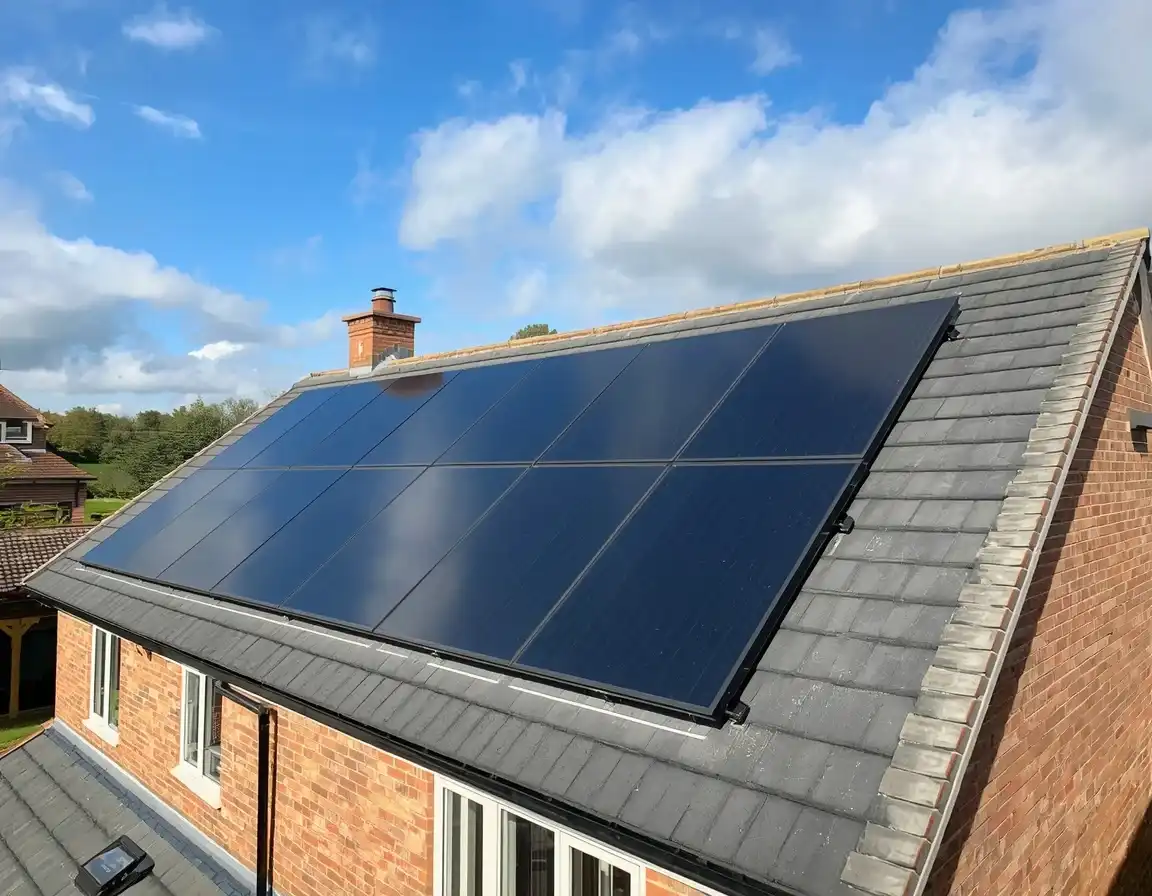
Solar Panels for a 3 Bedroom House UK: The Honest 2026 Guide

Solar Panels for a 3 Bedroom House UK: The Honest 2026 Guide
Thinking about going solar? I’ve pulled together all the numbers you actually need — real 2026 costs, how many panels fit a typical 3-bed, what you’ll genuinely save, and which grants you might be leaving on the table.
There’s a lot of solar content out there — and most of it is either a year out of date, deliberately vague, or quietly trying to get you to fill in a form. So here’s what I’ve done instead: I’ve pulled real data from the MCS (Microgeneration Certification Scheme) dashboard, used the latest Q2 2026 Ofgem price cap figures, and cross-referenced everything against what actual 3-bedroom UK households are paying and saving right now.
The short answer? A good solar setup for a 3-bedroom house costs around £7,500, saves you roughly £550–£950 per year depending on whether you add a battery, and pays itself back in 10–14 years. After that, you’ve got 15+ years of essentially free electricity. Once you factor in the 0% VAT window closing in March 2027, the financial case is genuinely strong right now.
Here’s everything you need to know.
How many solar panels does a 3-bedroom house need?
For a standard 3-bedroom UK home, you’re looking at 10 to 12 solar panels — making up what installers call a 4kWp system. This is based on Ofgem’s Typical Domestic Consumption Values, which peg the average 3-bedroom household at 2,700–3,100 kWh of electricity per year.
Modern panels in 2026 are mostly 400–450W monocrystalline N-type units. That’s a big jump from the 250–300W panels of five years ago, which is why older guides quote higher panel counts. With 10 x 450W panels, you get a 4.5kWp system — perfect for most 3-bedroom homes.
| House size | Annual usage (kWh) | System size | No. of panels | Roof space |
|---|---|---|---|---|
| 1-bedroom flat | ~1,500 kWh | 1.5–2 kWp | 4–6 | ~8–12 m² |
| 2-bedroom house | ~2,000–2,500 kWh | 3 kWp | 7–8 | ~14–16 m² |
| 3-bedroom house ★ | ~2,700–3,100 kWh | 4 kWp | 10–12 | ~20–24 m² |
| 4-bedroom house | ~3,600–5,500 kWh | 5–6 kWp | 12–16 | ~24–32 m² |
| 5-bedroom house | ~5,500 kWh+ | 6+ kWp | 14–18 | ~28–36 m² |
If your household uses more electricity than average — say you work from home, have a heat pump, or charge an electric car — you’ll want to size up. A heat pump typically adds around 3,200 kWh per year to consumption; an EV around 2,000 kWh. Either of those pushes you firmly towards a 5–6 kWp system with 12–15 panels.
How much do solar panels cost for a 3-bedroom house in 2026?
The MCS (Microgeneration Certification Scheme) publishes a live dashboard of actual installation prices across the UK. As of April 2026, the average cost of a solar panel system for a 3-bedroom home is £7,505. That’s for a 4kWp system, fully installed, at 0% VAT.
Add a solar battery and you’re looking at £9,800 to £11,300 all in. Here’s how the money breaks down:
| Component | Typical cost | Notes |
|---|---|---|
| Solar panels (10–12 × 400–450W) | £2,450–£3,150 | ~30–45% of total installed cost |
| Inverter (string or hybrid) | £500–£1,200 | Hybrid inverter costs £200–£500 more but is battery-ready |
| Mounting & racking system | £300–£600 | Varies by roof type — tile, slate, and flat all differ |
| Labour & scaffolding | £1,000–£2,500 | Biggest variable — roof height, pitch, and access all affect this |
| Electrical work & cabling | £400–£800 | Includes generation meter and DNO notification |
| Total (panels only, no battery) | £6,500–£8,000 | MCS average £7,505 (Apr 2026) |
| + Solar battery (5kWh) | £2,500–£4,000 | Popular: GivEnergy, Huawei LUNA, Solis ARIES |
| Total with battery | ~£9,800–£11,300 | 0% VAT applies to the full amount |
One thing worth understanding: those headline price differences between installers often come down to labour costs and installer overheads, not necessarily panel quality. Always get at least three quotes, and ask each installer for a generation estimate (kWh per year) specific to your postcode and roof — that figure tells you far more about value than the upfront price alone.
Check out Solar Panel Grants U.K.
What will I actually save on my energy bills?
At the Q2 2026 Ofgem price cap of 24.67p/kWh, here’s what a typical 3-bedroom UK household can expect to save with a 4–4.5kWp solar system:
| Setup | Bill saving/yr | SEG income/yr | Total saving/yr | Payback period |
|---|---|---|---|---|
| 4.5kWp system only | ~£460–£510 | ~£50–£100 | ~£554 | ~13–14 years |
| 4.5kWp + 3kWh battery | ~£700–£800 | ~£100–£200 | ~£818–£943 | ~11 years |
| 5kWp + 5–10kWh battery | ~£800–£950 | ~£150–£300 | ~£950–£1,100 | ~10–12 years |
The Smart Export Guarantee (SEG) is the government-backed scheme that pays you for the surplus electricity you send back to the National Grid. Rates vary by supplier — currently between 4p and 15p per kWh — and all licensed energy suppliers with over 150,000 customers are legally required to offer one. It’s not a windfall, but it adds a meaningful £50–£300 per year to your total return.
The biggest lever is self-consumption: the more of your own solar electricity you use rather than export, the better. Every kWh you consume yourself saves you 24.67p; every kWh you export earns you just 4–15p. Running your dishwasher, washing machine, and EV charger during the day — roughly 10am to 4pm — is one of the simplest ways to shift the dial in your favour.
Check out Solar Panels Maintenance
Payback period and long-term profit
Here’s the big picture for a typical 3-bedroom household in 2026:
With a battery: break even in around 10–12 years. Without a battery: closer to 13–14 years. After that, you’re generating essentially free electricity for another 15+ years. Over a full 25-year system lifespan, the total savings on a 4.5kWp-plus-battery setup can exceed £23,000, with a net profit of over £10,000 once you’ve covered the original installation cost.
Something worth building into your planning: energy prices are unlikely to stay at 24.67p/kWh forever. The UK’s Q2 2026 price cap is actually lower than the 2024 peaks — analysis from Cornwall Insight suggests wholesale price volatility could push the cap back above £1,900 per year. Every time the price cap rises, your solar panels become more financially valuable. They’re essentially a 25-year hedge against energy price inflation.
And here’s something people often overlook: solar panels add value to your home. Research puts the increase at around 6–7% for a 2–3 bedroom UK property. Homes with solar also tend to sell faster, because buyers increasingly prize high EPC ratings and low running costs. If you plan to sell in the next decade, that could be worth thousands on top of your energy savings.
Check out the Solar Panels for Flat Roof
Grants and government incentives for solar panels 2026
There’s more support available than most homeowners realise — though it’s worth being clear about what’s universal and what’s means-tested. The 0% VAT is available to absolutely everyone. The cash grants are targeted at lower-income households.
🏛️ 0% VAT on Solar Installation
Every UK homeowner pays zero VAT on solar panels, battery storage, and installation. On a typical £10,000 system, that’s a saving of around £500–£2,000 compared to standard or old VAT rates.
Deadline: 31 March 2027
Available to all homeowners⚡ Smart Export Guarantee (SEG)
Legally mandated payments for surplus electricity you export to the National Grid. Rates range from 4p to 15p per kWh depending on supplier. Requires an MCS-certified install and a compatible smart meter.
Status: Ongoing
All MCS-certified installs🏡 Warm Homes: Local Grant
Up to £15,000 of fully funded energy upgrades, including solar panels and battery storage, for eligible low-income households in England with EPC ratings D–G. Delivered through local councils.
Runs until: March 2028
Income-eligible households🔋 ECO4 Scheme (act fast)
Free solar panels — sometimes including battery storage — for households receiving qualifying benefits or living in low-EPC-rated homes. Managed by Ofgem and funded by energy suppliers.
Closes: December 2026
Benefits/low-income households🌿 Warm Homes Plan — £15bn fund
The UK government’s landmark January 2026 plan to upgrade 5 million homes. Low- and zero-interest loans for solar, batteries, and heat pumps are being finalised and expected to launch later in 2026 — open to all homeowners regardless of income.
Loans expected: Late 2026–2027
All homeowners (coming soon)🏴🏴 Scotland & Wales
Scotland: Home Energy Scotland — £1,250 grant + £4,750 interest-free loan for eligible households. Wales: NEST scheme for low-income households, plus Green Homes Wales interest-free loans up to £25,000 for all Welsh homeowners.
Status: Currently open
Devolved nationsTo check whether you qualify for the Warm Homes: Local Grant, you can use the official two-minute eligibility checker on GOV.UK — Apply for the Warm Homes: Local Grant. It tells you instantly whether to contact your local authority, and if your household income is under around £36,000 with an EPC of D or lower, there’s a real chance of significant funding.
Check out the best solar battery
Should I add a solar battery to my 3-bedroom house?
The short answer: if you can stretch the budget by £2,500–£4,000, a battery makes a meaningful difference to both your savings and your independence from the grid.
Here’s the key thing: without a battery, a typical household uses just 30–50% of the electricity their panels generate, with the rest exported at SEG rates (4–15p). Add a battery and that self-consumption figure jumps to 70–85% — storing the surplus for evening use rather than exporting it cheap and buying it back expensive.
For a 3-bedroom house, a 5kWh battery is the minimum that makes practical sense. The table below shows the most popular options in 2026:
| Battery model | Usable capacity | Installed cost (approx.) | Warranty |
|---|---|---|---|
| GivEnergy GivBattery 5.0 | 5 kWh | £2,800–£3,500 | 10 years |
| Huawei LUNA 2000-5-E0 | 5 kWh | £3,000–£3,800 | 10 years |
| Solis ARIES 6.0 | 6 kWh | £3,200–£4,200 | 10 years |
| Tesla Powerwall 3 | 13.5 kWh | £7,500–£9,000 | 10 years (unlimited cycles) |
| Pylontech US3000C | 3.5 kWh | £2,500–£3,200 | 10 years |
One practical tip: if you’re not quite ready to add a battery at installation, specify a hybrid inverter (rather than a standard string inverter). It costs just £200–£500 more upfront, but means you can bolt on a battery later without replacing the inverter — saving you £800–£1,500 on a future retrofit.
Is my roof suitable for solar panels?
The vast majority of standard UK semi-detached and detached homes are suitable for solar panels. Here’s a quick suitability check:
| Factor | Ideal | Still viable | Potential issue |
|---|---|---|---|
| Orientation | South-facing | East or west-facing (15% less output) | North-facing — significantly reduced output |
| Pitch / tilt angle | 30–40 degrees | 20–50 degrees | Flat or extremely steep |
| Shading | No shading at all | Partial shading (use Tigo/Enphase optimisers) | Heavy shading throughout the day |
| Available roof space | 20 m² or more (clear) | 14–20 m² (fewer panels or higher wattage) | Under 10 m² usable area |
| Roof condition | Structurally sound, post-2000 | Pre-2000 roof in good condition | Asbestos, damaged, or old flat felt |
| Planning permission | Permitted development (most homes) | Conservation area — check with council | Listed buildings — restrictions apply |
The good news is that the vast majority of residential solar installations don’t need planning permission — they’re classified as permitted development. The exceptions are listed buildings and some conservation areas, where you’ll need to get prior approval from your local council. A quick email or phone call to your local planning department gives you a definitive answer in a day or two.
If your roof has shading from trees, a chimney, or neighbouring buildings, don’t write solar off entirely. Panel-level optimisers or microinverters (Tigo TS4, Enphase IQ) can dramatically reduce the performance hit from shading by managing each panel independently — at a modest extra cost of around £30–£70 per panel.
Is solar worth it for a 3-bedroom house in 2026?
For most UK 3-bedroom homeowners — yes, genuinely. The economics are better than they’ve been in years, the technology has improved, and the 0% VAT deadline creates a real and legitimate reason to act sooner rather than later. But it’s not right for everyone, so here’s an honest look at both sides:
✅ Reasons to go solar in 2026
- Electricity remains expensive at 24.67p/kWh — historically high
- 0% VAT saves £500–£2,000 — but only until March 2027
- 10–12 year payback with battery, then 15+ years near-free electricity
- SEG turns surplus generation into passive income
- Property value increases ~6–7% on average
- Warm Homes Grant covers up to 100% for eligible households
- 25-year performance warranties; panels last 30–40 years
- Cuts your home’s carbon footprint significantly
- Hedge against future energy price rises — locks in a “price” for 25 years
⚠️ Things to weigh up first
- Significant upfront cost: £7,500–£11,300 with battery
- Long-term commitment — payback is 10–14 years
- Q2 2026 price cap is lower than 2024 peaks; slightly extends payback
- North-facing or heavily shaded roofs reduce output considerably
- Inverter replacement adds £800–£1,500 at the 10–15 year mark
- Savings are lower if you’re out during peak generation hours (10am–4pm)
☀️ SolarBriton’s honest verdict
If you own your home, plan to stay at least 10 years, have a south- or east/west-facing roof with reasonable space, and can budget around £7,500–£10,000, solar is a genuinely sound investment in 2026. The 0% VAT deadline isn’t marketing spin — it’s a real saving that expires in March 2027.
My practical advice: get three quotes from MCS-certified installers (check the MCS certified installer finder), ask each one for a personalised generation estimate for your specific postcode and roof, and compare on total kWh output over 25 years rather than just the headline price. That single number tells you more than anything else.




4 Comments