
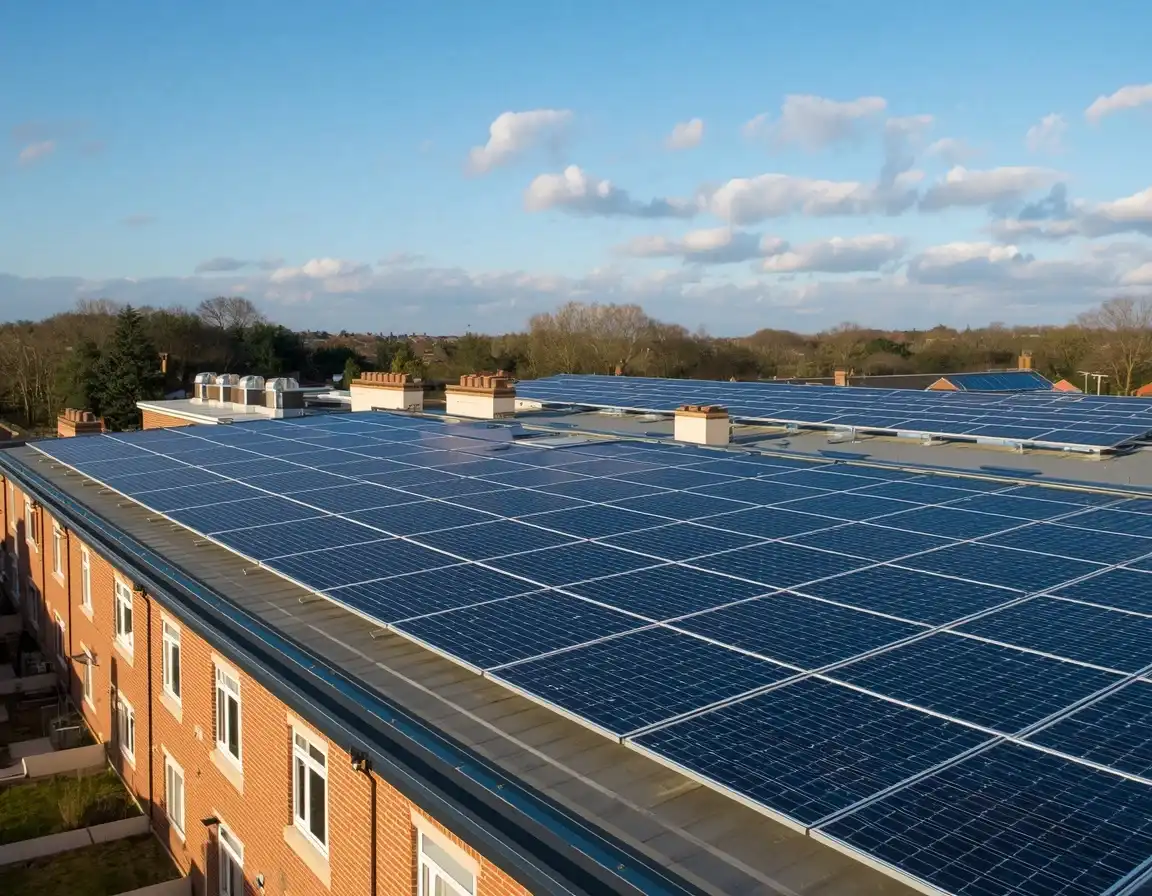
Solar panels for commercial property in the UK

UK COMMERCIAL SOLAR · 2026 GUIDE
Solar panels for commercial property in the UK: what 2026 actually costs
Real 2026 installer quotes, the latest tax rules, and the planning red tape — in plain English.
If you run a business with decent roof space in the UK, you’ve probably had a chat about going solar this year. Daytime electricity is still painful for commercial accounts, often 20p to 25p a unit, and panels are one of the rare upgrades that pay you back. I look at commercial solar numbers for a living — here’s what installers are quoting in 2026, what HMRC lets you claim, and where the planning rules catch people out.
How much do solar panels cost for a commercial property in 2026?
Prices have settled since the spike of a few years back, and the bigger the roof, the cheaper each kilowatt gets. Below is roughly what’s landing on quotes for straightforward rooftop jobs this year, before VAT.
| System size | Cost per kWp | Example total cost |
|---|---|---|
| Under 30 kWp — small shop, office | £900–£1,200 | £27,000–£36,000 (30 kWp) |
| 30–100 kWp — medium warehouse | £750–£950 | £52,500–£66,500 (70 kWp) |
| 100–250 kWp — large warehouse, factory | £700–£850 | £140,000–£170,000 (200 kWp) |
| 250 kWp+ — big industrial roof | £660–£780 | From £165,000 (250 kWp) |
Figures exclude VAT. Commercial installs are charged the standard 20% rate, unlike homes, which get 0% until March 2027, but VAT-registered businesses simply claim it back on their next return.
Check out how many solar panels are required in the U.K.
How quickly do you get the money back?
Payback has far less to do with system size than with how much of the power you use as you make it. A factory running shifts will eat almost everything its roof produces; an office that empties out at 5pm won’t get close. Here’s roughly what I’m seeing by sector this year.
Typical payback period by business type
Years to repay the system, based on 2026 installer and self-consumption data
Check out Solar Panel Grants U.K.
The tax breaks worth knowing about
This is where commercial solar pulls ahead of most other purchases a business can make. Solar panels count as “special rate” plant and machinery, which matters for your bank balance. The Annual Investment Allowance lets you deduct 100% of the cost from taxable profit in year one, up to £1 million. Anything above that uses the 50% First Year Allowance, made a permanent part of the tax system at the Autumn Statement 2023, despite older posts claiming it expires in 2026. Rooftop solar is also exempt from business rates until 31 March 2035.
Check out the Solar Panels for Flat Roof
| Relief | What it does | Worth knowing |
|---|---|---|
| AIA | Deducts 100% of cost from profit, up to £1m a year | Covers most SME-sized systems outright |
| 50% FYA | Deducts 50% of anything over the AIA limit | Permanent, not a temporary scheme |
| Business rates | Removes rooftop solar from your rateable value | Runs to 31 March 2035 |
| VAT | Standard 20% on commercial installs | Reclaimable if VAT-registered |
Do you actually need planning permission?
Mostly good news. Since late 2023 the government scrapped the old 1MW cap, so most rooftop commercial solar counts as permitted development, meaning no planning application at all, as long as panels don’t stick out more than 200mm from the roof, the building isn’t listed, and you’re not on a conservation-area frontage.
Selling what you don’t use
Any electricity you generate and don’t use can be sold to the grid through the Smart Export Guarantee. Rates vary by supplier, mostly between 7p and 16p per kWh in 2026, and the better deals usually need you to already be that supplier’s customer.
If you’re a landlord, not just an occupier
Since April 2023 it’s been illegal to let a commercial building with an EPC below E, and a C rating is the direction of travel for the next round of Minimum Energy Efficiency Standards. Solar won’t fix a poor EPC alone, but it’s a cheap way to nudge a rating up before the rules tighten further.
Check out Solar Panels Maintenance
Is it worth it for your building?
If your roof gets reasonable sun, your business uses power through the day, and you can use the Annual Investment Allowance properly, commercial solar is one of the better-value things you can buy right now. The only way to know your real numbers is a quote built from your actual half-hourly meter data, not a generic estimate. Get two or three quotes and compare them properly.
Check out the best solar battery
A few quick answers
Do I need planning permission for solar panels on a commercial building in the UK?
Most rooftop commercial solar in the UK now counts as permitted development, so no planning application is needed, provided the panels don’t project more than 200mm beyond the roof, the building isn’t listed, and it isn’t on a conservation-area frontage facing a road. Always check with your local planning authority if you’re unsure.
How much do commercial solar panels cost in the UK in 2026?
Most commercial rooftop systems cost between £660 and £1,200 per kWp installed in 2026, before VAT. Smaller systems under 30kWp sit at the top of that range, while installations over 250kWp tend to come in nearer £700 per kWp or lower.
What tax relief can UK businesses claim on commercial solar panels?
Businesses can deduct 100% of the cost through the Annual Investment Allowance, up to £1 million a year, with anything above that qualifying for a permanent 50% First Year Allowance. Rooftop solar is also exempt from business rates until 31 March 2035.

4 Comments