
What Size Solar System Do I Need in the UK?

What Size Solar System Do I Need in the UK?
Updated 13 July 2026 · 6 minute read · Straight answers on kW, panels and price, using Ofgem’s brand-new usage figures.
Most UK homes now do well with a 4kW system — around 9 to 10 panels. It covers a typical household’s usage with room to spare for an EV or heat pump later on. Read on to work out your own number properly.
I get asked this more than almost any other solar question: what size system do I actually need? It’s a fair thing to worry about, because get it wrong and you’re either paying for panels sitting half-idle on the roof, or still buying every unit from the grid on a dark February evening. The good news is you don’t need to guess, and you don’t need to be an electrician either. Work through three quick steps — your usage, your roof, and the rules that apply to bigger systems — and you’ll land on a sensible size before an installer even sets foot on your street.
Start with your usage, not a guess
Skip the roof measurements for a moment. The number that actually decides your system size is how many kWh of electricity your home gets through in a year, and you’ll find it printed on a recent bill or sitting inside your smart meter app under “usage”.
Ofgem updated its official household figures on 1 July 2026, and they’re genuinely useful here. A typical UK home on a standard single-rate meter now uses around 2,500 kWh of electricity a year — down from the old 2,700 kWh benchmark that a lot of guides still quote. Homes with an electric car, heat pump or storage heaters tend to sit much higher, typically between 3,400 and 6,100 kWh a year. Neither number is “yours” specifically, but they’re a solid check against whatever your own bill says.
Match that figure to a system size
Here’s the rule of thumb installers actually use: a well-positioned UK solar system generates somewhere between 850 and 950 kWh a year for every 1 kW installed, a bit more in the sunny South East and a bit less the further north and west you go. Divide your annual usage by that figure and you’ve got a sensible starting point in kW.
Then round up a little. Without a battery, most households only use 30–50% of their solar electricity at the moment it’s actually made — you’re at work while the panels are working hardest, then buying electricity back again that evening anyway. That’s exactly why installers usually size a system 20–30% above current usage rather than matching it exactly, which also leaves useful headroom for an EV or heat pump later on. Here’s how that plays out across the sizes people actually buy:
| System size | Panels needed* | Annual generation | Roof space | Best suited to | Guide price 2026 |
|---|---|---|---|---|---|
| 2kW | ~5 panels | 1,900–2,100 kWh | ~10 m² | 1-bed flat, low usage | £4,000–£5,000 |
| 3kW | ~7 panels | 2,600–2,900 kWh | ~14 m² | 2-bed home, couple | £5,000–£6,500 |
| 4kW | ~9 panels | 3,400–3,800 kWh | ~18 m² | Average 3-bed semi (most popular) | £6,000–£8,000 |
| 5kW | ~11 panels | 4,250–4,750 kWh | ~21 m² | 4-bed family home | £7,000–£9,500 |
| 6kW | ~14 panels | 5,100–5,700 kWh | ~27 m² | Larger home, EV or heat pump | £8,000–£11,000 |
*Panel counts assume 2026-standard 440W panels. Fewer, higher-output panels can hit the same kW rating in less roof space.
Annual generation & guide price by system size
Bigger systems generate more, but cost climbs at roughly the same pace
Check your roof and the rules that apply
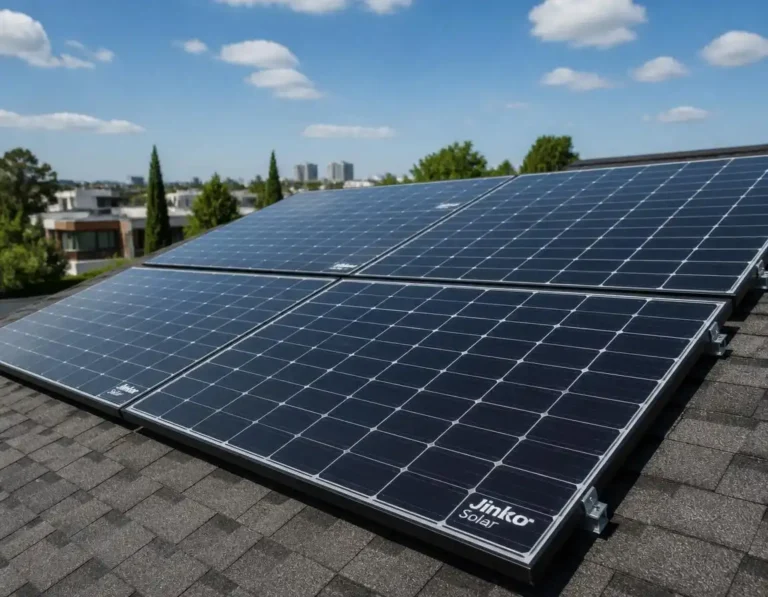
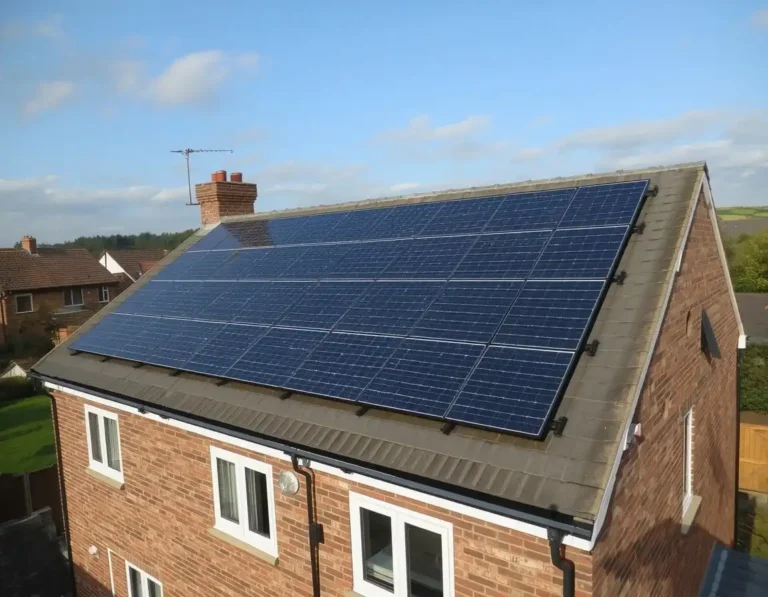
Maths sorted — now the practical bit. A standard 2026 solar panel measures around 1.7m by 1.1m and produces roughly 440W, so a 4kW system needs about 9 panels and 18 square metres of clear, unshaded roof. South-facing roofs perform best; east or west-facing ones still do a solid job, losing around 15–20% of output; north-facing roofs rarely make financial sense on their own.
There’s also a wiring limit worth knowing before you fall for a bigger system. Most UK homes run a single-phase electricity supply, which caps you at 3.68kW without extra sign-off from your network operator. Go above that and your installer simply applies for approval on your behalf — routine, just adds a couple of weeks. Three-phase properties can go up to 11.04kW the same way. Planning permission generally isn’t needed for rooftop solar either, though it’s worth a quick look at the government’s own solar energy guidance to check what applies to your home before you commit.
What about the cost, and getting money back?
Prices have settled down compared with a couple of years ago. As a rough UK-wide guide for 2026: a 3kW system typically costs £5,000–£6,500 fitted, a 4kW system (still the most popular choice for an average semi) £6,000–£8,000, and a 6kW system £8,000–£11,000. Solar and battery installations still qualify for 0% VAT until 31 March 2027, which takes a genuine bite out of the final bill.
To see why sizing matters financially and not just technically, look at what you’re avoiding: grid electricity now costs around 26p per kWh under the energy price cap. Anything you export instead gets paid through the Smart Export Guarantee, and most tariffs sit between 5p and 15p per kWh. Using your own electricity is always worth more than selling it, which is one more reason not to undersize.
Do you need a battery too?
Not necessarily, but it changes the sums quite a bit. A 9–10kWh battery suits a typical 2026 household well, and it can lift how much of your own solar electricity you actually use from around a third to somewhere between 70% and 90%. If your home sits empty most of the day, a battery usually earns its keep faster than exporting ever will, especially with grid and export rates so far apart.
Self-consumption: with a battery vs without
Share of your own solar electricity you actually use at home
None of this replaces a proper site survey — your roof, shading and daily habits are unique to your home — but walking into that conversation already knowing your rough size means you’ll spot a sensible quote from an inflated one straightaway, and ask sharper questions along the way.
Frequently asked questions
What size solar system does the average UK home need in 2026?
Most UK homes do well with a 3.5–4kW system, made up of around 8 to 10 panels. Ofgem’s latest figures put typical household electricity use at 2,500 kWh a year, and a well-placed 4kW system generates roughly 3,400–3,800 kWh annually — enough to cover the bulk of that usage with some headroom left over.
How many solar panels do I need for a 3-bedroom house in the UK?
A typical 3-bedroom semi usually needs 9 to 12 panels, forming a 4–5kW system. The exact number depends on your panel wattage, roof orientation and actual electricity use, so it’s worth checking a recent bill before comparing quotes.
Do I need planning permission for a bigger solar system?
Most rooftop solar counts as permitted development, so planning permission usually isn’t needed provided panels don’t sit above the roof ridge and don’t protrude more than 0.2 metres. Larger ground-mounted arrays, listed buildings and some conservation areas follow stricter rules, so it’s worth a quick check with your local council first.



4 Comments