GivEnergy vs Tesla Powerwall 3

GivEnergy vs Tesla Powerwall 3: British-Built vs the Default Choice
Battery head-to-head · Updated September 2026 · United Kingdom · 0% VAT until 31 March 2027 · Cross-checked against manufacturer datasheets, administrator statements and UK installer quotes
The short version
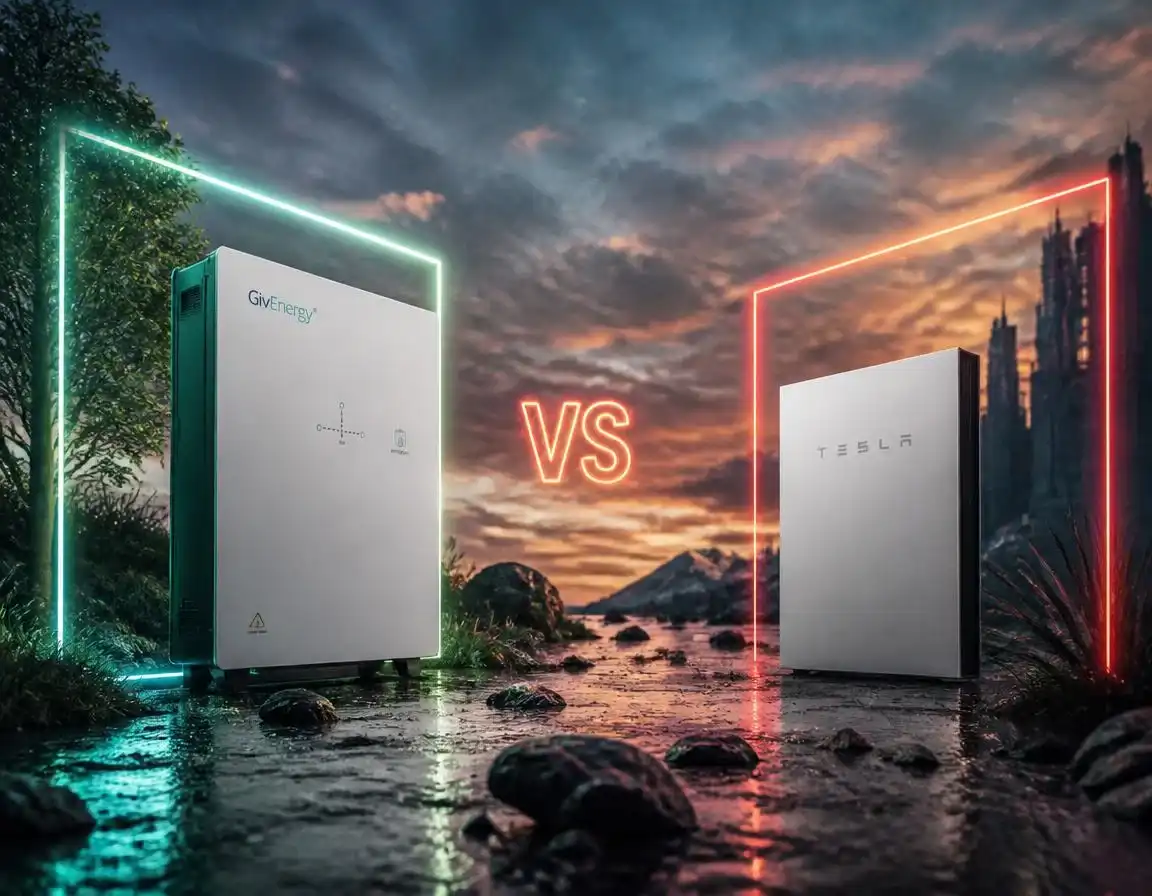
On paper this is close: both store 13.5 kWh of LFP battery and both charge from solar or a cheap overnight tariff. April 2026 changed that. GivEnergy Ltd entered administration on 09/04/2026 and no longer honours hardware warranties, while Tesla’s Powerwall 3 costs £7,499–£10,500 installed (typically £8,000–£8,500 for a straightforward single-unit fit) with a live 10-year warranty. For new buyers, Tesla wins by default. For existing GivEnergy owners, your kit keeps working — and your installer, not the brand, is now your protection.
The two batteries at a glance
I’ve specified, commissioned and fault-found both of these systems in UK homes, and for years the argument was genuinely fun: the plucky Staffordshire brand with the longer warranty and the better app, against the California default choice with the bigger name. Then 2026 happened, and this stopped being a hardware comparison. It’s now a comparison of a live manufacturer against a brand in administration — so I’m going to give you the specs, the prices, and then the bit most comparison pages skip: what actually protects you after you’ve signed.
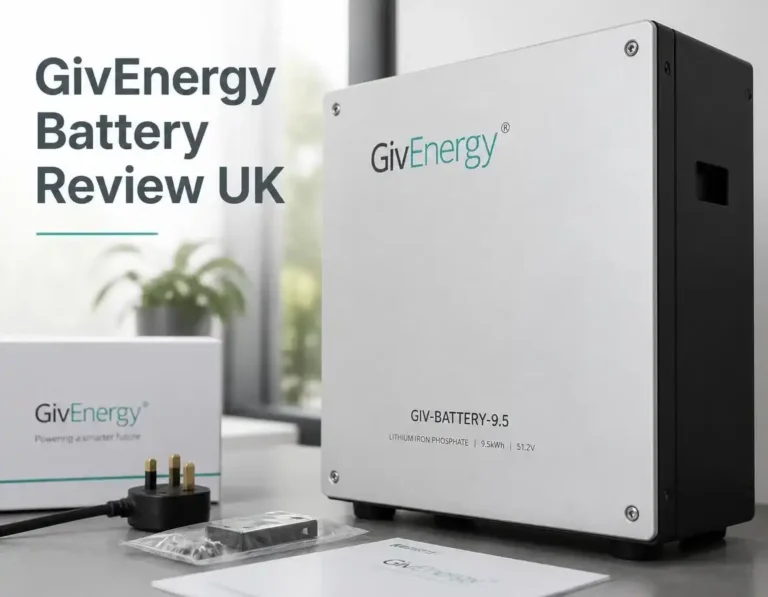
GivEnergy (All-in-One / Giv-Bat Gen 3)
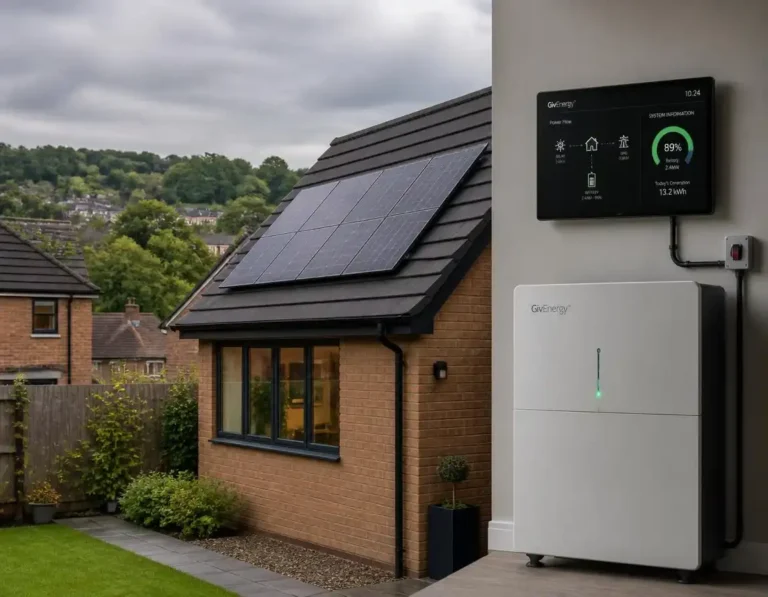
Designed and built in Newcastle-under-Lyme. LFP cells, 6,000+ cycles, 100% depth of discharge, modular stacking, and still the best Octopus smart-tariff integration I’ve used. The hardware is genuinely good. The company behind it entered administration on 9 April 2026 and stopped trading.
Tesla Powerwall 3
The UK’s most-chosen home battery in 2026. Built-in hybrid inverter, 11.5 kW continuous output, whole-home backup as standard, native Intelligent Octopus Flux integration, and a large certified installer network — including Octopus itself, which publishes a flat installed price.
Real UK prices in 2026
Here’s what installers are actually quoting this year, 0% VAT included. The GivEnergy figures are the last prices before trading stopped — useful if you’re weighing up clearance or second-hand stock, less useful as a new-buy benchmark.
Now the bit that surprises people: cost per usable kilowatt-hour. The GivEnergy All-in-One worked out at roughly £540/kWh installed at its mid-point price. The Giv-Bat 9.5 route landed near £670/kWh once you add the hybrid inverter. The Powerwall 3? About £670/kWh at its mid-point. So the “cheap British option” was only cheap in its all-in-one guise — and Tesla’s price buys you a built-in inverter (worth £800–£1,200 in separate hardware), 11.5 kW of continuous power and whole-home backup without add-ons. Add a 13.5 kWh Tesla expansion pack later for around £4,700 and the per-kWh maths improves further.
The VAT clock is the real deadline here. Installation of home batteries and solar runs at 0% VAT until 31 March 2027 under HMRC’s VAT Notice 708/6, then reverts to 5%. On a £9,000 Powerwall 3 install that’s about £450 extra for identical kit if you wait past spring. Whichever brand you choose, this is the saving to lock in first.
Specs that actually matter
Ignore the marketing tables and focus on the five numbers that change how a battery behaves in a British house: usable capacity, continuous power, expandability, backup behaviour and warranty status.
| Feature | GivEnergy (Gen 3 / All-in-One) | Tesla Powerwall 3 |
|---|---|---|
| Chemistry | LFP, 6,000+ cycles, 100% DoD | LFP, integrated hybrid inverter |
| Usable capacity | 5.12 / 9.5 / 13.5 kWh options | 13.5 kWh per unit |
| Continuous power | ~5–6 kW via hybrid inverter / AIO | 11.5 kW — runs EV charger + heat pump + hob at once |
| Round-trip efficiency | Not published by manufacturer | 97.5% |
| Expandability | Stackable to ~19–25 kWh | Up to 3 expansion packs per unit (54 kWh max); each 13.5 kWh pack around £4,700–£5,900 fitted |
| Backup during power cuts | EPS add-on circuit only | Whole-home backup built in |
| Stated warranty | 12 years (Gen 3 range) | 10 years, 70% capacity guarantee |
| Warranty status today | Not honoured — administration | Live and trading |
| App & smart tariffs | GivEnergy Cloud (premium tier now paid); class-leading Octopus Agile/Flux logic | Tesla app; native Intelligent Octopus Flux since July 2025 |
| Built in | Newcastle-under-Lyme, Staffordshire | United States |
On pure hardware, honestly, it’s tighter than the price gap suggests. GivEnergy’s 12-year stated warranty beat Tesla’s 10 on paper, its app showed more detail than Tesla’s, and its Agile-chasing logic was the best in the business. Tesla answers with raw power output, built-in backup, and an inverter you don’t have to buy separately. If this table were all there was, I’d call it a draw with different strengths. It isn’t all there is.
The British-built question: what April 2026 changed
This is the section the other comparison pages either miss entirely or bury. GivEnergy Ltd — the manufacturing company — entered administration on 9 April 2026, with Christopher Brooksbank of CB Business Recovery appointed by the High Court in Leeds. Trading stopped, all 74 staff were made redundant, and the administrator confirmed via the Energy Storage Association that no further hardware warranties would be honoured. The last filed accounts show why: £50.3m of revenue swinging from a £6.2m operating profit to a £6.5m operating loss in a single year, with unsecured creditors owed over £17m by the end.
| Date | What happened |
|---|---|
| 07/04/2026 | Notice of Intention to Appoint Administrators filed (High Court, Leeds) |
| 09/04/2026 | GivEnergy Ltd enters administration; trading stops; all 74 staff made redundant |
| 16/04/2026 | Administrator confirms via ESA: no further hardware warranties or software support from GivEnergy Ltd |
| 26/05/2026 | Statement of Proposals filed at Companies House — confirms unsecured creditors owed £17m+, and around £11m of unsold stock written down to roughly £115,000 |
| 15/07/2026 | Further update reconfirms the warranty position |
| 05/09/2026 | Still no buyer or restructuring announced for GivEnergy Ltd; situation remains open |
Here’s the nuance most owners don’t know: “warranty” was never one thing. Your protection sits in four layers, and administration only knocks out the top one. I’ve laid this out in full in our guide to GivEnergy’s administration, but the short version is this table:
| Protection layer | Covers | Affected? | Who you contact |
|---|---|---|---|
| Manufacturer warranty | Faulty cells, inverter, hardware | Yes — paused | Installer first, for now |
| Installer workmanship warranty | Quality of the installation (2–10 yrs) | No | Your original installer |
| Insurance-Backed Guarantee | Workmanship cover if the installer fails | No | RECC or HIES scheme |
| Consumer Rights Act 2015 | Goods of satisfactory quality, up to 6 years | No | Your installer, in writing |
And if you paid any part of the system — even a deposit — on a credit card, Section 75 of the Consumer Credit Act 1974 makes your card provider jointly liable for claims between £100 and £30,000. That route doesn’t care that the manufacturer has gone under. Meanwhile your battery keeps working tonight: it’s self-contained hardware, and the GivEnergy Cloud app survives because it’s run by a separate company, GivEnergy Software Ltd, which isn’t in administration. Premium app features moved to a paid subscription, but local Modbus TCP access (port 8899) stays free — the route most Home Assistant owners use anyway. Our updated GivEnergy battery review has the owner’s action plan step by step.
Earning from your battery: SEG, smart tariffs and VPPs
A battery earns in three layers: saving on your own bills, exporting surplus solar, and lending capacity to the grid. Both batteries play all three — with one 2026 caveat for GivEnergy owners.
On export, the tariff matters more than the battery. Open-to-all SEG rates start as low as 3–6p/kWh, while Fuse Energy pays 13p with no strings, installer-exclusive fixed rates reach 24–25p, and Octopus Intelligent Flux peaks up to 32p/kWh if you have a battery discharging into the 4pm–7pm window — our Best SEG tariff rates UK 2026 guide ranks the full ladder. Both batteries qualify; the Powerwall 3’s native Flux integration makes the peak-chasing automatic.
Then there’s the virtual power plant layer: realistic earnings of £120–£300 a year on top, via Axle Energy (£1/kWh per dispatch, and it supports GivEnergy hardware), Octopus Kraken, or Tesla’s own UK VPP, which launched with Octopus on 17 July 2025 and needs a Powerwall. One honest caveat for GivEnergy owners: GivBack and VPP payments depend on the cloud platform staying up. It’s running fine today under GivEnergy Software Ltd — but treat that income as a bonus, not a commitment, until a buyer for the manufacturing business is confirmed. Our virtual power plant guide covers what each scheme pays and what you’re signing away.
Which one should you choose?
Buying new, with solar or planning it: the Powerwall 3. Not because it’s magically better hardware — it’s because a 10-year warranty you can actually claim on is worth more than a 12-year warranty from a company that can’t pay out. The installed price gap narrows to almost nothing per usable kWh once you count Tesla’s built-in inverter and backup. Full numbers in our Tesla Powerwall UK cost 2026 review.
Buying new on a tighter budget: look at Fox ESS or Sigenergy before you look at clearance GivEnergy stock. If a dealer offers new-old-stock GivEnergy at a steep discount, it can be sensible — but only with the installer’s own workmanship warranty in writing, and ideally an Insurance-Backed Guarantee behind it.
Already own GivEnergy and it’s working: keep it. Don’t panic-replace a good battery because of a headline. Gather your paperwork (MCS certificate, invoice, serial numbers), write to your installer to confirm their workmanship warranty stands, and log a Section 75 claim now if you paid by credit card.
Want to expand an existing GivEnergy system: pause. Spares availability and firmware support are unresolved, and mixing in a second brand is usually cleaner than hunting discontinued packs — our guide to adding a battery to existing solar panels walks through AC-coupled retrofit options and costs from £3,500.
No solar panels at all: either battery still saves money on grid arbitrage (£300–£500 a year on a smart tariff), but payback stretches to 10–15 years. Do the panels first, or size the battery honestly against your evening usage.
My one-line verdict: the British-built battery was the better product on several measures and the worse business on the only one that matters after year three — so in 2026, buy the warranty you can enforce, and choose your installer as carefully as your brand.
FAQs
Is it safe to buy a new GivEnergy battery in 2026?
I wouldn’t. GivEnergy Ltd entered administration on 9 April 2026, stopped trading and the administrator confirmed no further hardware warranties will be honoured. Clearance or second-hand GivEnergy kit can still be solid value if your installer backs it with their own workmanship warranty, but for a new install I’d look at Tesla Powerwall 3, Fox ESS or Sigenergy — all actively trading with live manufacturer warranties.
How much does a Tesla Powerwall 3 cost installed in the UK?
Between £7,499 and £10,500 for a single 13.5 kWh unit in 2026, with Octopus Energy publishing a transparent £7,499 fully-installed price for a standalone unit and most straightforward single-unit fits landing around £8,000–£8,500. Adding a 13.5 kWh expansion pack costs around £4,700, and 0% VAT applies to the whole install until 31 March 2027, after which the rate returns to 5%.
Will my GivEnergy battery and app keep working after the administration?
Yes. The hardware is self-contained, so it keeps charging and discharging without GivEnergy’s servers, and the GivEnergy Cloud app still runs because it’s managed by a separate company, GivEnergy Software Ltd, which isn’t in administration. Premium app features moved to a paid subscription, but local access via Modbus TCP stays free. For faults, your installer is now your first port of call, not GivEnergy.