BYD vs GivEnergy Battery UK 2026

BYD vs GivEnergy Battery UK 2026: The Comparison Changed in April — Here’s the Honest Verdict
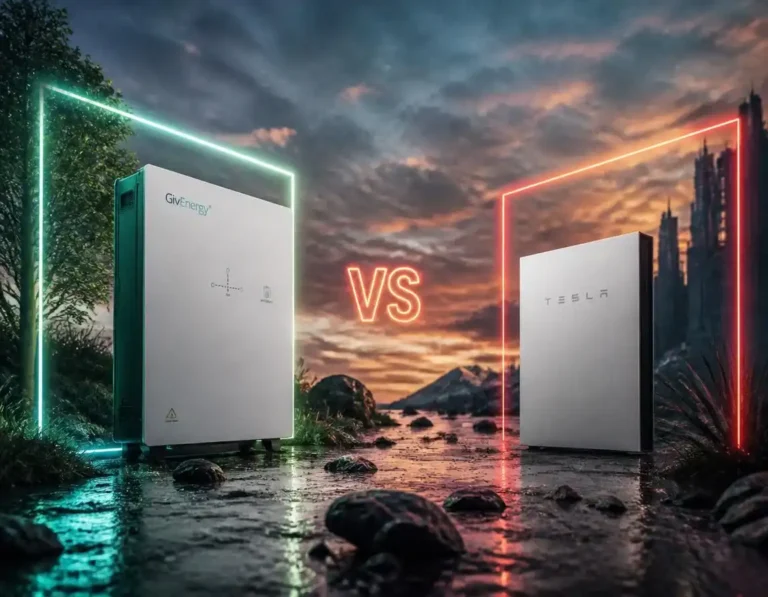
For years this was a friendly argument: plucky British brand with a 12-year warranty against a global giant with modular hardware. Then GivEnergy entered administration and the argument stopped being about hardware at all. I’ve re-run every number for 2026 — prices, warranties, inverter pairings, running costs — so you know exactly which box deserves your wall.
The short version
BYD and GivEnergy both build lithium iron phosphate home batteries, and on hardware alone the gap is narrower than either fanbase admits. What splits them in 2026 is the company behind the box: GivEnergy entered administration on 9 April 2026 and no longer honours hardware warranties, while BYD remains trading with a solid-if-baseline 10-year term on its HVS/HVM range. New install? I’d take the BYD. Already own GivEnergy? Keep it running — but think hard before expanding.
The 2026 Reality Check: This Is No Longer a Hardware Argument
Let me set out what actually happened, because half the comparison articles online were written before it and the other half haven’t caught up. GivEnergy Ltd filed its notice of intention to appoint administrators on 7 April 2026, entered administration two days later, and stopped trading immediately with all staff made redundant. The administrator, Christopher Brooksbank of CB Business Recovery, was appointed by the High Court in Leeds, and by mid-April his office had confirmed the bit that matters here: no further hardware warranties will be honoured by GivEnergy Ltd.
The company’s last filed accounts tell you why. Revenue of £50.3 million for the year to December 2024, but an operating loss of roughly £6.5 million — a savage swing from the £6.2 million operating profit the year before. Cheaper overseas cells squeezed the margin and the business ran out of road. Our full walkthrough of the filings, the creditor numbers and what owners should do is in GivEnergy Has Gone Into Administration.
BYD, meanwhile, is the second-largest company on earth by some measures of battery output — a car and cell giant that treats home storage as a side stream, not its entire livelihood. That’s not automatically a good thing (there’s no UK consumer-facing support desk to ring), but it does mean the warranty behind a Battery-Box isn’t hanging on one company’s quarterly margins. For the full product-level verdict rather than just this comparison, our BYD Battery-Box Review UK 2026 covers every model in the range.
Hardware, Specs & Safety: Closer Than the Fanbases Admit
Strip the logos off and both brands sell the same sensible chemistry: lithium iron phosphate (LFP), cobalt-free, no thermal-runaway drama, happy to be cycled daily for thousands of rounds. Both offer 100% usable capacity on their current generations. Both are modular. The differences that remain are real but narrow.
| Spec | BYD Battery-Box (HVS / HVM) | GivEnergy (Gen 3 / All-in-One) |
|---|---|---|
| Chemistry | LFP, cobalt-free | LFP, cobalt-free |
| Capacity range | 5.1–12.8 kWh (HVS), 8.3–22.1 kWh (HVM), in 2.56/2.76 kWh steps | 2.6–13.5 kWh per unit, stackable to ~19–25 kWh |
| Usable capacity | 100% of rated | 100% DoD on Gen 3 |
| Cycle life | 6,000 cycles (warranty basis) | 6,000+ cycles |
| Round-trip efficiency | ≥96% (high-voltage stack) | Not published as a headline figure; system-dependent |
| Weather rating | IP55 — fine outdoors under cover | IP65 — the stronger ingress rating |
| Inverter | None built in (HVS/HVM); pairs with partner hybrids | Own hybrid inverters & All-in-One units; one-vendor simplicity |
| App & monitoring | Comes from the partner inverter | GivEnergy Cloud — historically the best app in the UK game |
| Manufacturer status 2026 | Trading normally | In administration since 9 April 2026 |
Two things stand out for me as an engineer. First, BYD’s high-voltage series design is why it copes so well with greedy houses — an HVS 12.8 tower at 512 V nominal can push around 12 kW continuously, so an EV charger, induction hob and heat pump running at once doesn’t make it flinch. Second, GivEnergy’s IP65 rating and all-in-one format were genuinely clever for UK garages and side returns: one box, one app, one installer visit. On hardware, honestly, I’d call it a draw with different personalities — BYD the flexible component, GivEnergy the tidy appliance.
Safety-wise both sit in the right camp. LFP chemistry, sensible certifications, and both suit the siting rules that now apply to UK home batteries — garage or external wall rather than lofts and escape routes. Our battery fire safety guide covers exactly where a battery can and can’t go under the 2026 wiring rules, and neither brand gets a pass or a penalty there.
Real UK Installed Prices: The Surprise Is How Close They Are
Here’s the bit that overturns most people’s assumption. GivEnergy built its name on being the value pick, but by 2026 the installed prices had converged. These are the bands I’m seeing from UK installer quotes this year, all at 0% VAT:
| Size class | BYD system (installed) | GivEnergy system (installed) |
|---|---|---|
| ~5 kWh | HVS 5.1 · £3,500–£5,500 | Giv-Bat 5.12 · £3,800–£4,800 |
| ~9.5–10.2 kWh | HVS 10.2 · £5,500–£7,500 | Giv-Bat 9.5 · £5,800–£7,000 |
| ~12.8–13.5 kWh | HVS 12.8 · £6,500–£8,500 | All-in-One 13.5 · £6,500–£8,000 |
| Big-home territory | HVM 16.6 · £8,000–£10,000 HVM 22.1 · £9,500–£12,000 | No equivalent current offer (range effectively frozen) |
💷 Installed price bands, 2026 UK quotes (0% VAT)
Read that again: at the popular 9.5–10 kWh size, you’re looking at £5,500–£7,500 for a BYD against £5,800–£7,000 for a GivEnergy. A few hundred pounds either way depending on the installer and whether a new hybrid inverter is needed. So price is not the tiebreaker in 2026, and anyone selling you this comparison on price alone is fighting the last war. For context on what the whole market looks like at these sizes, our retrofit guide’s 2026 installed cost table lands in the same bands.
One genuine cost wrinkle favours BYD in the long run: modularity. A faulty BYD tower can have a single £800-ish module swapped out, and expansion is just another module or a parallel tower. With GivEnergy’s future supply chain now uncertain, spares and expansion are exactly where that convenience could get expensive.
Warranty: The Column That Decides It in 2026
On paper, GivEnergy won this argument for years. Twelve years on Gen 3 hardware against BYD’s ten. In practice, the comparison inverted on 9 April 2026, because a warranty is only worth what the company behind it can pay out.
| Warranty question | BYD Battery-Box (HVS/HVM) | GivEnergy Gen 3 |
|---|---|---|
| Headline term | 10 years | 12 years |
| Cycle / retention terms | 6,000 cycles, 60% retained capacity | 6,000+ cycles, 100% DoD design |
| Throughput cap | Yes — e.g. ~38.5 MWh lifetime on an HVS 12.8 | Not the headline constraint |
| Registration requirement | Within 3 months of install, or risk the claim | Historically via installer portal |
| Enforceable today? | Yes — trading manufacturer | No — administrator confirmed warranties not honoured |
| Who you actually call | Your MCS installer, who routes to BYD distribution | Your MCS installer, full stop |
Three honest caveats on the BYD side, because I’m not here to spray paint it gold. First, 60% retained capacity at year ten is industry baseline, not generosity — some rivals promise 70%. Second, the throughput cap is the clause heavy cyclers miss: fully cycling an HVS 12.8 every single day for tariff arbitrage burns through its ~38.5 MWh lifetime allowance in about eight years, before the ten-year clock expires. Normal solar-plus-home use rarely gets near that. Third, that 10-year figure is specifically for the established HVS and HVM ranges — BYD’s newer HVE all-in-one, aimed at single-vendor installs, carries a longer 15-year term instead, so don’t assume every BYD box on a quote is on the same warranty clock. Daily-chasing-the-Agile-price use absolutely can burn through the cap early. If that’s your plan, read our guide on earning from home battery storage before you commit.
And remember that a manufacturer warranty was never your only protection. The installer’s workmanship warranty, any insurance-backed guarantee or MCS-approved financial protection product behind it, and your Consumer Rights Act 2015 rights against the seller all survive a manufacturer collapse. Our warranty explainer maps the four layers properly — it’s five minutes that could save you a four-figure argument.
Inverters & Ecosystems: Open Garden vs Walled Garden
This is the structural difference that shapes ownership for a decade. The BYD Battery-Box (HVS and HVM) contains no inverter at all. It’s a battery that bolts onto a partner hybrid — BYD’s tested list includes the Fronius GEN24 Plus, SMA Sunny Tripower Storage, Sungrow SH-RT series and GoodWe ET/EH hybrids. Your app, your backup behaviour and your tariff tricks all come from that inverter. Pair it with a serious hybrid and it’s a serious product; pair it with a bargain unit and you’ve bought a Ferrari engine for a hatchback.
One pairing catch most comparisons skip: Victron’s own compatibility page states its inverters do not work with BYD’s HVS/HVM high-voltage range — Victron pairs with BYD’s older low-voltage boxes instead. If an off-grid installer quotes you “Victron plus BYD”, ask exactly which BYD model they mean, in writing, before you pay anything.
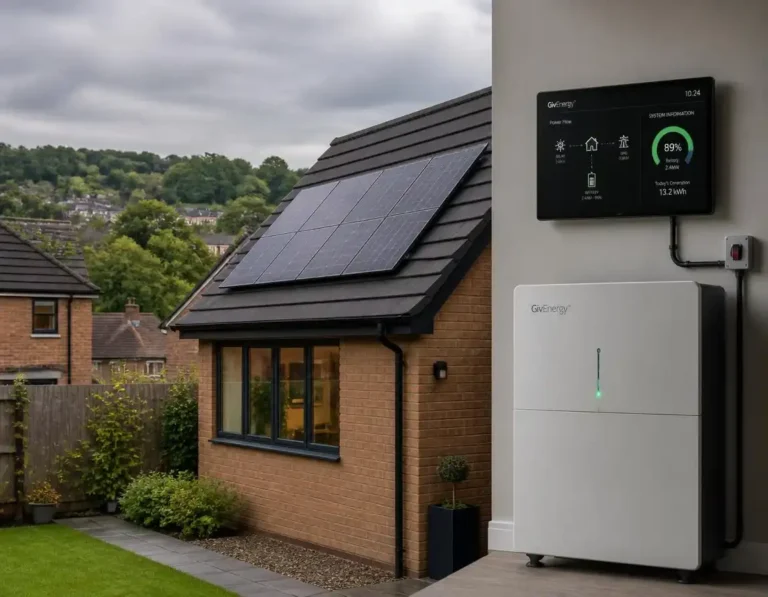
GivEnergy is the opposite: a walled garden. Its hybrid inverters and All-in-One units expect GivEnergy batteries, and in exchange you got the smoothest single-app experience in the UK market, including class-leading Octopus Agile and Flux automation. Brilliant while the company stood behind it. The walled garden is also the trap now — a GivEnergy inverter won’t happily adopt a BYD tower, and orphaned hardware depends on whatever spares and firmware support the market can scramble together.
One nuance for existing owners: the GivEnergy Cloud app, portal and API are run by GivEnergy Software Ltd, a separate company that was not placed into administration, so monitoring still works — with premium features now on a paid subscription. Local control via Modbus TCP remains free and is the belt-and-braces route if you like Home Assistant. Full detail, including what happens to GivBack payments, is in our GivEnergy Battery Review UK 2026.
Running Costs & Tariffs: Where Neither Brand Wins
Here’s the comforting part for GivEnergy owners and the levelling part for buyers: once installed, both batteries save money in exactly the same way. They store cheap or free electricity and discharge it when the price stings. The brand on the box changes nothing about that arithmetic.
📈 Typical annual savings, 3-bed UK home with 4 kWp solar
The inputs behind those bands: Ofgem’s Q2 2026 unit rate sits around 24.67p/kWh, Octopus Go’s overnight window around 7.5p/kWh, and peak export slots on Intelligent Flux have touched 32p/kWh in our tariff tracking. Charge a 9.5 kWh box at 7.5p and discharge it into a 24.67p evening and the spread pays for itself without a single ray of sunshine — add summer solar on top and you’re in the four-figure territory some owners report.
My point is narrower than “batteries are great”, though they currently are. My point is that the savings column cannot break the BYD vs GivEnergy tie. Identical chemistry, identical tariffs, identical physics. Which is precisely why the company-risk column has to break it.
Already Own a GivEnergy Battery? Don’t Panic — But Don’t Expand Blind
If your GivEnergy system is humming in the garage, keep it. The hardware is self-contained: it charges, discharges and runs its backup circuit without phoning home. Your savings are real and your installer’s workmanship warranty never depended on GivEnergy’s bank balance. Panic-replacing a working battery is the one move here that guarantees you lose money.
Expansion is where it gets interesting, and it’s the question nobody in the SERPs answers properly. Your options, honestly ranked:
| Route | What it means | My take |
|---|---|---|
| Add another GivEnergy battery | Keeps one ecosystem and one app — but new hardware now carries no manufacturer warranty | Only at a sharp price, with eyes open |
| AC-couple a separate battery (e.g. BYD + its own hybrid inverter) | Existing GivEnergy kit keeps running; the new battery sits alongside on the AC side with a live warranty | Usually the smartest move |
| Replace the lot | One clean ecosystem again, but you’re scrapping working hardware | Rarely justified on economics alone |
| Wait for a buyer of the business | A credible sale could revive warranty support — no buyer confirmed as at mid-August 2026 | Fine if your system is healthy |
The AC-coupled route deserves a sentence more: because a GivEnergy inverter won’t adopt a BYD tower on the DC side, the clean play is a second, independent battery with its own inverter — which is exactly the scenario our retrofit battery guide costs out, including the inverter checks and the 0% VAT position.
The Verdict: Which One Deserves Your Wall?
BYD, with two conditions
- Get the inverter pairing confirmed against BYD’s compatibility list, in writing
- Register the battery within 3 months and keep the confirmation with your MCS certificate
- Prefer modularity if an EV or heat pump is in your next five years
Keep it, don’t expand blind
- Hardware and savings unaffected; app still live via the software company
- Route any fault through your MCS installer, not GivEnergy
- For more capacity, AC-couple a warranted battery alongside
Read the throughput cap first
- Full daily cycles hit BYD’s MWh cap in ~8 years on a 12.8 tower
- Model your arbitrage plan against the cap, not the 10-year headline
- Compare unlimited-cycle rivals before committing
So the answer to “BYD vs GivEnergy battery” in 2026 isn’t a spec-sheet score. It’s this: two good batteries, one solvent company. Buy the hardware with your eyes open on the warranty small print, buy it from an installer who’ll still answer the phone in year three, and lock in 0% VAT before it steps back up to 5% in April 2027. Do those three things and either box on your wall will outlive the argument.
Frequently Asked Questions
For a new install, I wouldn’t buy GivEnergy right now. GivEnergy Ltd entered administration on 9 April 2026 and the administrator confirmed no further hardware warranties will be honoured, so the brand’s main selling point — a 12-year promise — can’t currently be enforced. The BYD Battery-Box is the safer buy: it’s still fully supported with a 10-year, 6,000-cycle warranty on the HVS/HVM range, wide inverter compatibility and modular expansion, even if 60% capacity retention is only industry baseline.
Not directly. GivEnergy hybrid inverters operate a closed ecosystem that only accepts GivEnergy batteries, and BYD’s high-voltage Battery-Box needs a compatible partner inverter such as a Fronius GEN24 Plus or SMA Sunny Tripower Storage. The clean route is an AC-coupled addition: keep the GivEnergy kit running and add a second, separate battery with its own inverter on the AC side, which our retrofit battery guide walks through step by step.
On paper, yes — 12 years with 100% depth of discharge beat BYD’s 10 years, 6,000 cycles and 60% retained capacity on the HVS/HVM range (BYD’s newer HVE carries 15 years). In practice the comparison inverted in April 2026: GivEnergy’s warranty can no longer be claimed against the manufacturer, while BYD’s remains enforceable, subject to its throughput cap and the requirement to register the battery within three months of installation. A shorter warranty from a solvent company beats a longer one from a company in administration.
Figures checked September 2026 against BYD and GivEnergy datasheets, UK installer quotes, Companies House filings and the administrator’s statements via trade press; installed price bands are working ranges, not list prices. Savings assume a 4 kWp array and vary with usage, region and tariff. 0% VAT on home battery storage runs to 31 March 2027 under HMRC VAT Notice 708/6. Always confirm current pricing, pairing and warranty terms in writing before paying a deposit.