
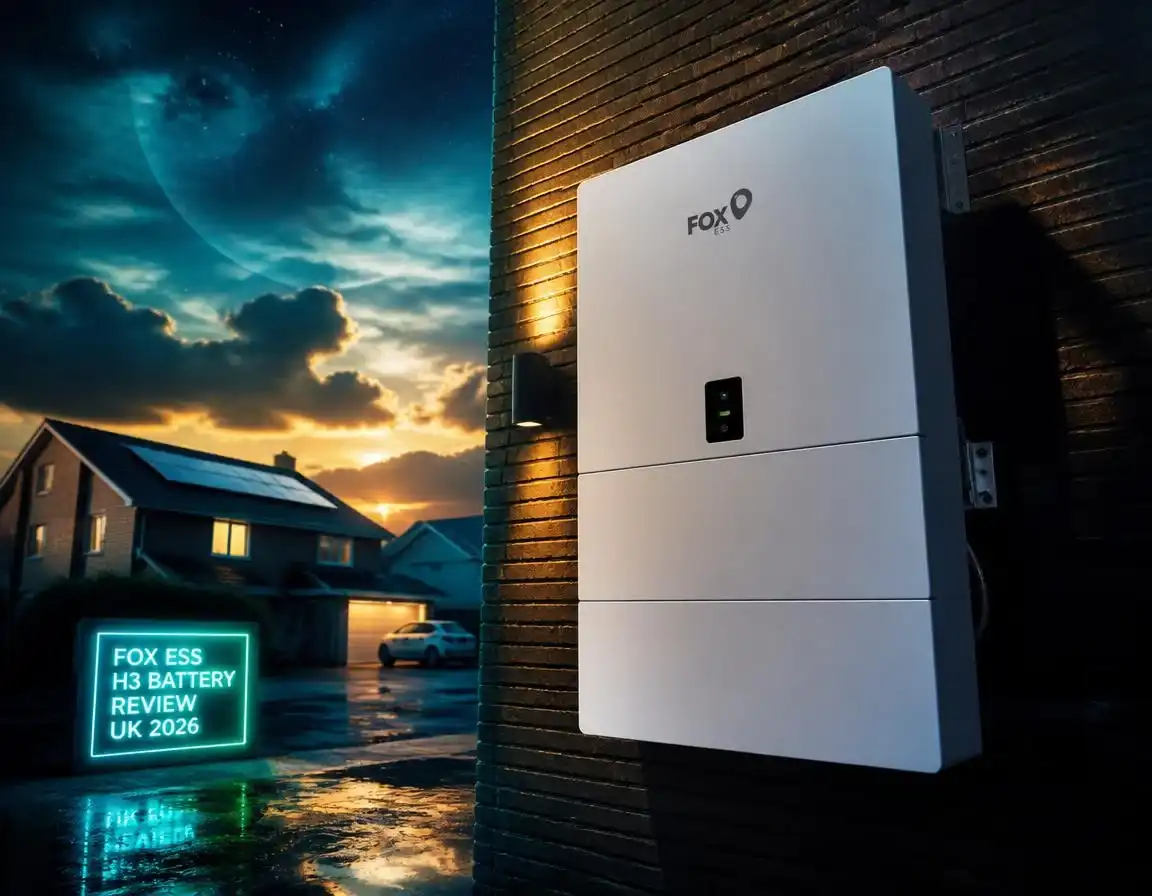
Fox ESS H3 Battery Review UK 2026

Fox ESS H3 Battery Review UK 2026: Prices, Specs & an Honest Verdict
Let me be straight with you from the first paragraph: “Fox ESS H3” is not a battery. It’s the hybrid inverter that Fox’s batteries hang off — and half the quotes and forum rows I see in UK solar groups start from that exact confusion. (You’ll even see “Fox ESS H3” used loosely elsewhere on this site as shorthand for the whole system in comparison tables — this review is where that shorthand gets unpacked properly.) So this review covers the whole system as it’s actually sold in Britain in 2026: the H3 hybrid platform, the EP5 and EP11 batteries it pairs with, what installers are genuinely charging, and whether the whole package deserves a place on your wall. I’ve spent two decades around UK solar, and Fox is one of those brands I get asked about more and more — usually by someone holding a quote that’s a few thousand pounds under the Tesla number.
The short version, for the scroll-happy: Fox ESS is the mid-tier battery system I keep coming back to, not because it wins every per-kWh spreadsheet outright — Tesla’s now level with it there, as you’ll see below — but because you can walk in at a genuinely low entry price and grow the system in roughly £3,500 steps, backed by a Fortune Global 500 parent company at a time when UK battery brands keep going bust. Its app is mediocre, its backup power is limited, and the H3 itself only fits three-phase homes — but for most households deciding where to start, none of that outweighs the flexibility. Now let’s earn that verdict properly.
🦊 What the “H3” actually is — and the single-phase trap
Fox ESS, founded in China in 2019 and sold globally since 2020, structures its hybrid range like this: the H1 and KH/KA are single-phase hybrids for ordinary UK homes, while the H3 is the three-phase hybrid — the original H3 runs 5–10 kW, and the newer H3 Smart stretches to 15 kW for larger or rural properties on a three-phase supply. They share the same hardware platform, the same battery stack and the same app. The difference is the electrical supply in your house.
Why does this matter? Because roughly nine in ten UK homes are single-phase. If your quote says “H3” and you live in a typical semi with a standard supply, that’s a question to raise before you sign anything — you likely need the H1 or KH pairing instead, with identical batteries behind it. If you’re on three-phase (common in bigger new builds and rural homes), the H3 is genuinely one of the better-value three-phase hybrids on the market, with peak efficiency around 97.5–97.9% depending on model.
🔌 Quick supply checkLook at your electricity bill or fuse board. Three separate fuse switches or a “3-phase” note from your installer means three-phase; a single main switch almost always means single-phase. Your MCS installer will confirm at survey, but it’s worth knowing before you compare quotes.
🔋 The batteries: EP5, EP6 Plus and EP11
Here’s the part of the Fox ESS proposition I rate most highly. Every current battery in the range is LFP (lithium iron phosphate) — the safest, longest-lived chemistry mainstream home storage uses — rated for 6,000+ cycles and covered by the same 10-year warranty as the inverters. The EP5 and EP11-H also ship with a built-in heating element, which lets them charge in freezing weather that would lock out colder-blooded rivals. That’s a genuinely useful feature for a garage-mounted battery in a British January.
| Model | Capacity (nominal) | Usable @ 90% DoD | Stackable to | Form factor | Typical installed cost |
|---|---|---|---|---|---|
| EP5 | 5.18 kWh | ≈4.7 kWh | 20.7 kWh (4 units) | Wall / floor, IP65 | £3,500–£4,500 (one) |
| EP6 Plus | 6 kWh | ≈5.4 kWh | 24 kWh (4 units) | Wall / floor, IP65 | £4,200–£5,200 (one) |
| EP11-H | 10.36 kWh | ≈9.3 kWh | Single tower | Slimline tower, heated | £8,500–£9,500 |
| ECS / EQ4800 | 2.88 kWh modules | ≈2.6 kWh each | ~11.5 kWh stack | Stackable tower | from ~£3,500 |
The EP5 is the workhorse. Two of them give you around 10 kWh nominal — the size most UK family homes want — and because they’re IP65-rated they can sit on an external wall, which the new 2026 siting rules actively prefer (more on that below). The EP11 is the tidy option: one slim tower instead of two boxes, at a premium of a couple of thousand pounds for essentially the same usable energy. I’ll show you what that premium does to the per-kWh maths in the pricing section, because it’s the single most useful comparison nobody else publishes.
⚙️ Real-world performance: efficiency, winter and the app
On paper the H3 platform peaks at 97–97.9% inverter efficiency; in practice, across UK installer reports and owner data, you’ll see 96–97% conversion from your panels and around 94–95% round-trip efficiency when cycling the battery. That’s a percentage point or two behind Tesla’s Powerwall 3 (97.5% round-trip) and honestly, on a typical bill it’s worth perhaps £10–£20 a year. Not a deciding factor.
Winter is where the Fox quietly earns its keep. LFP cells hate charging below freezing, and most brands simply refuse to charge on a cold morning — wasting exactly the solar you wanted to store. The heated EP5 and EP11 condition themselves first, then accept a charge. Owners in Scotland and the Pennines report noticeably fewer “frozen battery” days than rivals. Pair that with the H3’s dual MPPTs — which let you split panels across two roof orientations — and a Fox system holds up better in a British winter than its mid-tier price suggests.
Then there’s the app, and I won’t dress this up: the FoxESS Cloud app is the weakest link. Owner reports across UK forums and Trustpilot describe the same trio of gripes — connectivity drops between the Wi-Fi dongle and the cloud, data that lags 15–30 minutes behind reality, and occasional login nonsense. The hardware keeps working perfectly while the app sulks, and Fox’s open Modbus/RS485 port means tinkerers can pipe data into Home Assistant and bypass the whole thing. But if you’re the type who checks an app over breakfast, know that Tesla and myenergi simply feel nicer to live with.
💷 What it costs installed in 2026 — and the per-kWh truth
Fox ESS sits firmly in the value bracket. A single EP5 starts around £3,500–£4,500 installed, the popular two-EP5 bundle (the “10 kWh Fox system” on most quotes) typically lands at £5,500–£7,000, and a single heated EP11 sits near £8,500–£9,500. Every figure includes the 0% VAT that applies to all UK home battery installs until 31 March 2027 — on a £6,000 system that’s roughly £1,200 you simply don’t pay, and it’s one of the few genuine freebies left in this market. The official rules live in HMRC’s VAT Notice 708/6 guidance on GOV.UK if you want to check the small print yourself.
Read that chart twice, because it’s the heart of this review — and it’s not quite the story I expected going in. Tesla’s built-in inverter and bigger single unit actually nudge the Powerwall 3 to a very slightly lower cost per usable kWh than the Fox two-EP5 stack once you use the confirmed £7,499–£10,500 installed range — close enough to call it a tie. What Fox actually wins on is the entry price: you can start with one EP5 for roughly half of Tesla’s minimum spend, then add a second box later, rather than committing to Tesla’s 13.5 kWh in a single purchase. GivEnergy’s old pricing sits in the same tight band, for what that’s now worth. The EP11, meanwhile, costs you nearly £300 more per usable kWh than the two-EP5 stack for the privilege of a tidier footprint. If your garage wall can take two boxes and you don’t need the full 10 kWh on day one, buy the EP5s and grow into it.
⏱ The VAT clock is real0% VAT on home battery and solar installs runs to 31 March 2027, then reverts to 5%. On the two-EP5 system above that’s a few hundred pounds of pure timing — worth factoring in if you’re dithering into next spring.
📈 The savings maths: solar, SEG and the Flux bonus
A battery earns its keep in the gap between what electricity costs and what your surplus is worth. At the current Ofgem cap (around 25–26p/kWh through 2026), every stored unit that replaces an evening import saves you roughly four times what it would have earned exported on a basic SEG tariff. That’s the whole game.
For a typical UK home pairing 4 kW of solar with a two-EP5 Fox system, owners realistically see £500–£900 a year in combined bill savings and export income on a standard tariff — and the Fox is on the Intelligent Octopus Flux approved list, so it can be automated to export into the 4–7pm peak window at up to around 32p/kWh. Move onto Flux and the same hardware routinely pushes past £1,000 a year. My full SEG tariff comparison for 2026 shows how wide the gap is between the best and worst export deals; the battery is what lets you aim for the top of that ladder instead of the bottom.
Without solar at all, a Fox system charging overnight at around 7–9p on Octopus Go and discharging at peak rates still clears roughly £500 a year in arbitrage. Payback? On solar-plus-battery with a smart tariff, I’d expect 6–9 years — comfortably inside the 10-year warranty. Our home battery storage guide runs the wider numbers if you’re still deciding whether storage makes sense at all.
🆚 Head-to-head: Fox H3 + EP5s vs the 2026 field
| Feature | Fox ESS H3 + 2×EP5 | Tesla Powerwall 3 | Sigenergy SigenStor | GivEnergy 9.5 |
|---|---|---|---|---|
| Usable capacity | ≈9.3 kWh (modular) | 13.5 kWh | 5–25 kWh (modular) | 9.5 kWh |
| Chemistry | LFP ✓ | LFP ✓ | LFP ✓ | LFP ✓ |
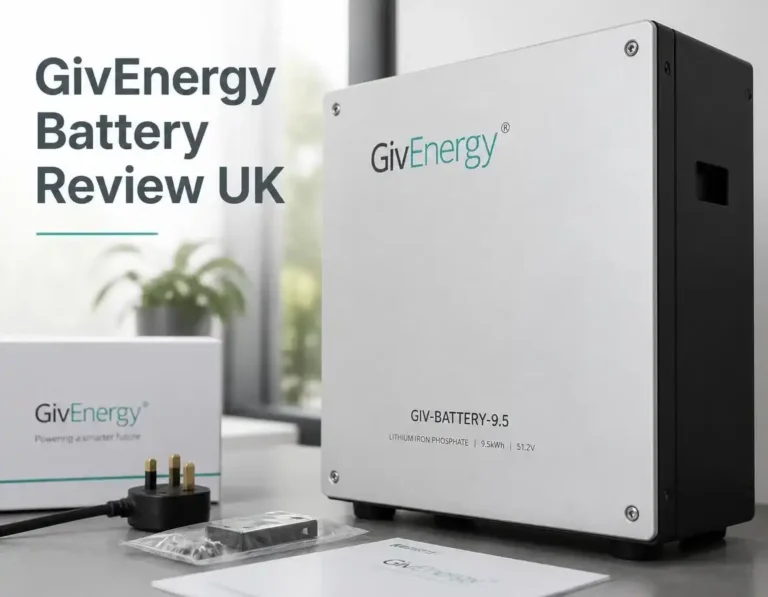
| Warranty (active?) | 10 yrs ✓ | 10 yrs ✓ | 10 yrs ✓ | 12 yrs — void ⚠ |
| Installed cost | £5,500–£7,000 | £7,499–£10,500 | £6,000–£8,000 | No longer sold new |
| Whole-home backup | No — EPS circuits only | Yes, built-in | Yes, built-in | EPS add-on only |
| Octopus Flux | Approved ✓ | Native ✓ | Compatible ✓ | Was class-leading |
| App polish | Functional, laggy at times | Excellent | Good | Was excellent |
| Cold-weather charging | Heated modules ✓ | Self-heating ✓ | Standard | Standard |
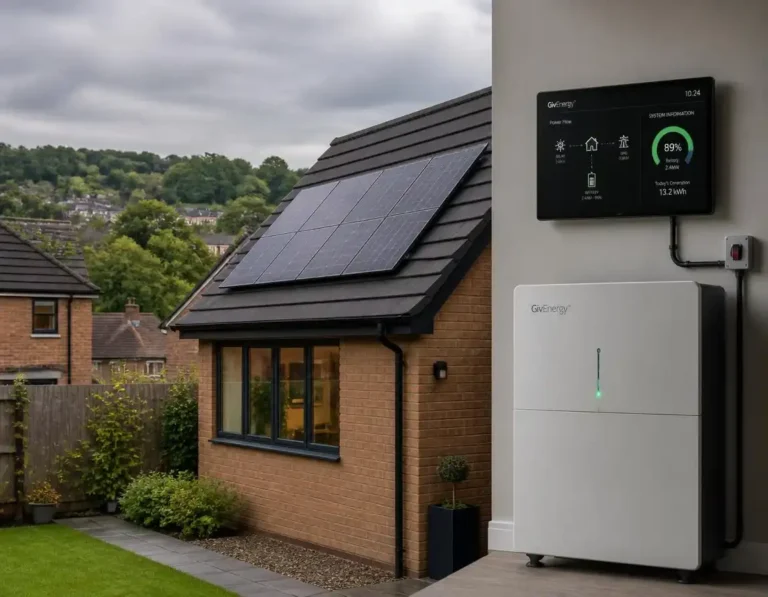
The pattern is clear: Tesla wins on backup, app and — once you check the real numbers — ties on per-kWh value too; Sigenergy wins on modularity range; and Fox wins on the number that starts most conversations in my inbox — the quote. For a deeper dive on the two rivals, see my Tesla Powerwall 3 cost breakdown and the GivEnergy review, which explains exactly why that last column now reads the way it does.
⚡ Backup power: the honest limits
If you’re buying a battery because you’re worried about power cuts, read this twice. The H3’s EPS (emergency power supply) is an optional, dedicated-circuit affair, typically capped around 4 kW — wired at installation to keep, say, your lighting, fridge and Wi-Fi alive when the grid drops. It is not whole-home backup. You cannot ride out a blackout with the shower, the induction hob and the EV charger running, and no Fox residential hybrid will seamlessly carry an entire house the way a Powerwall 3 with a transfer switch will.
For most UK households, where genuine multi-hour outages are rare, a couple of dedicated sockets is plenty — but decide before the survey, because EPS wiring added later means reopening the installation. If blackout-proofing is your actual priority, that’s the one sentence in this review that should push you towards Tesla or SolarEdge instead.
🛡️ Warranty, support and the Tsingshan question
Ten years on both inverter and batteries, guaranteeing at least 70% capacity at the end, across roughly 6,000 cycles. On paper that’s market-standard. The more interesting question in 2026 is whether the company behind the warranty will still be standing in 2032 — a question GivEnergy answered badly this spring. Fox’s ace here is its balance sheet: Fox ESS is part of the Tsingshan Group, a Fortune Global 500 company and the world’s largest stainless-steel producer. That’s a very different risk profile from a venture-backed startup, and it’s a big reason Fox keeps climbing my recommendation lists as rivals wobble.
The caveat lives in the service department. Fox ESS’s Trustpilot score hovers around 3 out of 5, and the complaints follow a pattern: slow responses when hardware faults land, and owners bounced between installer and manufacturer. The praise, just as consistently, is for the hardware’s value and for individual UK support engineers who sort things out fast. My practical read: the warranty is only as quick as your installer, so choose one who answers the phone — and register the warranty through them on day one, because unregistered Fox kit is where the horror stories start.
🏠 The new 2026 siting rules Fox owners must know
One thing almost every Fox review online misses: the rulebook changed under your feet this year. Since 15 April 2026, home batteries sit under their own chapter of the wiring regulations (BS 7671 Amendment 4, Chapter 57), with full compliance compulsory for new installs from 15 October 2026. In plain English: no lofts, no bedrooms, no escape routes, at least a metre of clearance from doors and windows outdoors, and proper ventilation wherever it lives.
The good news is that Fox’s IP65-rated EP5 and EP11 are naturals for the rules’ preferred location — an external wall or garden enclosure — and the heated modules shrug off the outdoor temperature swings that worry some owners. Just make sure your installer confirms compliance with both Chapter 57 and PAS 63100:2024 in writing, and tell your home insurer before the install, not after. My full battery fire-safety guide covers every location, clearance and paperwork requirement in detail.
🔧 Retrofitting Fox batteries to existing solar
Adding storage to panels that are already up? The Fox system is at its happiest when your existing inverter is already a Fox hybrid — then it’s a case of bolting on EP5s and registering them. With another brand of inverter, your installer will either AC-couple the Fox batteries (keeping your old inverter, the most common UK retrofit route) or swap it for a Fox hybrid if it’s nearing end of life anyway. Budget towards the top of the price ranges above for retrofits, because the extra electrical work is real. Our retrofit battery guide has the full cost table and the five checks to run before you commit.
✅ The verdict: who should buy the Fox ESS H3 system?
Buy it if you…
- Want the lowest entry price into reliable storage, from a financially solid manufacturer
- Have (or plan) solar and a smart tariff like Octopus Flux
- Need outdoor or garage mounting — the heated, IP65 modules love it
- Value modularity: start with one EP5, add a second later
Skip it if you…
- Want whole-home backup through power cuts
- Live for a polished app and live data
- Are single-phase and were quoted an “H3” without that conversation
- Expect premium resale cachet — Fox is still building its UK name
Score it how you like; here’s mine. Hardware: 9/10 — proven LFP cells, clever cold-weather heating, honest efficiency. Value: 9/10 — not the outright per-kWh winner once you hold Tesla’s real numbers up against it, but nobody else solvent lets you start this small and grow the system as you go. Software: 6/10 — it works, eventually, and Home Assistant fans won’t care. Support: 7/10 — strong backing, patchy front line. That still adds up to the best mid-tier battery recommendation on this site for 2026, with the backup and app caveats worn visibly on the sleeve.
❓ Frequently asked questions
How much does a Fox ESS H3 battery system cost in the UK in 2026?
A single EP5 (5.18 kWh) starts around £3,500 to £4,500 installed, the popular two-EP5 setup (roughly 10 kWh) typically lands between £5,500 and £7,000, and a single EP11 (10.36 kWh) sits near £8,500 to £9,500. Prices include 0% VAT, which applies to UK home battery installs until 31 March 2027.
Can the Fox ESS H3 be fitted in a single-phase home?
Not the H3 itself. It is a three-phase hybrid aimed at larger homes with a three-phase supply. Single-phase homes get the same batteries, app and warranty with Fox’s H1 or KH hybrid inverters instead, so ask your installer which pairing suits your supply rather than assuming the H3 label fits every house.
How long is the Fox ESS battery warranty and what does it cover?
Fox ESS covers its batteries and hybrid inverters for 10 years, guaranteeing at least 70% of capacity at the end of the period across roughly 6,000 full cycles. The warranty has to be registered through your MCS-certified installer, so keep the paperwork: it is usually the installer, not the factory, who handles any claim.



One Comment