Off-Grid Solar Systems UK 2026

Off-Grid Solar Systems UK 2026: Complete Guide to Costs, Components & Whether It’s Right for You
Going off-grid sounds freeing. No electricity bills, no standing charges, no grid reliance. But the real picture is a bit more nuanced than that — and I want to give you the honest version before you spend £20,000 or more finding out the hard way.
The dream of total energy independence is genuinely appealing. I completely understand it. No bills arriving every quarter, no standing charges just for being connected, no relying on energy companies. Just your own roof, the sun, and a bank of batteries quietly keeping the lights on.
But I’d be doing you a disservice if I started this guide with the exciting stuff before making one thing clear: for most UK homes that already have a grid connection, going fully off-grid is rarely the most sensible financial choice. There’s a better option called a hybrid system that gives you most of the same benefits at a fraction of the cost. More on that shortly.
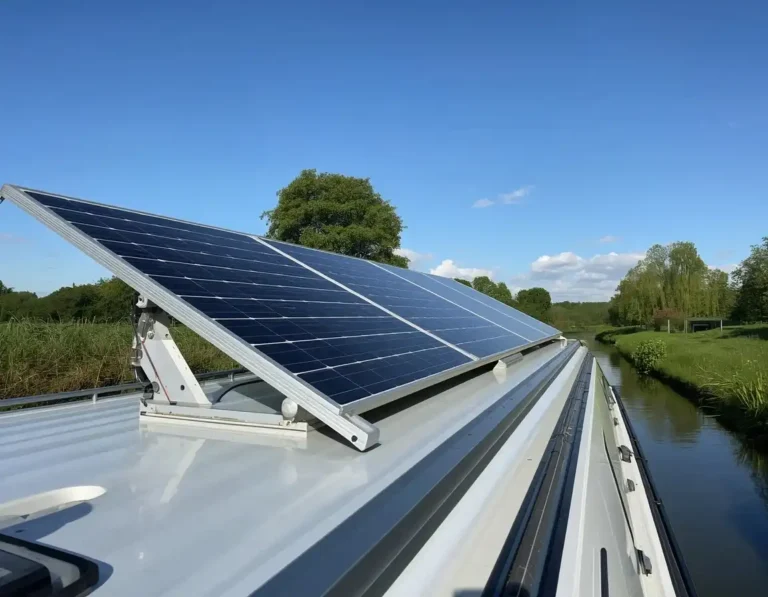
For remote cottages, rural smallholdings, canal boats, shepherd’s huts, and properties where the cost of a new grid connection runs into tens of thousands — off-grid solar is absolutely the right answer, and a brilliant one. The UK solar sector installed a record 267,032 certified systems in 2025, a 31% increase on the previous annual record, which shows that homeowners across the country are increasingly serious about energy independence in all its forms.
The BasicsWhat Is an Off-Grid Solar System?
An off-grid solar system — sometimes called a standalone solar system — is a completely self-contained setup that generates, stores, and delivers your electricity with no connection to the National Grid whatsoever. Your solar panels capture daylight and convert it into electricity. That electricity either powers your home directly during the day, or it charges a battery bank for use in the evening, overnight, and during cloudy spells.
The key distinction from a standard grid-tied solar system is that you have no fallback. When a cloud passes over a grid-tied home, the shortfall is quietly topped up from the grid. In an off-grid home, if your batteries run flat, the lights go out. That changes everything about how the system must be designed.
The golden rule of off-grid design: an off-grid system must be sized for your worst-case scenario — typically a cold, dark January week in the UK — not your average summer day. That’s what makes them so much more expensive than grid-tied alternatives.
Off-Grid vs Grid-Tied vs Hybrid — Which Is Which?
What’s in a Complete Off-Grid Solar System?
An off-grid setup needs more equipment than a standard grid-tied installation — and each component must be correctly sized to prevent you running out of power during a stretch of grey winter weather.
Complete Off-Grid Solar System Costs UK 2026
| System Type | Solar (kW) | Battery (kWh) | Installed Cost | Best For |
|---|---|---|---|---|
| Micro / Garden office | 0.5–1kW | 2–5kWh | £2,000–£5,000 | Shed, cabin, EV charge point |
| Shepherd’s hut / Tiny home | 1–2kW | 5–10kWh | £5,000–£10,000 | Holiday let, remote cabin |
| Small cottage / Rural bothy | 3–4kW | 10–15kWh | £12,000–£18,000 | Holiday or part-time property |
| Average UK family home ★ | 5–7kW | 20–30kWh | £20,000–£30,000 | Full-time remote home + generator |
| Large or high-demand home | 8–12kW | 30–40kWh+ | £35,000–£60,000 | Farm, large rural property |
Note: these prices include 0% VAT on solar panels and batteries (extended to 2026 for residential installations). The backup generator and some balance-of-system components may still attract 20% VAT. Always get at least three written quotes from MCS-certified installers before committing.
Who Should Actually Consider Going Off-Grid?
This is the section I wish more guides included. The honest answer is that off-grid solar is genuinely brilliant for a fairly specific set of circumstances — and genuinely not worth it for the majority of UK homes.
✅ Off-grid makes sense if…
- You’re a remote rural property with no existing grid connection
- Getting a new grid connection quoted at £20,000+
- You own a holiday cabin, shepherd’s hut, or canal boat
- You want a zero-bill lifestyle on a smallholding or farm
- You live somewhere genuinely inaccessible to the grid
- You’re running a garden office or outbuilding far from the house
❌ Off-grid probably isn’t for you if…
- You already have a grid connection at your property
- You want to reduce bills (a hybrid system does this cheaper)
- You rely on high-demand appliances like electric heating or a hot tub
- You can’t manage winter shortfalls with a backup generator
- Your budget is under £15,000 for a full home system
- You want to earn from the Smart Export Guarantee
The SEG point matters: grid-tied and hybrid systems qualify for the Smart Export Guarantee — meaning you get paid (currently up to 15p per kWh with the best tariffs) for every unit you export. Fully off-grid systems get nothing. Over a 25-year system life, that lost SEG income is significant.
The UK Winter Problem
This is the thing that catches people out more than any other. The UK in summer is genuinely very good for solar — long days, reasonable solar yield, batteries that can fill up and sit full overnight. Manchester in June can see 6+ hours of useful solar generation per day.
But December? Manchester averages just 1.5 hours of sunshine per day in December. Solar generation drops to 10–20% of peak summer levels across the UK between November and February. For a grid-tied home, the grid covers the shortfall silently. For an off-grid home, that shortfall has to come from somewhere — and that somewhere is usually a diesel or LPG backup generator running for 200–500 hours per year.
Design for winter, not summer: a well-designed off-grid system is sized around your January usage, not July. Undersizing is the single most common mistake in off-grid installations — and it leaves people cold and powerless at exactly the worst time of year.
Off-Grid vs Hybrid Solar — Full Comparison
| Factor | 🏕️ Fully Off-Grid | 🔋 Hybrid Grid-Tied + Battery |
|---|---|---|
| Cost (4kW equivalent home) | £20,000–£30,000 | £9,000–£14,000 |
| Winter energy security | Generator required | Grid acts as backup |
| Smart Export Guarantee | Not eligible | Up to 15p/kWh |
| Energy independence | Total (summer) | Partial — grid backup |
| No electricity bills | Yes (if grid not connected) | Near-zero bills possible |
| Payback period | 15–25 years | 6–9 years |
| Maintenance | Higher (generator, battery) | Moderate |
| Best for | Remote/rural no-grid property | Most UK grid-connected homes |
Do You Need Planning Permission for an Off-Grid Solar System?
The good news here is straightforward. Most roof-mounted solar installations in the UK are permitted development — meaning no planning application is needed. Under the 2026 updates to permitted development rights, panels can project up to 300mm from the roof plane and cover up to 70% of the roof area without requiring planning consent.
Ground-mounted panels (common in rural off-grid setups where roof space isn’t the limiting factor) have specific size limits — generally a maximum height of 3 metres and a 15m² array area before planning permission becomes required. Conservation areas, listed buildings, and Areas of Outstanding Natural Beauty (AONBs) have additional restrictions.
All installations must be carried out by an MCS-certified installer and comply with Part P of the Building Regulations (electrical safety) regardless of planning status.
How to Choose the Right Off-Grid Solar Installer
Frequently Asked Questions
Should You Go Off-Grid?
Off-grid solar: brilliant when it’s right, expensive when it isn’t.
If you’ve got a remote property, a rural smallholding, a holiday cabin that’s miles from the nearest substation, or a canal boat — off-grid solar is absolutely the right choice and 2026 is a great time to do it. Technology has improved enormously, lithium battery prices have fallen significantly, and UK installers are increasingly experienced with standalone systems.
If you’ve got a standard house with a working grid connection and you mainly want to reduce your electricity bills, stop right there. A hybrid system with a decent battery will give you the energy independence feeling, cut your bills dramatically, earn you export income, and pay itself back in under 10 years. A full off-grid system for the same home won’t pay itself back for 15–25 years — and you’ll need to manage a generator in January.
Whatever you decide, always use an MCS-certified installer, get three quotes, ask detailed questions about winter performance, and don’t sign anything until you’re confident the system is sized for your actual energy use — not someone else’s best-case scenario.
Check out how many solar panels are required in the U.K.
Check out Solar panels grants uk
Check out Are solar panels worth it in cornwall
Check out Solar panels Scotland grants
Check out Solar panels Wales grants
Check out the best solar battery

2 Comments