
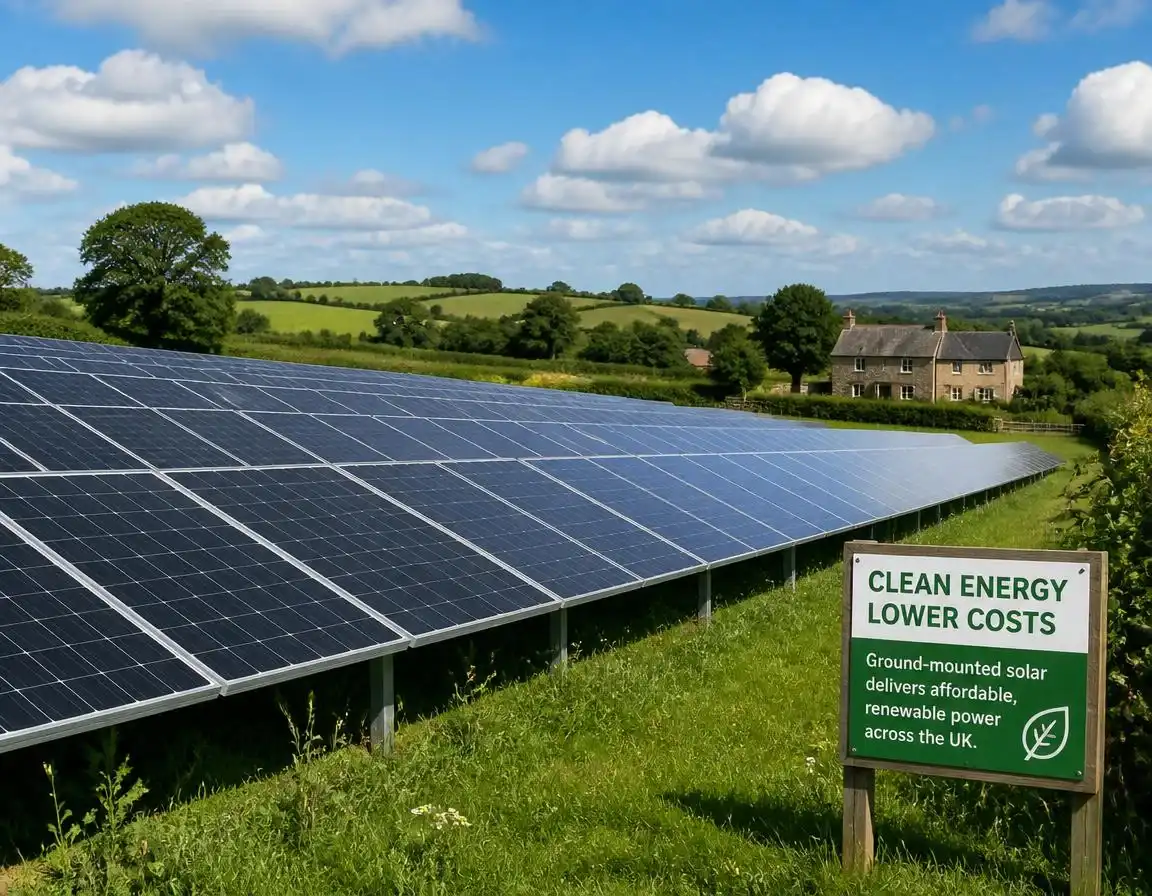
Ground Mounted Solar Panels UK Cost

Ground Mounted Solar Panels UK Cost: 2026 Price Guide
Real prices, honest payback figures, and everything you need to know before you commit — including grants you might actually qualify for.
📅 Updated 27 July 2026 · 6 min read
2026 Price BreakdownWhat Does a Ground-Mounted Solar System Actually Cost?
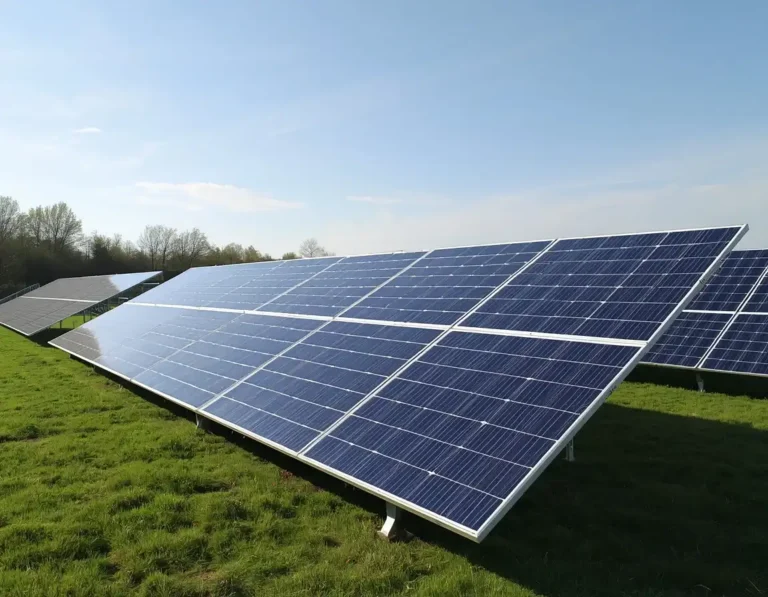
If your roof is shaded, faces the wrong direction, or just isn’t suitable, a ground-mounted solar system could be the answer. They sit in your garden on a metal frame, can be angled perfectly towards the sun, and produce 5–25% more electricity than roof panels — because they stay cooler and you control the tilt. The trade-off? They cost a bit more upfront.
In 2026, a fully installed domestic ground-mounted system typically ranges from £6,500 to £15,000 for most homes — covering panels, inverter, mounting frame, cabling, groundworks, and MCS certification. Importantly, 0% VAT applies to all solar equipment in the UK, which saves you a noticeable chunk versus other home improvements. Pole-mounted systems (panels on a single elevated pole) run 15–35% higher still, thanks to the heavier structure and optional solar-tracking technology.
📊 Installed Cost by System Size — Ground Mount vs Roof (2026)
🔵 Where Your Money Goes — 4–5 kW System
Ground vs Roof-Mounted: How Do the Costs Stack Up?
Ground-mounted solar panels are generally 25–35% more expensive than their roof-mounted equivalents, mainly because of the extra materials, groundworks, and longer cable runs. That said, the added performance can reduce your payback period and close the gap over time.
| System Size | Roof-Mounted (avg.) | Ground-Mounted (avg.) | Extra Cost | Efficiency Gain |
|---|---|---|---|---|
| 3 kW (1–2 bed) | £4,800 | £6,500 | +£1,700 | Up to 25% |
| 4–5 kW (3 bed) | £7,200 | £9,500 | +£2,300 | Up to 25% |
| 6 kW (4+ bed) | £9,500 | £13,000 | +£3,500 | 5–25% |
| 10 kW (large / farm) | £14,000 | £21,000+ | +£7,000+ | 5–15% |
6 Things That Can Change Your Quote by Thousands
Two ground-mounted systems of the same size can vary by thousands. These six factors are worth knowing before you request quotes.
System Size
More panels cost more, but economies of scale apply — a 6 kW system isn’t twice the cost of a 3 kW one.
Ground Conditions
Rocky or waterlogged land adds groundwork cost. Flat, firm soil keeps the install straightforward and cheaper.
Cable Run Length
The further the array sits from your consumer unit, the more cable is needed — and that adds up quickly.
Mounting Type
A fixed-angle frame is cheapest. Solar-tracking systems add £1,500–£4,000 but boost output by up to 30%.
Location in the UK
Labour costs vary significantly — London and the South East are pricier, and rural areas may attract travel fees.
Battery Storage
Adding a battery (£2,000–£4,500) lets you use solar at night and can meaningfully cut your payback period.
Grants, Tax Breaks & the Smart Export Guarantee
The sticker price isn’t the whole story. The UK government and energy suppliers offer several ways to cut what you actually pay — and to earn money back over the system’s lifetime.
| Incentive | What It Gives You | Who Qualifies? |
|---|---|---|
| 0% VAT | No VAT on panels, inverter & installation | All UK homeowners |
| Smart Export Guarantee (SEG) | Paid for surplus electricity sent to the grid | MCS-certified install + smart meter required |
| ECO4 | Heavily subsidised or free solar | Low-income / fuel-poor households |
| Warm Homes Plan | Grants for home energy upgrades including solar | Subject to income and EPC eligibility |
💡 Don’t Miss the Smart Export Guarantee
If your installer is MCS-certified and you have a smart meter, you’ll earn money for every unit of electricity you export back to the National Grid — on top of what you save on bills. Tariff rates vary by supplier, so it’s worth shopping around once your system is up and running. For full official details, visit GOV.UK’s Smart Export Guarantee guidance.
Do You Need Planning Permission?
For most people in England, the answer is no — provided your system stays within Permitted Development limits. A single ground-mounted array can go ahead without a planning application if it covers no more than 9 square metres (roughly 4–5 panels), is no taller than 4 metres, sits at least 5 metres from the property boundary, and isn’t on a listed building or within a conservation area or AONB.
⚠️ When You Do Need Permission
Arrays larger than 9 m², installations in conservation areas or AONBs, and anything on listed building grounds all require a formal planning application. In England, this typically costs around £258 and takes about 8 weeks. Permitted Development rules differ in Scotland, Wales, and Northern Ireland — always confirm with your local authority before proceeding.
Is It Actually Worth the Money?
For homes with the right amount of outdoor space, I’d say yes — ground-mounted solar is one of the better long-term investments you can make on a property right now. A typical 4–5 kW system could save between £930 and £1,120 on bills each year, with SEG earnings on top.
| System | Annual Saving | Payback (est.) |
|---|---|---|
| 3 kW | £600–£780 | 8–11 yrs |
| 4–5 kW | £930–£1,120 | 9–12 yrs |
| 6 kW | £1,100–£1,400 | 10–14 yrs |
| + Battery | +£300–£500 more | Cuts by 1–2 yrs |
Estimates based on UK average electricity rate of 24.5p/kWh (July 2026) and a south-facing array at optimal angle. Your savings will vary by location and usage.
📈 Cumulative Net Position — 4 kW Ground System at £9,500
With panels typically lasting 25–30 years, you’re looking at a long stretch of near-free electricity once the system has paid for itself. Ground-mounted panels also tend to run slightly cooler than roof-mounted ones — airflow hits both sides — which keeps efficiency losses lower during warm spells and could add years to the system’s life.
Frequently Asked Questions
Ready to Harness the Sun?
Find out exactly how much a ground-mounted solar system will cost for your property. Get a tailored, no-obligation quote from our expert team today.
Get Your Free Quote

5 Comments