
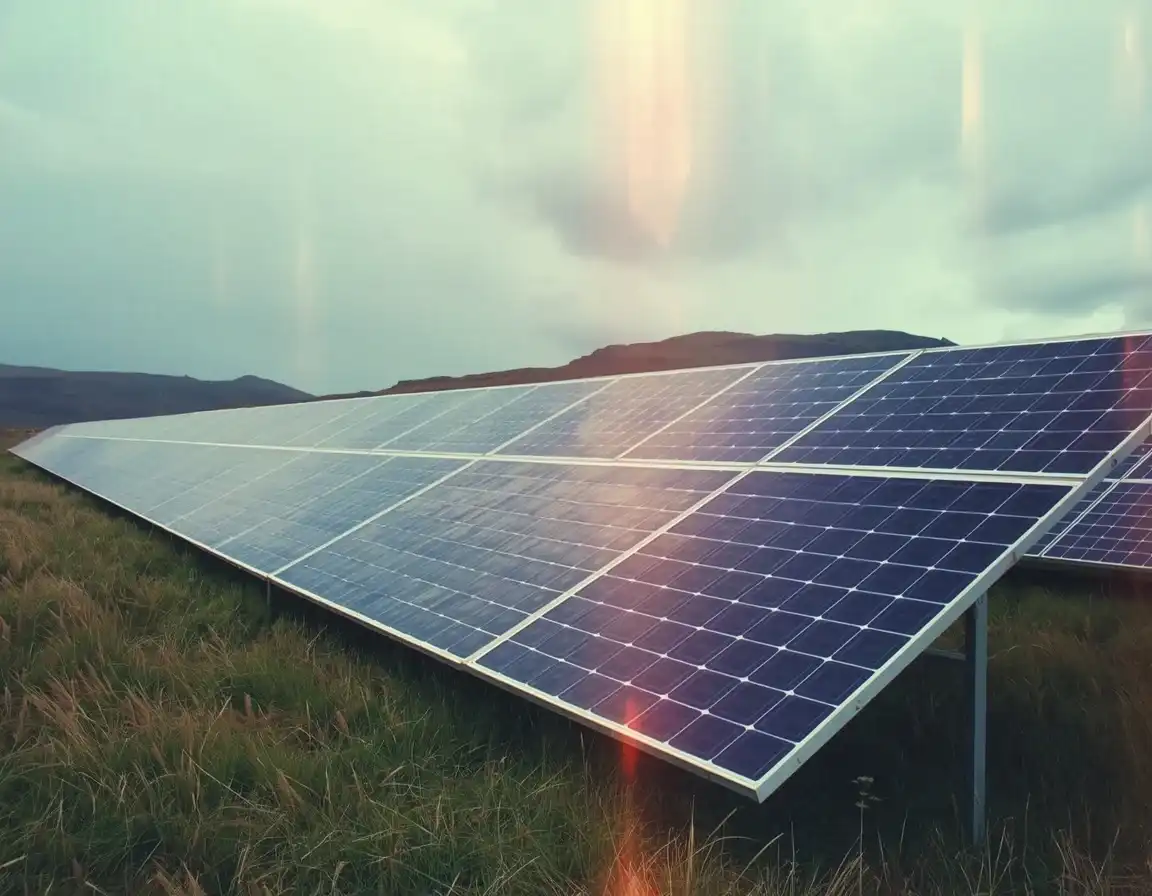
Solar Panels in Northern Ireland 2026

Solar Panels in Northern Ireland: The Honest 2026 Guide
Northern Ireland is the cheapest place in the UK to get solar fitted — and one of the few where the usual GB advice quietly leads you wrong. No Smart Export Guarantee, a different regulator, its own planning rulebook. Here’s what actually applies here, with the numbers to back it up.
I’ve specified solar across the UK for twenty years, and Northern Ireland is the one market where I have to stop people copying advice written for Birmingham. NI has its own electricity regulator, its own planning system, its own supplier list — and the Smart Export Guarantee that every GB guide leans on simply doesn’t apply here. Get those four things straight and the picture is genuinely good: NI has the cheapest installation costs in the UK and some of the highest electricity prices, which is exactly the combination you want.
💷What solar panels actually cost in Northern Ireland
The good news first: per installed kW, NI is the cheapest nation in the UK.
Current MCS-derived pricing puts the NI average at £1,303 per kW, against roughly £1,591 in England and £1,660 in Scotland — a gap driven by lower labour costs and a tight, competitive local installer market. Our UK-wide breakdown in solar panel costs UK 2026 has the full nation-by-nation table if you want to compare.
| System size | Panels (440W class) | NI installed cost (0% VAT) | GB average for comparison | Typical NI annual output |
|---|---|---|---|---|
| 3 kWp | 7 | £4,000–£5,000 | £4,000–£5,500 | 2,400–2,700 kWh |
| 4 kWp | 9–10 | £5,200–£6,500 | £5,500–£7,500 | 3,200–3,600 kWh |
| 5 kWp | 11–12 | £6,500–£8,000 | £7,500–£9,000 | 4,000–4,500 kWh |
| 6 kWp | 13–14 | £7,800–£9,500 | £8,500–£11,500 | 4,800–5,400 kWh |
How I’ve built those NI columns, so you can sanity-check any quote: the £1,303/kW average bracketed at £1,250–£1,600/kW depending on scaffolding and roof complexity, and output at the 800–900 kWh/kWp NI yield range multiplied by system size. A 4kWp system at the average works out at about £5,200 — if your quote is more than £1,000 above my range without a clear reason (difficult roof, long cable runs, battery included), get two more quotes.
Domestic solar in NI is zero-rated for VAT until 31 March 2027. If a quote shows 20% VAT on a household install, either the firm doesn’t understand its own tax position or it’s padding the number. Either way, it’s a reason to look elsewhere.
🧾0% VAT: the NI dates, because they differ from what you’d assume
Here’s the bit most GB-written guides get wrong for NI readers. The zero rate launched in Great Britain in April 2022 but did not originally apply in Northern Ireland, thanks to post-Brexit VAT alignment rules. That was fixed by a dedicated statutory instrument — the government’s VAT relief for energy-saving materials to Northern Ireland — which extended the zero rate to NI from 1 May 2023.
Since then, NI households have had exactly the same relief as GB: 0% on panels, batteries and installation labour, running until 31 March 2027, when it reverts to 5%. On a £6,000 NI system that’s roughly £1,000 you don’t pay versus the old standard rate — and the deadline is the same one pressing on every UK buyer right now.
☀️Does solar work in Northern Ireland’s climate?
Short answer: better than people think, and here’s the monthly proof.
Panels run on daylight, not sunshine — a bright overcast Belfast day still produces useful power. A typical NI system yields 800–900 kWh per kWp per year, about 15% below the sunniest English counties and level with the North of England. On NI’s high electricity prices, that gap matters far less than the price you pay per kW — and NI wins that one outright.
Notice the shape: half your year’s electricity arrives in four months. That single fact drives everything else — size the system around your summer daytime usage, and treat winter generation as a bonus. Our payback period guide covers how this seasonal curve translates into break-even timelines across the UK.
⚡Getting paid for exports: no SEG in Northern Ireland
The single biggest difference between buying solar here and buying it in GB.
The Smart Export Guarantee does not apply in Northern Ireland. It’s a Great Britain scheme administered by Ofgem, whose remit stops at the Irish Sea; NI’s market is regulated by the Utility Regulator instead, and there’s no statutory obligation on NI suppliers to buy your surplus. What exists instead is a mix of voluntary supplier tariffs and one regulated rate — smaller money than GB’s best SEG deals, but real money.
| Route | Typical rate (Sept 2026) | What you should know |
|---|---|---|
| Power NI microgeneration export | 9.64p/kWh | Utility Regulator-approved for the 1 Oct 2025–30 Sept 2026 tariff year; new rate published each September |
| SSE Airtricity export tariff | ~5–8p/kWh | Voluntary commercial offer — confirm current rate in writing |
| Budget Energy / Click Energy | Varies | Check current availability; terms change without the SEG safety net |
| Smart Export Guarantee | Not available | GB-only scheme; NI households cannot register for it |
Eligibility mirrors GB in practice: an MCS-certified system, under 5MW, with export metering. And the strategic point is the same one I make to GB customers, only sharper here: with NI import prices sitting in the low 30s per kWh after the July 2026 increases, every unit you use yourself is worth four to six times more than every unit you export. Design for self-consumption first; treat export income as the cherry. For context on what GB households earn by comparison, see our best SEG tariff rates guide — useful as a benchmark, not as an option open to you.
🏛️Planning permission: NI runs its own rulebook
Northern Ireland has a separate planning system from England, Scotland and Wales, so GB permitted-development summaries don’t automatically hold here. In practice, most domestic rooftop solar is treated as permitted development and needs no application, provided it stays within the familiar limits — panels not protruding more than 200mm from the roof surface, not rising above the ridge line. The exceptions bite harder: listed buildings need consent, conservation areas often do, and ground-mounted arrays are more likely to need a full application.
The official nidirect guidance on photovoltaic panels is blunt about it: check with your divisional planning office before you install, because retrospective permission is expensive and sometimes refused. Five minutes on the phone is cheaper than a refused application sitting on your house file.
NIE Networks is NI’s network operator, and your MCS installer handles the connection notification as part of the job — the NI equivalent of the GB G98/G99 process. Larger systems or older supplies can need extra headroom checks, so raise it at quote stage, not install day.
🎁Grants in Northern Ireland: what actually exists in 2026
Let me save you an afternoon of dead-end searching: there is no universal NI grant for household solar in 2026. The support that exists is targeted. The Northern Ireland Sustainable Energy Programme (NISEP) has its 2026-27 schemes live, but the money flows mainly to insulation and heating upgrades for income-qualifying households rather than to solar PV for all comers. The Affordable Warmth Scheme, run by the NI Housing Executive, can fund up to around £7,500 of energy-efficiency work (up to £10,000 where solid-wall insulation is needed) for owner-occupiers and private tenants on a gross household income under roughly £23,000 a year — and solar can feature in some funded packages, subject to the scheme’s own criteria.
If you’ve read our other guides, you’ll have seen the Warm Homes Plan and its Warm Homes: Local Grant, which can fund a full solar package up to £30,000 for eligible households. That scheme is England, Scotland and Wales only. Energy efficiency policy is devolved, and Northern Ireland was never part of it — several NI energy sites have had to publish corrections after readers assumed otherwise. NI’s own equivalent, the Affordable Warmth Scheme above, is a smaller, insulation-and-heating-first programme, not a solar grant.
So for most NI homeowners, the financial support stack is: 0% VAT until March 2027 (universal), plus whatever targeted scheme your household qualifies for, plus the export tariff and bill savings described above. Anyone advertising a “NI solar grant” for everyone is selling you something that doesn’t exist.
🔋Batteries, inverters and panels: what I’d specify here
NI’s price structure makes the kit choices slightly different from GB. Because imported electricity costs more here, a battery’s stored solar unit displaces a pricier grid unit — which improves storage economics versus most of England. A 5kWh battery typically adds £2,500–£4,000 to an install; our battery storage guide has the full brand and size rundown.
On panels, the 2026 UK mainstream — N-type TOPCon modules in the 440–480W class from Jinko, JA Solar or Trina — is exactly right for NI roofs; our best solar panels for UK homes piece explains why efficiency matters more than brand glamour on cloudy-climate roofs. And if your roof has chimneys, dormers or a neighbour’s tree clipping one slope, look at optimised or microinverter designs before accepting a plain string inverter — our microinverter vs string inverter comparison shows where each earns its keep.
Size for your summer daytime load plus a margin, not for your annual consumption. A 4kWp system covering 3,200–3,600 kWh a year suits most NI semi-detached homes; add a battery only if your evening usage is genuinely high, because export rates here are too low to make “export everything” a strategy.
🛠️Choosing an installer in Northern Ireland
MCS certification is non-negotiable here for a practical reason beyond quality: without an MCS certificate you cannot register for export payments with NI suppliers at all. Ask for the certificate number at quote stage, confirm the firm handles the NIE Networks paperwork, and get three quotes — NI’s market is small enough that word travels, and good local firms will show you completed jobs within a few miles of your street. Our installer finder is a sensible starting point for shortlisting, and our maintenance guide tells you what to ask about aftercare before you sign.
✅ My verdict for NI homeowners in 2026
- Do it, and do it before April 2027. NI combines the UK’s cheapest installs (£1,303/kW average) with some of its highest electricity prices — that pairing is rarer than it sounds, and the 0% VAT deadline gives it a hard date.
- Buy a 4kWp system with a hybrid inverter, no battery at first, unless your evening load is genuinely heavy. Add storage in year two if the numbers still justify it; the inverter choice keeps the door open cheaply.
- Ignore export-led sales pitches. With no SEG and NI export rates at roughly 5–10p/kWh, any quote whose payback maths leans on export income is fiction. Self-consumption at 30p+ is where NI money is made.
- Skip it if your roof is heavily shaded and north-facing, or you’re moving within three years — those are the two cases where I’d tell an NI homeowner to keep their money.
❓Frequently asked questions
How much do solar panels cost in Northern Ireland in 2026?+
Northern Ireland is the cheapest of the four UK nations to install, averaging around £1,303 per kW, so a typical 4kWp system lands roughly between £5,200 and £6,500 fully installed at 0% VAT. Smaller 3kWp systems start near £4,000, while 6kWp setups with extra panels can reach £9,000 or so. Prices vary by roof, scaffolding and installer, so get at least three MCS-certified quotes before committing.
Is 0% VAT available on solar panels in Northern Ireland?+
Yes. The zero rate that started in Great Britain in April 2022 was extended to Northern Ireland from 1 May 2023, and it covers solar panels, battery storage and the installation labour. It runs until 31 March 2027, after which the rate returns to 5%. If an NI quote shows you 20% VAT on a domestic install, challenge it before signing anything.
Can I get paid for exported solar electricity in Northern Ireland?+
Yes, but not through the Smart Export Guarantee, which is a Great Britain scheme and does not apply here. NI suppliers offer export tariffs voluntarily: Power NI’s Utility Regulator-approved export rate for the October 2025 to September 2026 tariff year is 9.64p per kWh, while other suppliers’ offers typically sit around 5p to 8p. You will need an MCS-certified system and export metering to qualify.
Do I need planning permission for solar panels in Northern Ireland?+
Usually not for rooftop systems. Most domestic roof-mounted solar falls under permitted development, provided panels stay within the usual limits such as not protruding more than 200mm from the roof surface. You will need planning permission for listed buildings, and often in conservation areas, while ground-mounted arrays are more likely to need an application. Always confirm with your divisional planning office before work starts.
Are solar panels worth it in Northern Ireland’s weather?+
Yes. Panels generate from daylight rather than direct sunshine, and NI yields of 800 to 900 kWh per kWp a year are only about 15% below the sunniest parts of the UK. Combined with the cheapest installation costs in the UK and some of the highest electricity prices, payback typically lands around 9 to 12 years, leaving well over a decade of near-free electricity on a 25-year panel warranty.
Key sources: GOV.UK, “VAT: relief for energy-saving materials to Northern Ireland” (2023); House of Commons Library briefing CBP-8602; Power NI microgeneration tariff table (1 Oct 2025–30 Sept 2026); Energy Saving Trust (SEG availability; NISEP 2026-27); UREGNI NISEP scheme lists; nidirect photovoltaic panels guidance; Commons Library CBP-9585 (Affordable Warmth); MCS-derived regional pricing data, March–May 2026; NI supplier rate cards and NI tariff comparison data, September 2026.
