Bifacial solar panels UK: worth the extra cost on a home roof?

Bifacial panels sound like the future—generating power from both sides. But when it comes to a standard UK home roof, is the extra upfront cost actually worth it? Let’s look at the real numbers.
I get asked about bifacial solar panels almost every week. Here at SolarBriton, we see a lot of homeowners excited about the tech. On paper, they look like a no-brainer. Instead of just catching sunlight on the front, they capture ambient light on the back too, supposedly giving you a massive boost in energy production. Who wouldn’t want that?
But here’s the thing: solar technology doesn’t exist on paper. It exists on your roof. And when we start looking at how bifacial panels actually perform on a standard roof-mounted solar system in the UK, the reality is a bit more complicated than the marketing brochures suggest.
Let’s break down exactly what bifacial panels are, how much they cost in 2026, which brands are leading the market, and whether you should be spending your hard-earned cash on them for your home.
What Exactly Are Bifacial Solar Panels?
Traditional solar panels—known as monofacial—have solar cells on the front side and a solid, opaque backing on the rear. They only generate electricity from direct and diffused sunlight hitting the front.
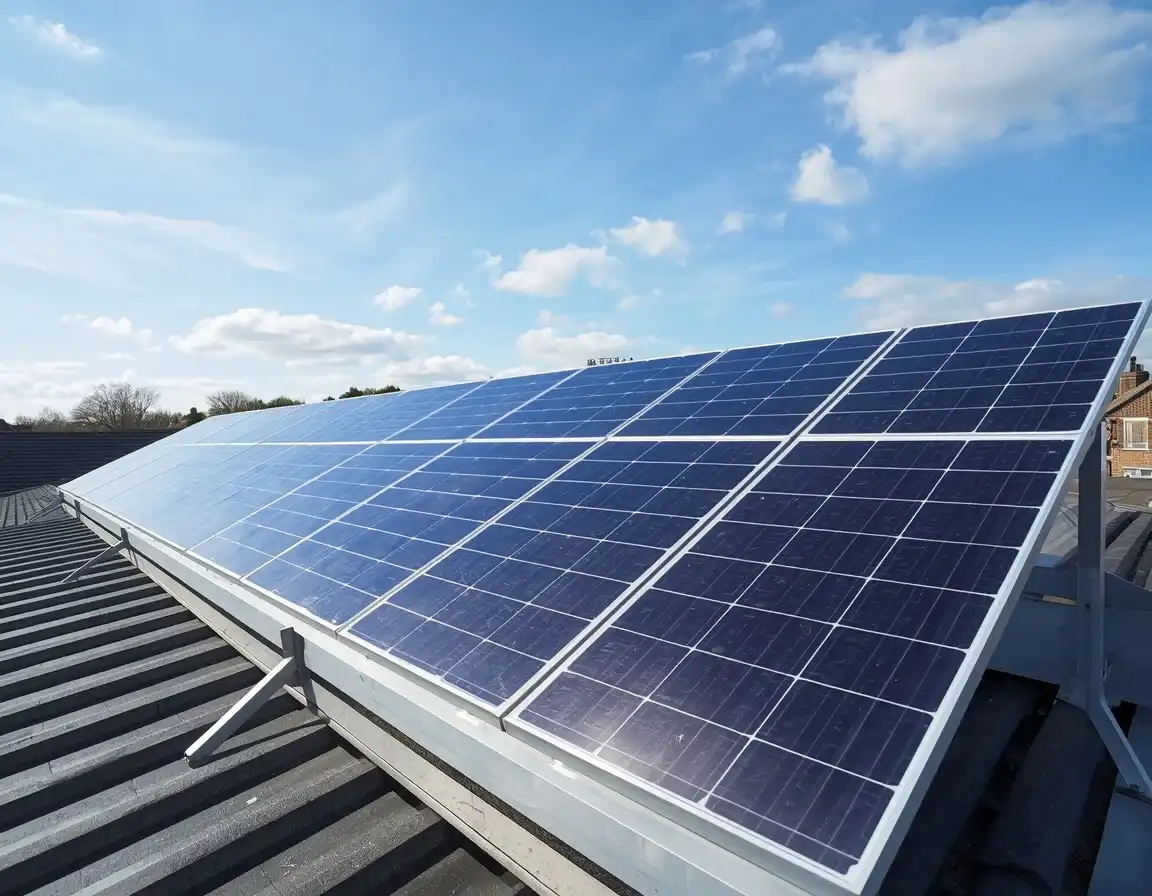
Bifacial panels, on the other hand, have solar cells embedded in transparent glass on both the front and the back. This means they can generate electricity from the front, plus any sunlight that reflects off the surface behind the panel and hits the rear.
In perfect conditions—like a ground-mounted array sitting over white gravel or snow—a bifacial panel can generate up to 30% more energy than a standard panel. But as we’ll see, UK roofs are far from perfect conditions.
Bifacial vs Monofacial: Cost & Energy Yield in 2026
Let’s talk money. Because bifacial panels require more glass and slightly more complex manufacturing, they come with a price premium. In 2026, you can expect to pay about 10% to 15% more per panel compared to a high-end monofacial equivalent.
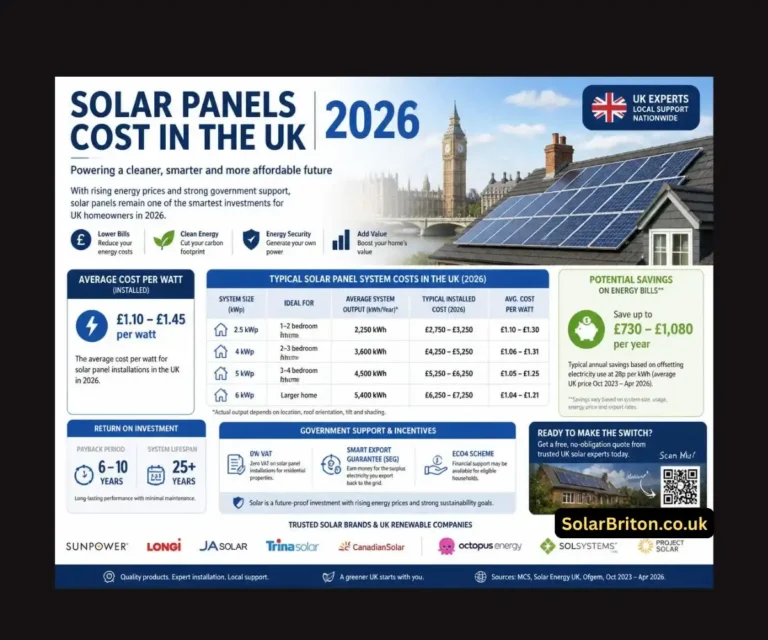
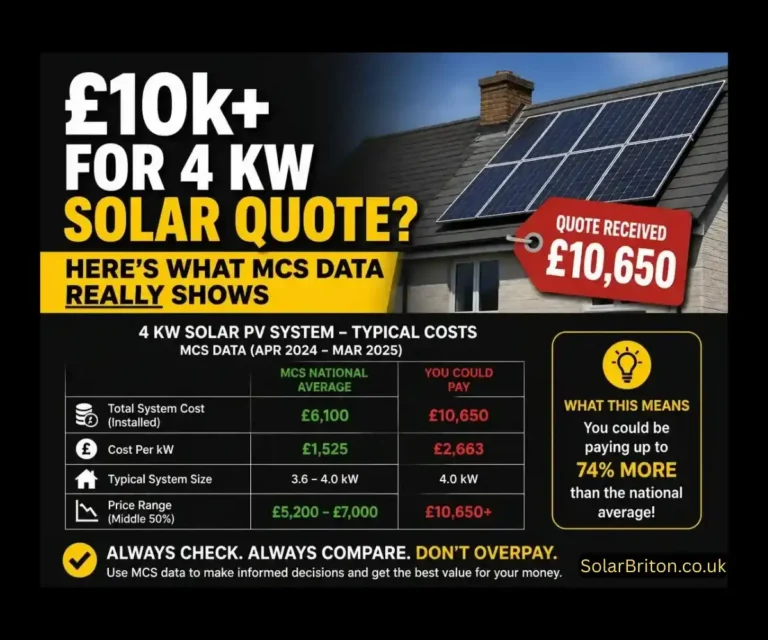
To put that into perspective, if you use our solar panel calculator, you’ll see a standard 4–5 kW solar panel system costs around £7,200 fully installed. Upgrading to bifacial could push that closer to £8,000. And remember, thanks to the 0% VAT on solar installations (officially detailed on GOV.UK), that price is kept as low as possible.
But do the extra energy savings justify the extra £800? Here’s the reality check.
| Factor | Monofacial (Standard) | Bifacial |
|---|---|---|
| Cost (4kW system) | ~£7,200 | ~£8,000+ |
| Energy Yield Boost | 0% (Baseline) | 2% to 5% on pitched roof |
| Payback Period | 9–12 years | 10–13 years |
| Best Use Case | Standard pitched roofs | Flat roofs, pergolas, ground mounts |
📊 Energy Yield vs Cost Increase (Pitched Roof)
💡 The “Albedo” Reality Check
The boost you get from bifacial panels depends entirely on the “albedo” (reflectivity) of the surface behind them. A standard dark UK tiled roof has an albedo of about 0.1 to 0.15—meaning it reflects very little light. Because your panels are mounted just inches above these dark tiles, almost no light reaches the rear cells. You end up paying a 15% premium for a 2% energy bump. Not a great return on investment.
Which Companies Make the Best Bifacial Solar Panels?
If you’ve decided you want to give bifacial technology a go (perhaps for a flat roof or outbuilding), you need to know which brands to look at. The UK market in 2026 is dominated by a few heavy hitters when it comes to bifacial tech. Here’s a quick breakdown of the best options available:
| Brand & Model | Cell Tech | Why It Stands Out | Verdict |
|---|---|---|---|
| Jinko Solar (Tiger Neo N-type) | N-type TOPCon | Massive global presence, fantastic price-to-performance ratio, and excellent UK warranty support. | Best Overall |
| Trina Solar (Vertex N) | N-type TOPCon | Super high efficiency, great low-light performance (perfect for UK winters), and very durable framing. | Premium Runner-Up |
| LONGi (Hi-MO 6) | N-type TOPCon | Beautiful aesthetic, brilliant temperature coefficient, but carries a slightly higher price tag. | Best Aesthetics |
| JA Solar (DeepBlue 4.0 X) | N-type TOPCon | Great budget-friendly option, widely stocked by UK installers, solid all-rounder. | Best Value |
If you want to dive deeper into how these stack up against traditional panels, check out our comprehensive guide to the best solar panels in the UK for 2026.
When Do Bifacial Panels Actually Make Sense?
Okay, so I’m sounding pretty negative about bifacial panels on a roof. But that doesn’t mean they are a bad technology. In fact, they are brilliant in the right setup. If you have a property that fits one of these scenarios, bifacial panels are absolutely worth the extra cost.
Flat Roofs with White Membrane
If you have a flat extension roof with a white or light-coloured waterproofing membrane, the albedo is massive. Bifacial panels mounted on angled frames here can genuinely hit that 20-30% energy boost.
Solar Pergolas & Carports
Building a solar carport or a garden pergola? The panels aren’t pressed against a roof. Light bounces off your driveway or patio straight onto the rear cells. It looks stunning and performs brilliantly.
Ground-Mounted Arrays
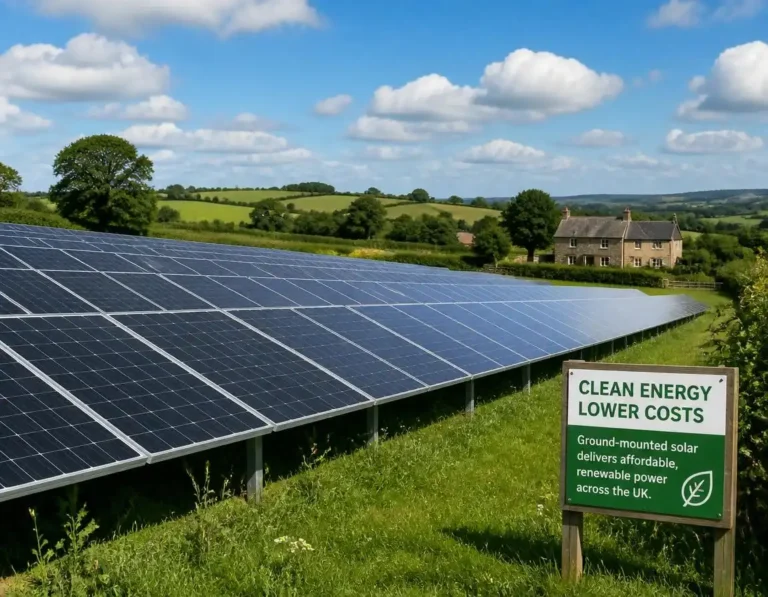
If you have the land, a ground-mounted solar system is the perfect home for bifacial panels. The light reflects off the grass (or snow in winter), pushing your yield way up.
Should You Buy Them for Your Home Roof?
If you have a standard pitched roof with dark tiles or slates, my honest advice is to save your money. Put the £800 you would have spent on the bifacial premium towards adding an extra couple of standard panels to your array, or put it towards a decent solar battery. You will see a much better return on investment.
However, if you are designing a system with a flat roof, a solar carport, or you just love having the absolute latest tech regardless of the exact payback period, then bifacial panels are a fantastic choice. They are incredibly durable (often frameless with double-glass), look superb, and will squeeze every last drop of energy out of the available light.
Just remember, whatever panel you choose, ensure your installer is MCS-certified. That’s the only way you’ll qualify for the Smart Export Guarantee (SEG) to get paid for your surplus power. You can also check the official GOV.UK SEG guidance for tariff details.
Frequently Asked Questions
Are bifacial solar panels worth it on a UK home roof?
For most standard pitched roofs in the UK, no. Bifacial panels generate extra power from light hitting their rear side, but a typical dark roof doesn’t reflect enough light to justify the 10-15% higher cost. They are only worth it if you have a flat roof with a white reflective surface, a pergola, or a ground-mounted array.
How much extra do bifacial solar panels cost in the UK?
In 2026, bifacial panels typically cost about 10% to 15% more than standard monofacial panels. While a standard 4kW roof system might cost £7,200, upgrading to bifacial could push that closer to £8,000. Thanks to the UK’s 0% VAT on solar installations, that price difference is kept as low as possible.
Which company makes the best bifacial solar panels in the UK?
For the UK market in 2026, Jinko Solar (Tiger Neo series) and Trina Solar (Vertex N series) are considered the best bifacial panels. They offer excellent N-type TOPCon technology, strong UK warranties, and great value for money. Longi’s Hi-MO 6 is also a fantastic premium alternative.