
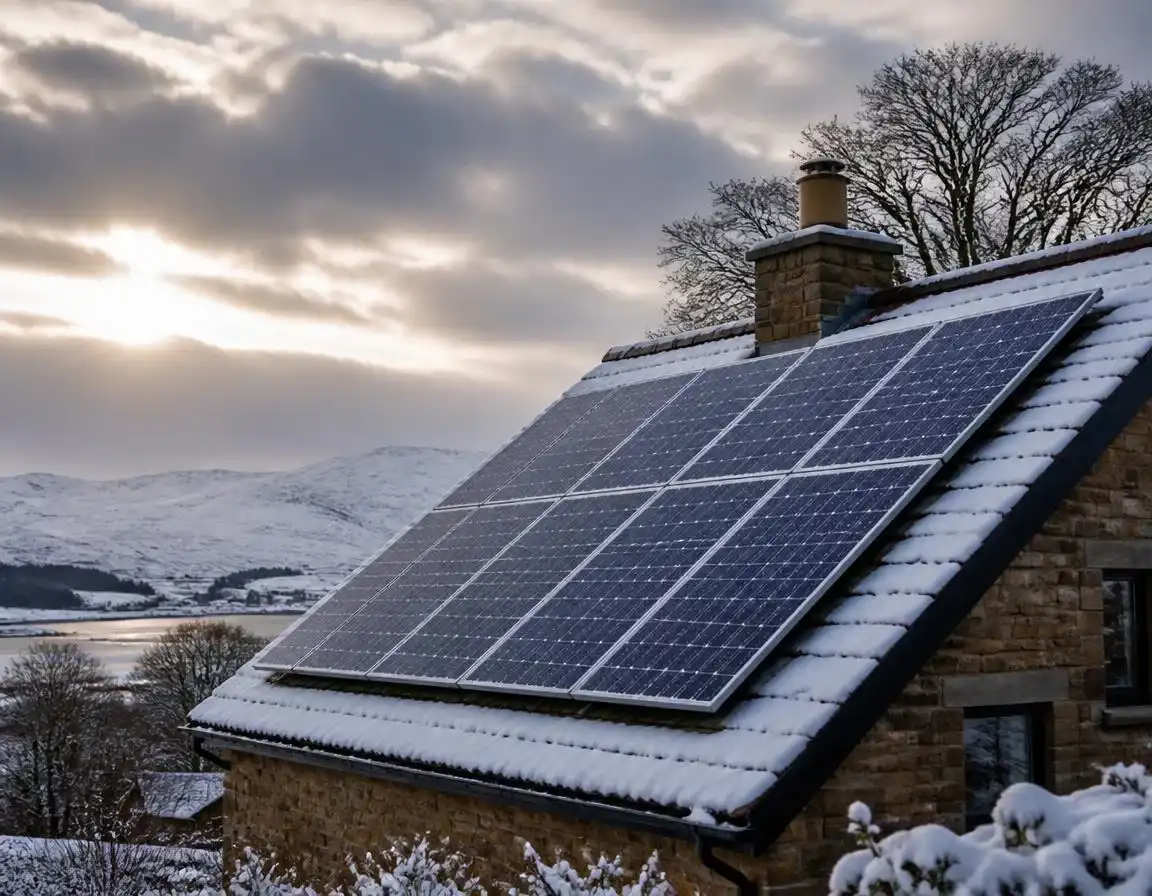
Do Solar Panels Work in Winter in Scotland?

When we think of Scottish winters, we picture grey skies, short days, and a distinct lack of sunshine. So, it is completely natural to wonder: do solar panels work in winter in Scotland?
If you are considering making the switch to renewable energy, you might be worried that our northern climate will leave your investment gathering dust for half the year. We get it. But the truth might surprise you. We have spent years looking at the data, and we are here to set the record straight.

The Short Answer: Yes, They Absolutely Do
Solar panels do not need blazing summer heat to generate electricity. In fact, they rely on light, not heat. Even on a dreich, overcast December day in Glasgow or Aberdeen, your panels are still capturing daylight and turning it into usable power for your home.
What is more, solar panels actually operate more efficiently in colder temperatures. Extreme heat can cause the photovoltaic cells to lose efficiency, so a crisp, bright winter morning in Scotland is actually perfect conditions for your system.
Scottish Winter Solar Output: What to Expect
We won’t sugar-coat it: you will generate less electricity in the winter compared to the height of summer. Scotland gets roughly 6 to 8 hours of daylight in the depths of winter, compared to 17 hours in June. However, your system will not just switch off.
Real-world data backs this up. A homeowner in Scotland with a 4.8kW south-facing system reported generating 73 kWh in January 2026, compared to a record 781 kWh in May 2025. Across the UK, the November-to-February window typically contributes around 15% to 25% of a system’s annual generation, according to industry performance data. That is still plenty of energy to run your fridge, lights, and standby appliances.
Monthly Generation Comparison (4kW System)
To give you a clear picture of how a standard 4kW system performs across the year in central Scotland, we have put together this quick visual guide based on typical Scottish yield figures.
Estimated Monthly Energy Generation (kWh)
What About Snow and Cloud Cover?
Cloud cover is a fact of life in Scotland, but modern panels are designed to capture diffuse radiation—the light that filters through the clouds. So, while output drops, it never stops completely.
Snow is another common worry. If your panels are covered in a thick layer of snow, they will not generate power. However, because panels are installed at an angle and have a smooth glass surface, snow usually slides off quickly, especially as soon as a bit of sunlight warms the glass. Plus, the dark panels absorb what little light there is, heating up slightly and helping the melting process.

Maximising Your Winter Solar Performance in 2026
As we move through 2026, solar technology and energy tariffs have adapted to make winter solar more worthwhile than ever. Here is how you can make the most of your system during the darker months:
- Invest in Solar Battery Storage: This is a game-changer for Scottish winters. By adding a battery, you can store the energy generated during the short winter days and use it in the evenings when you actually need it. If you want to understand the benefits, our guide on solar battery storage breaks it down simply.
- Shift Your Usage: Try to run your washing machine or dishwasher during daylight hours when your panels are active. It reduces the amount of power you need to pull from the grid.
- Keep Them Clean: Winter grime, bird droppings, and salt can build up on panels. A quick wash with a hose on a mild day can boost your winter yield.
Are Solar Panels Worth It in Scotland?
It is easy to get fixated on winter performance, but solar panels are a year-round investment. Yes, your generation will dip in December and January, but the massive overgeneration in May, June, and July balances it out.
With the Energy Company Obligation (ECO4) scheme and the 0% VAT on energy-saving materials (extended through 2027), the financial maths makes more sense now than ever before. On top of that, 2026 Smart Export Guarantee (SEG) tariffs have become genuinely competitive — E.ON Next’s Export Premium v3 pays 17.5p per kWh exported, and even British Gas offers 8p per kWh for systems up to 15kW. That means your panels are earning money on days you are not even at home.
Quick Fact: A typical 4kW solar PV system in Scotland can save you between £300 and £500 a year on your electricity bills, depending on your usage and whether you have a battery installed.
If you are ready to see how much you could save, or if you want a tailored quote for your property, our team is here to help. You can check out our solar panels in Scotland page for more local information.
The Verdict on Winter Solar in Scotland
So, do solar panels work in winter in Scotland? Yes, they do. While you will not be powering your home entirely off winter sunshine, your panels will still be working hard every single day to offset your energy bills. When you pair them with a battery and smart usage habits, Scottish weather is no barrier to going solar.
Want to find out how much a system would cost for your home? Get in touch with us today to get a free, no-obligation quote and let us help you harness the power of the Scottish weather, rain or shine.
Frequently Asked Questions
Do solar panels produce electricity on cloudy winter days in Scotland?
Yes, solar panels produce electricity on cloudy days. While direct sunlight is best, modern photovoltaic panels use diffuse radiation to generate power. They actually work more efficiently in cooler temperatures, so a crisp, cloudy winter day in Scotland can still yield a solid amount of energy.
Will snow damage my solar panels or stop them from working?
Snow will temporarily stop panels from generating if they are completely covered. However, quality solar panels are built to withstand heavy snow loads and are typically installed at an angle, meaning snow usually slides off quickly once the sun comes out or temperatures rise slightly.
Is it financially worth getting solar panels in Scotland for the winter?
Absolutely. While winter generation is lower than summer, modern systems and 2026 smart export tariffs allow you to earn money for excess energy year-round. Over the course of a year, a typical Scottish home can still cut its electricity bills by 50% to 70%.

2 Comments