Solar Panels for Narrowboats

Solar Panels for Narrowboats: The Honest 2026 UK Guide
How much wattage you actually need, what it really costs fitted, and the Boat Safety Scheme rules most sellers never mention.
Ask anyone who’s spent a winter running the engine for two hours a day just to keep a fridge cold, and they’ll tell you the same thing — it’s noisy, it burns diesel, and your neighbours at the next mooring won’t thank you for it. Solar has quietly become the default fix on the cut, not a novelty.
I’ve gone through the real UK numbers: the wattage you genuinely need, what it costs fitted, and the safety rules that trip people up. No vague guessing, just the actual figures.
How Much Solar Do You Actually Need?
It comes down to one sum: daily amp-hour use, divided by local peak sun hours. A typical narrowboat gets through 80–120Ah a day running lights, pumps, a fridge and charging devices. Southern England averages 3–4 peak sun hours across the year; further north, plan on less.
Work it through on 80Ah and 3.5 peak hours and you need roughly 23A of charge current — about 276W at 12V. Add a 20% safety margin and you land close to 330W, which is exactly why 300–400W has become the sweet spot for most cruising boats in 2026.
| Usage Type | Recommended Wattage | Typical Daily Use |
|---|---|---|
| Weekend / fair-weather | 120–160W | 30–50Ah |
| Standard cruising | 300–400W | 80–120Ah |
| 3-season liveaboard | 400–600W | 120–180Ah |
| Year-round liveaboard | 600W–1kW+ | 180Ah+ (engine backup needed) |
What Does It Actually Cost in 2026?
A professionally supplied-and-fitted 200W system typically runs to around £625 all in, rising to about £1,050 for 400W, plus roughly £150 more for the MPPT upgrade over a basic PWM controller. DIY kits work out notably cheaper if you’re happy fitting it yourself over a weekend.
| System Size | DIY Kit | Professionally Fitted |
|---|---|---|
| 200W | £250–£350 | ~£625 |
| 300–400W | £400–£700 | £1,050–£1,200 |
| 600W–1kW | £800–£1,400 | £1,800–£2,800 (est.) |
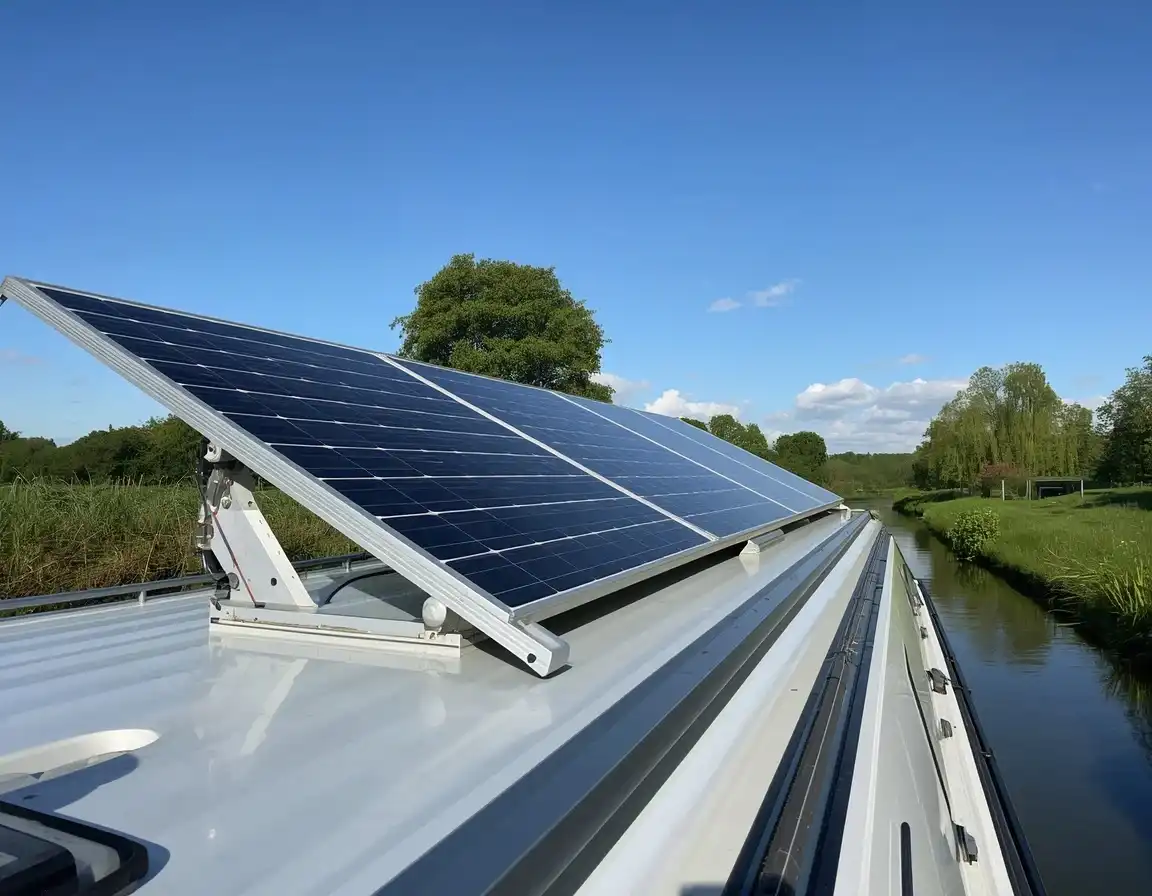
Rigid aluminium-framed monocrystalline panels remain the standard fit — they suit a curved or flat cabin roof well, and newer PERC and shingled-cell versions squeeze more output from the same footprint than older panels did. Flexible panels suit an oddly shaped or walked-on section of roof but run slightly less efficient and don’t last as long.
Boat Safety Scheme: The Bit Sellers Skip Over
Your installation has to satisfy the Boat Safety Scheme (BSS), jointly run by the Canal & River Trust and the Environment Agency. Any narrowboat with an electrical system needs a valid BSS certificate every four years to hold a licence, and examiners specifically check solar fusing — a fuse between controller and battery is mandatory, cable must be properly sized (4mm² or 6mm² solar cable) to avoid voltage drop, and everything needs proper support. Badly wired solar is a genuinely recognised cause of boat electrical fires, so this isn’t box-ticking.
⚓ The Verdict
For most owners, 300–400W of rigid monocrystalline panels through an MPPT controller is the genuine sweet spot in 2026 — enough to stop the engine-charging routine for three seasons, paying for itself within a couple of winters of diesel you’re no longer burning. Just make sure whoever fits it understands BSS fusing rules, because that’s what actually keeps you safe.